Overview
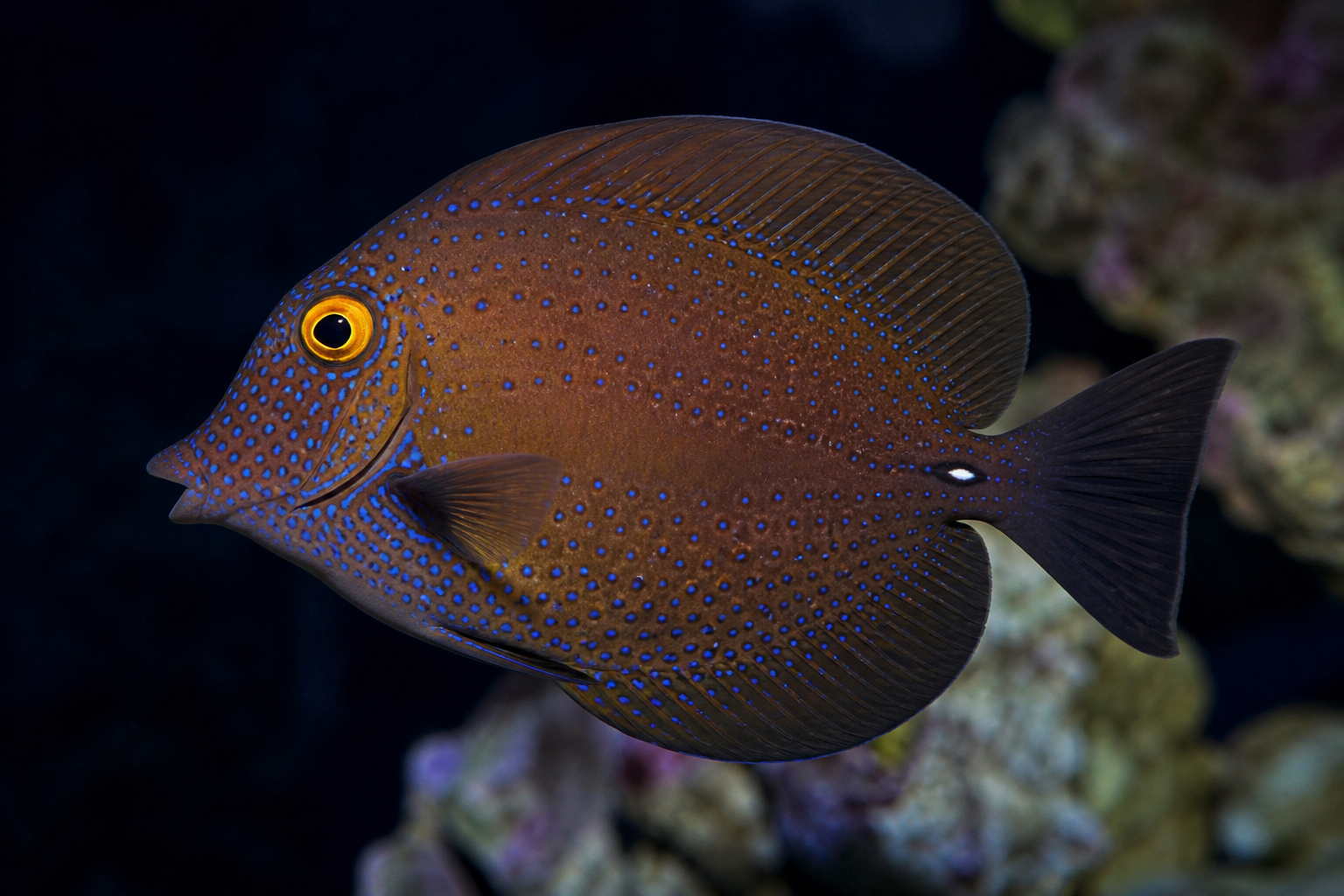
The Kole Tang is one of the best “working fish” you can add to a reef tank—active, hardy in the right setup, and constantly grazing on film algae and natural buildup on rocks and glass. It’s often called a “bristletooth tang” because of its specialized mouth, which is designed for scraping and brushing surfaces. In a healthy reef tank, a Kole Tang spends its day cruising, grazing, and keeping things looking cleaner over time.
Compared to some larger tangs, Kole Tangs are often considered a bit more manageable in temperament and size, but they still need real swimming space and stable conditions. They’re not a beginner tank fish, but they can be an excellent choice for a hobbyist ready for a tang with strong algae-grazing habits and lots of personality.
Quick Care Snapshot
Reef Safe: Yes
Difficulty: Moderate
Temperament: Semi-aggressive (especially toward other tangs)
Minimum Tank Size: 70–75 gallons (larger is better)
Best Kept As: Single in most tanks
Diet: Grazer (film algae/biofilm) + supplemental foods
Water Conditions: Stable reef parameters; high oxygen and strong filtration help
Special Note: Excellent film algae grazer, but still needs proper feeding
Natural Background
Kole Tangs come from reef environments where they spend most of their time grazing—scraping microalgae, film algae, and natural biofilm from surfaces. They’re constant movers and foragers. That natural behavior is why they’re so useful in reef tanks, but it’s also why they need:
• enough space to cruise
• lots of surface area to graze
• a diet that supports their constant activity
In aquariums, a Kole Tang that’s comfortable and healthy is almost always on the move, doing laps and checking every rock and panel for something to nibble.
Tank Requirements
Tank size & swimming space
• 70–75 gallons minimum is a good baseline for long-term success.
• 90+ gallons is even better for stability and compatibility.
• Tank length matters—these fish like to cruise.
Rockwork and layout
• Provide plenty of rockwork for grazing, but keep open lanes for swimming.
• A good layout includes:
• open water for laps
• lots of surfaces to graze
• hiding spots for rest and stress relief
Flow, oxygen, and filtration
Tangs generally appreciate:
• strong water movement (oxygen-rich environment)
• stable temperature and salinity
• solid filtration and consistent maintenance
Lid / jumping
Not typically known for jumping, but a lid is still a good idea—especially in reef tanks with other jump-prone fish.
Feeding
Kole Tangs are grazers, but they still need intentional feeding. “Busy grazing” doesn’t always mean “getting enough nutrition.”
What to feed
A strong routine includes:
• dried seaweed/nori (often a staple)
• algae-based pellets or flakes
• frozen foods with veggie content
• occasional meaty foods as a supplement (not the main diet)
Feeding tips
• Offer seaweed regularly, especially if your tank is clean and algae is limited.
• A well-fed Kole Tang is usually less aggressive and maintains better body condition.
• Watch for signs of weight loss (pinched areas behind the head or a hollow look).
How often
• Daily algae-based feeding is recommended.
• Many hobbyists do best with 2 smaller feedings per day rather than one large meal.
Compatibility
Kole Tangs are reef safe with corals and most invertebrates. Compatibility issues are mainly about other fish, especially other tangs.
Good tankmates
Often compatible with:
• clownfish
• gobies and blennies
• cardinalfish
• many reef-safe wrasses
• other peaceful community fish that aren’t tang-shaped
Watch-outs
• Other tangs: Kole Tangs may fight with other tangs, especially in smaller tanks or if introduced in the wrong order.
• Similar-shaped fish: they may chase fish they see as competition.
• Adding fish later: an established tang may bully new arrivals.
Practical guidance
For most hobbyists and most home tanks:
• one tang per tank is the simplest and most peaceful approach.
Multiple tangs can work, but usually requires larger tanks and careful planning.
Common Mistakes
1) Adding a tang to a tank that’s too small
This is the most common tang mistake. Even if it “fits,” it may not thrive long-term without space to cruise.
2) Treating it like a “cleaner” instead of a fish
Kole Tangs graze, but they still need a real diet and stable conditions. They’re not a replacement for maintenance.
3) Underfeeding in a clean tank
A Kole Tang can run out of natural grazing. If the tank looks spotless, you must feed algae-based foods consistently.
4) Poor planning with other tangs
Most tang aggression is predictable. If you want multiple tangs, the tank needs to be large, and introductions need to be planned.
5) Ignoring stress signs
A stressed tang may hide, stop grazing, show faded color, or become unusually aggressive. Stress usually points to tank size, diet, water quality, or tankmate conflict.
Notes & Variations
Common names
- Kole Tang
- Yellow Eye Kole Tang
- Bristletooth Tang (general group name)
Scientific name
- Ctenochaetus strigosus
Behavior notes
• Constant grazing is normal.
• They tend to be “busy” fish, always inspecting surfaces.
• They often pick a sleeping spot in the rockwork at night.
Practical note about the tail spine
Like other tangs, Kole Tangs have a sharp spine near the tail used for defense. It’s not something they “attack” with casually, but it can cause damage during fights or when handled.
Final Thoughts
If you want a tang that’s active, useful, and generally more manageable than some larger species, the Kole Tang is a great choice—assuming you can provide the space and stability it needs. Give it a tank with real swimming room, plenty of surfaces to graze, and a consistent algae-based diet. Do that, and a Kole Tang becomes a hardworking, personality-filled fish that helps keep your reef looking cleaner while adding constant life and movement.