Overview
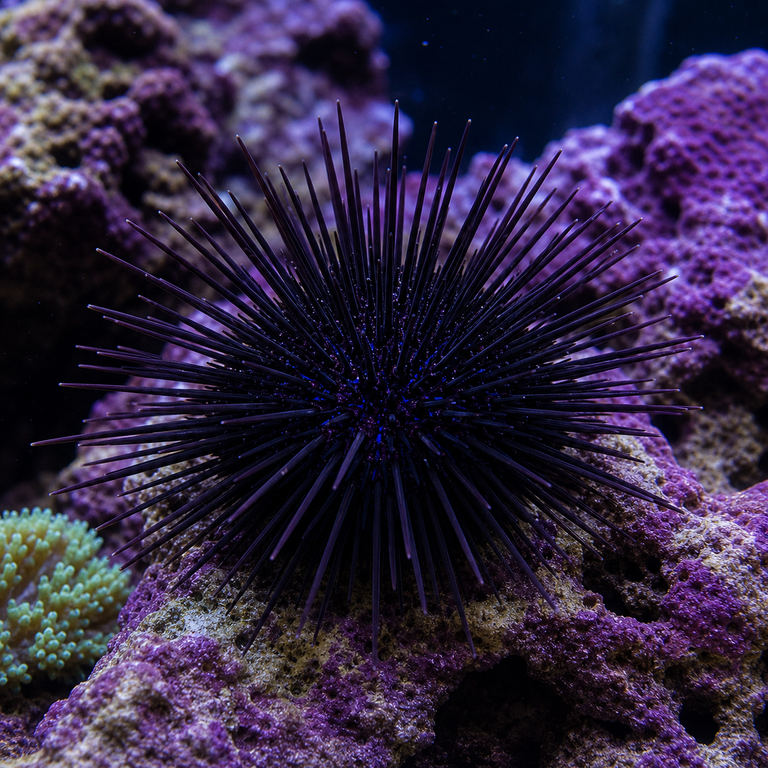
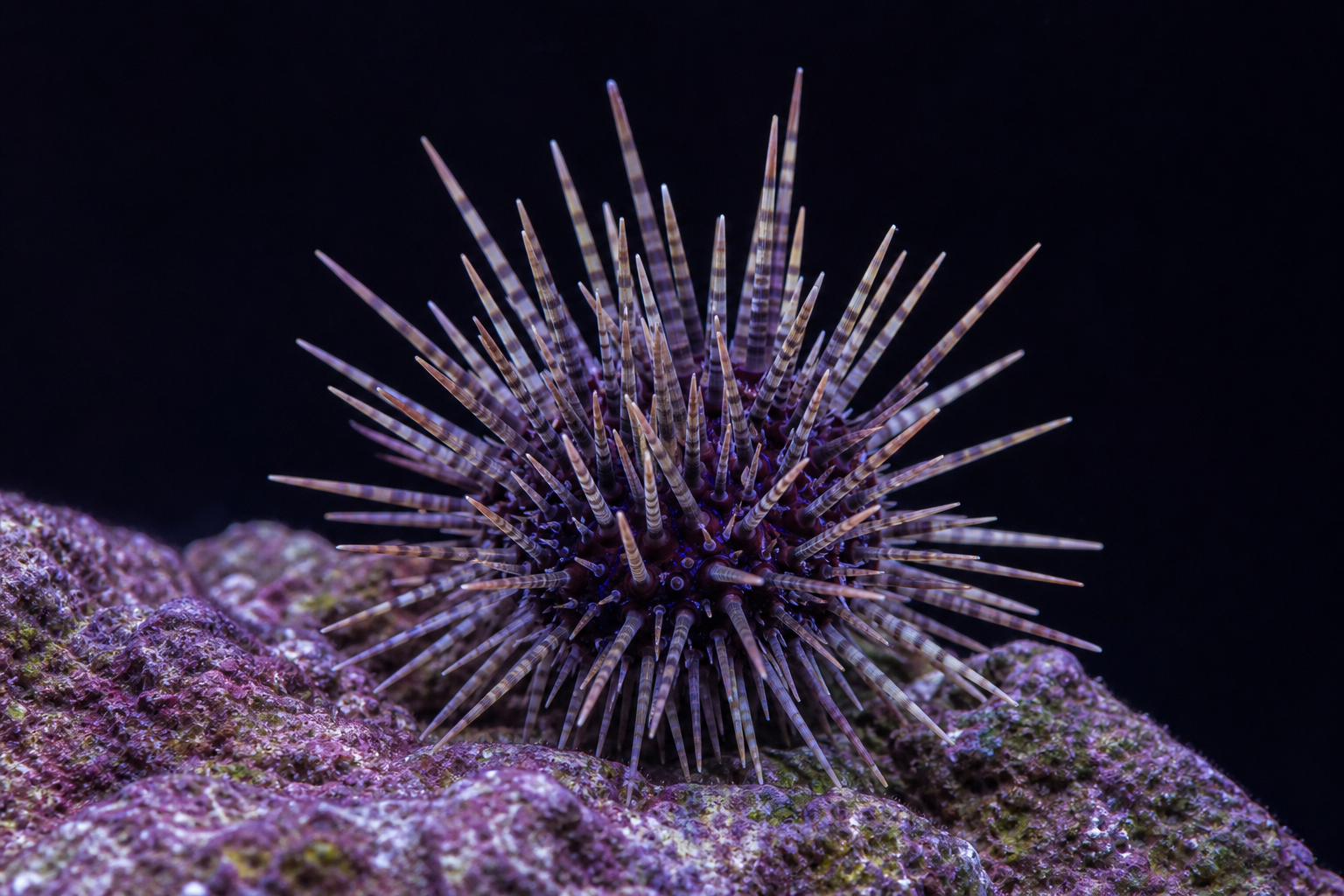
The Collector Urchin is one of the most entertaining invertebrates you can keep in a reef tank—partly because it’s useful, and partly because it has absolutely no shame.
Collector urchins are known for picking up anything they can carry—shells, rubble, algae, frag plugs, loose corals—and wearing it like a hat. That behavior isn’t random or cute (well… it is cute), it’s survival instinct. In the wild, it helps with camouflage and protection. In an aquarium, it means anything not secured is fair game.
From a husbandry standpoint, collector urchins are generally hardy, effective grazers, and reef safe with conditions. From a reef-layout standpoint, they are tiny bulldozers with excellent grip strength.
If you can accept a little chaos in exchange for algae control and personality, collector urchins are a great addition.
Quick Care Snapshot
Difficulty: Easy to intermediate
Minimum tank size: 30 gallons (larger is better)
Tank maturity: 3–6+ months recommended
Lighting: Not critical
Flow: Moderate
Placement: Rockwork and glass
Feeding: Algae, biofilm, supplemental algae if needed
Reef safe: With caution (may move loose items)
Temperament: Peaceful grazer
Biggest risk: Starvation in ultra-clean tanks, knocking over unsecured frags
Natural Background
Collector urchins live on reefs where they graze constantly on algae and biofilm. Their defining behavior—picking up debris—is a natural defense mechanism. They aren’t picky about what they collect, only whether they can carry it.
In the wild, that might be shells or rubble. In your tank, that might be:
• frag plugs
• small coral colonies
• loose rocks
• snail shells
The animal doesn’t know the difference.
Tank Requirements
Stability over precision
Collector urchins are tolerant of standard reef conditions, as long as:
• salinity is stable
• temperature is stable
• oxygen levels are good
They do not tolerate sudden parameter swings well, but they aren’t delicate animals.
Habitat
They do best in tanks with:
• plenty of rockwork
• grazing surfaces
• room to roam
Bare tanks or minimal aquascapes limit their usefulness and increase stress.
Flow
Moderate flow works well:
• enough to keep surfaces clean
• not so strong that it dislodges the urchin constantly
They’re strong, but constant blasting isn’t ideal.
Feeding
Collector urchins are primarily algae grazers.
What they eat
• film algae
• turf algae
• biofilm
• some macroalgae
In many tanks, natural algae growth is enough—at least at first.
Supplemental feeding
In clean or mature tanks where algae is scarce:
• provide dried algae (like sheets clipped to the glass)
• allow some algae to grow instead of scrubbing everything spotless
Starving urchins will:
• lose spines
• slow down
• decline quietly over time
Compatibility
With reef tanks
Collector urchins are generally reef safe biologically:
• they don’t sting corals
• they don’t eat coral tissue
However:
• they will knock things over
• they will carry corals if loose
With corals
Secure everything:
• glue frags well
• avoid resting corals loosely on rock
• expect occasional rearrangement anyway
They may graze algae growing on coral bases, which is usually harmless—but dragging a coral across the tank is not.
With fish
Fish ignore them.
With inverts
Generally peaceful. Snails and crabs are fine.
Common Mistakes
1) Adding one to an ultra-clean tank
No algae = no food.
2) Not securing frags and rockwork
If it can be picked up, it will be.
3) Assuming it’s “set and forget”
They still need food monitoring.
4) Blaming it for coral damage
Most damage is mechanical (knocking things over), not grazing.
5) Underestimating strength
Collector urchins are surprisingly powerful for their size.
Notes & Variations
“Why is it carrying everything?”
That’s normal behavior. It’s not stress—it’s instinct.
“It dropped all its decorations”
That often happens during:
• feeding
• rapid movement
• acclimation
It may pick them back up later.
Signs of health
Good signs:
• active grazing
• intact spines
• consistent movement
• regular “hat changes”
Red flags:
• spine loss
• lethargy
• shrinking body
• staying in one place for long periods
Final Thoughts
Collector urchins are one of those inverts that force you to choose between perfect aesthetics and functional ecology. They do real work, but they don’t respect your aquascape vision.
If you secure your tank, accept a little rearranging, and make sure they have food, they’re hardy, useful, and genuinely fun to watch.
If you want a pristine, untouched coral display—this probably isn’t your animal.