Overview
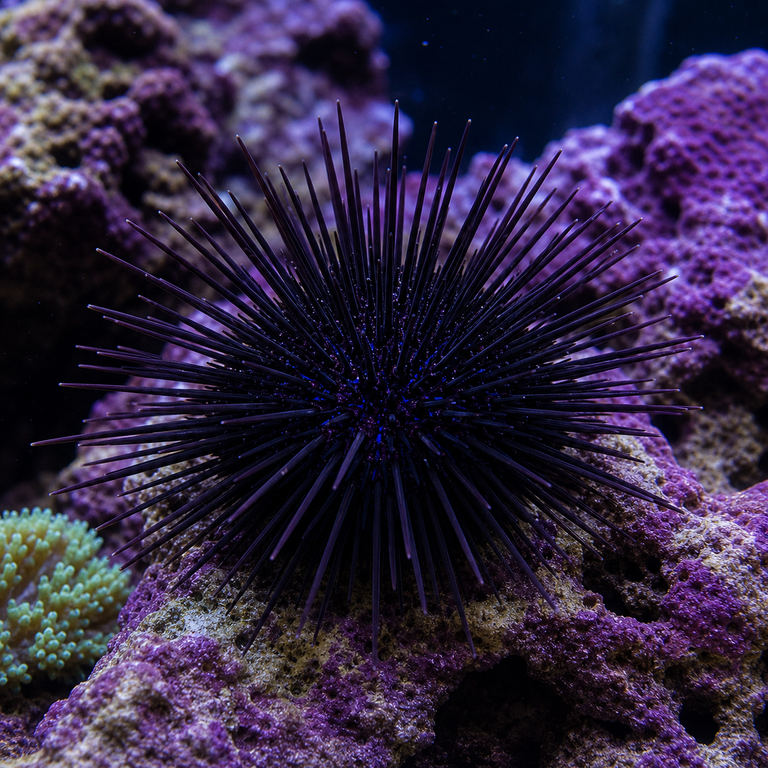
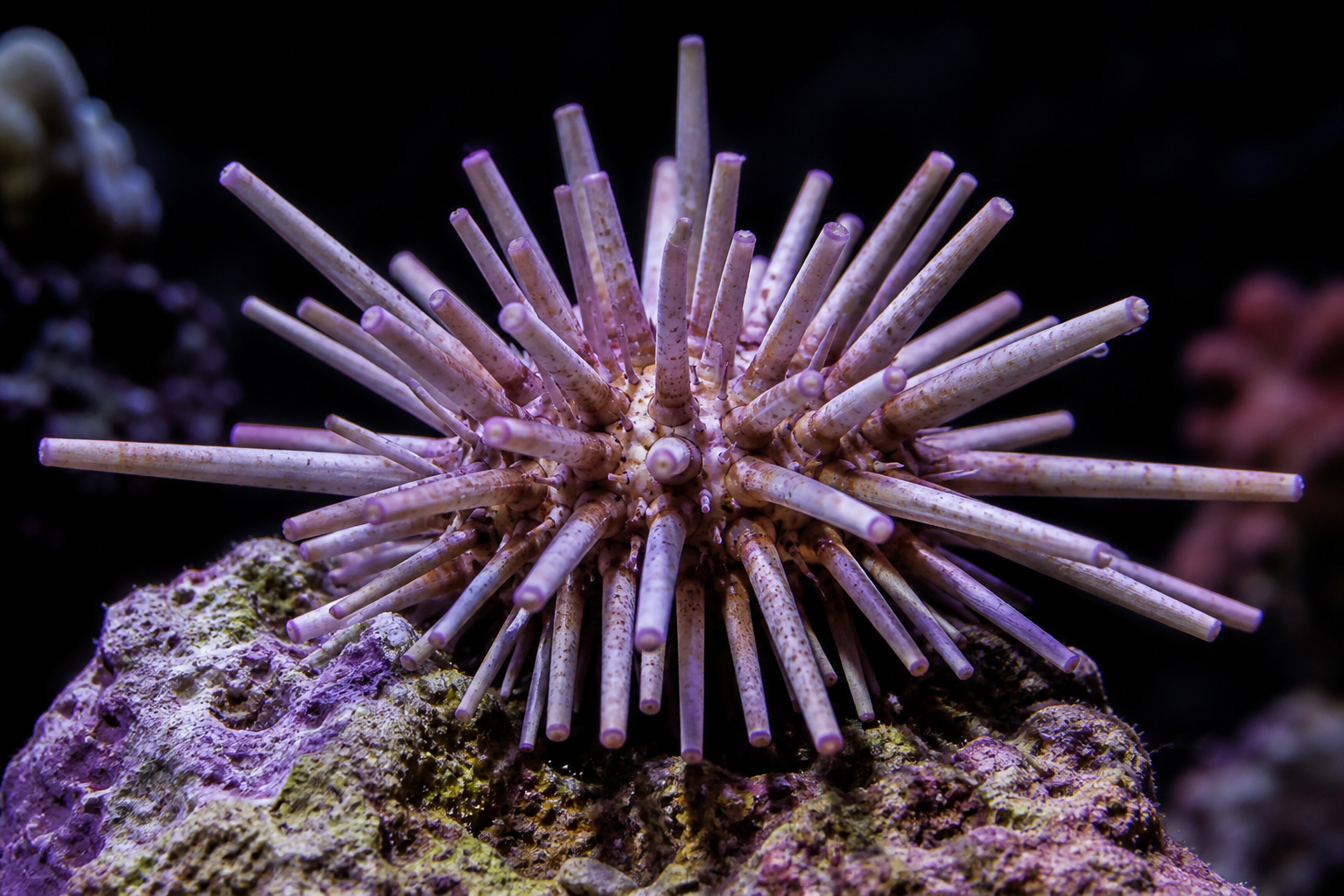
The Pencil Urchin is one of the most misunderstood urchins in the reef hobby. It’s often lumped in with “cleanup crew” urchins, but it plays a very different role—and treating it like a harmless algae grazer is where people get into trouble.
Pencil urchins are strong, slow-moving, and opportunistic. They do graze algae, but they’re also capable of bulldozing rockwork, knocking over corals, and in some cases damaging coral tissue if they decide something is edible or in the way.
That doesn’t make them “bad” animals. It means they belong in the right kind of system, with the right expectations.
If you want a gentle, reef-polishing urchin, this isn’t it.
If you want a hardy, powerful grazer for a rugged reef or fish-focused system, a Pencil Urchin can work.
Quick Care Snapshot
Difficulty: Intermediate
Minimum tank size: 75 gallons (larger footprint preferred)
Tank maturity: 6+ months recommended
Lighting: Not critical
Flow: Moderate
Placement: Rockwork and hard surfaces
Feeding: Algae, biofilm, supplemental algae
Reef safe: With caution (can damage corals and structures)
Temperament: Peaceful but destructive by behavior
Biggest risks: Coral damage, rockwork instability, starvation in clean tanks
Natural Background
Pencil urchins live in reef environments where they graze on algae and encrusting growth while using their thick, blunt spines for protection. Unlike smaller, more delicate urchins, they’re built like tanks.
In the wild, they:
• wedge themselves into rock
• scrape algae aggressively
• move rubble as they go
In aquariums, that translates directly to:
• moving things you thought were stable
• scraping surfaces thoroughly
• interacting physically with corals and rockwork
This is normal behavior—not aggression.
Tank Requirements
Stability and structure matter
Pencil urchins are hardy, but they require:
• stable salinity
• stable temperature
• solid, well-secured rockwork
Loose rock structures are a recipe for collapses once a Pencil Urchin starts pushing.
Habitat
They do best in tanks with:
• large, stable rock structures
• plenty of hard surfaces to graze
• minimal fragile coral placement in their path
Minimalist aquascapes with delicate coral towers are usually a bad match.
Flow
Moderate flow works well:
• enough to keep algae growth healthy
• not so strong that it constantly dislodges the urchin
They’re strong, but constant blasting causes stress.
Feeding
Pencil urchins are primarily algae grazers, but they are not picky.
What they eat
• film algae
• turf algae
• encrusting growth
• biofilm
In tanks with limited algae, they may:
• scrape coralline aggressively
• sample coral tissue
• slowly starve
Supplemental feeding
In clean or mature systems:
• provide dried algae sheets regularly
• allow some algae growth to remain
Starving pencil urchins are more likely to cause damage as they search for food.
Compatibility
With reef tanks
This is where caution is required.
Pencil urchins:
• can damage corals through grazing or contact
• can topple frags and rock
• do not respect coral placement
They are best suited for:
• fish-only systems
• rugged reefs with large, well-attached corals
• tanks where aesthetics are secondary to function
With corals
High risk:
• scraping tissue
• knocking corals loose
• dislodging frags
They are not ideal for delicate SPS or loosely mounted corals.
With fish
Fish ignore them.
With inverts
Generally peaceful, but they may outcompete other grazers for food.
Common Mistakes
1) Treating it like a “standard reef-safe urchin”
Pencil urchins are not delicate grazers.
2) Adding one to a coral-heavy display
Mechanical damage is common.
3) Not securing rockwork
They are strong enough to shift unstable structures.
4) Underfeeding in clean tanks
Starvation leads to increased destructive behavior.
5) Expecting it to control nuisance algae gently
It controls algae aggressively—sometimes too aggressively.
Notes & Variations
“It’s eating my coralline”
Yes. That’s normal behavior, especially if other algae is scarce.
Signs of health
Good signs:
• intact, firm spines
• steady movement
• consistent grazing activity
Red flags:
• spine loss
• lethargy
• shrinking body
• staying in one place for long periods
“Is it reef safe?”
Biologically yes. Mechanically risky.
Final Thoughts
Pencil urchins are not subtle animals. They don’t tiptoe through your reef—they push through it. For the right tank, that’s acceptable. For the wrong tank, it’s a nightmare.
If you value rugged function over delicate aesthetics and can secure your aquascape properly, a Pencil Urchin can be a hardy, effective grazer. If you want a pristine coral showcase, this is one invert best admired elsewhere.