Overview
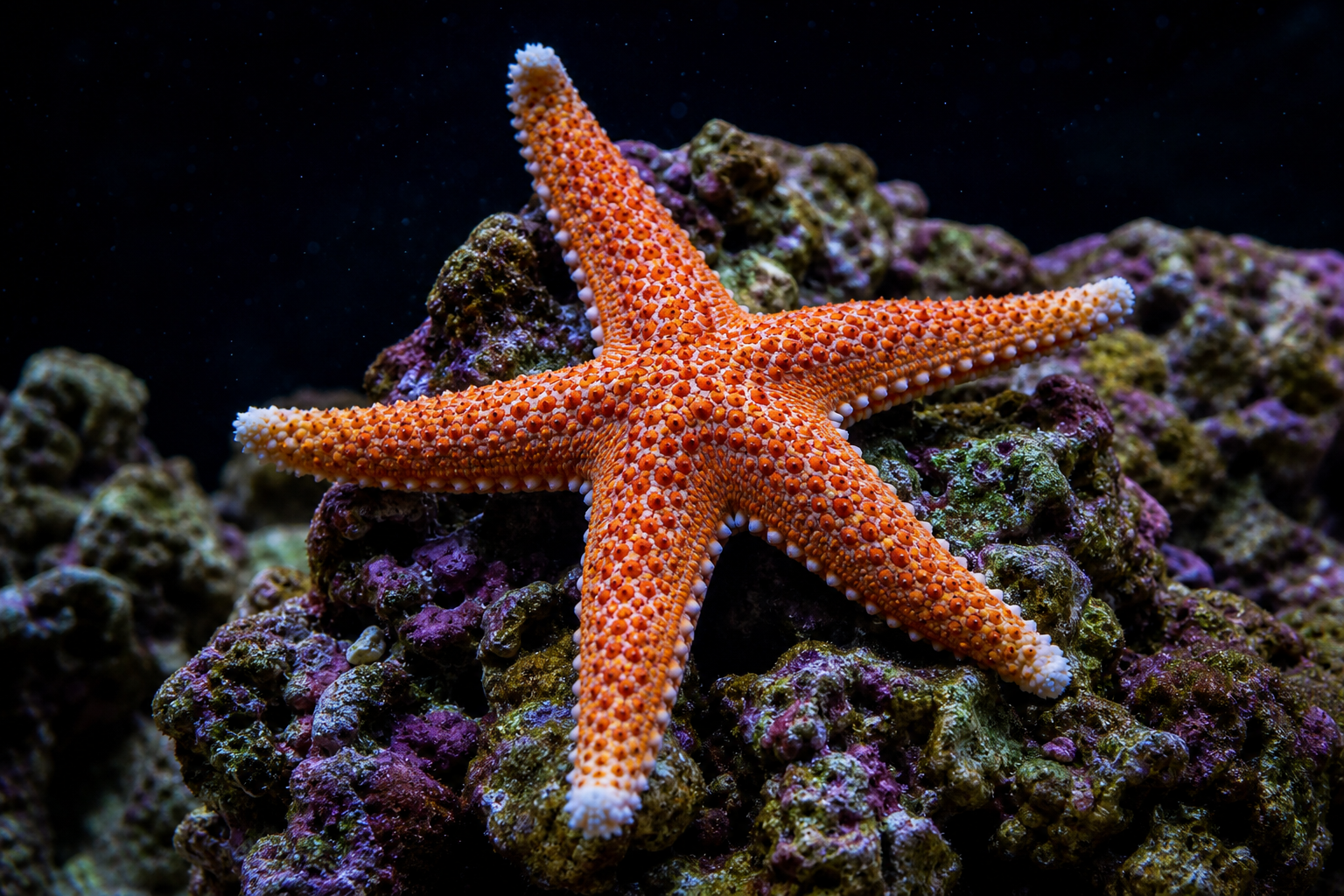
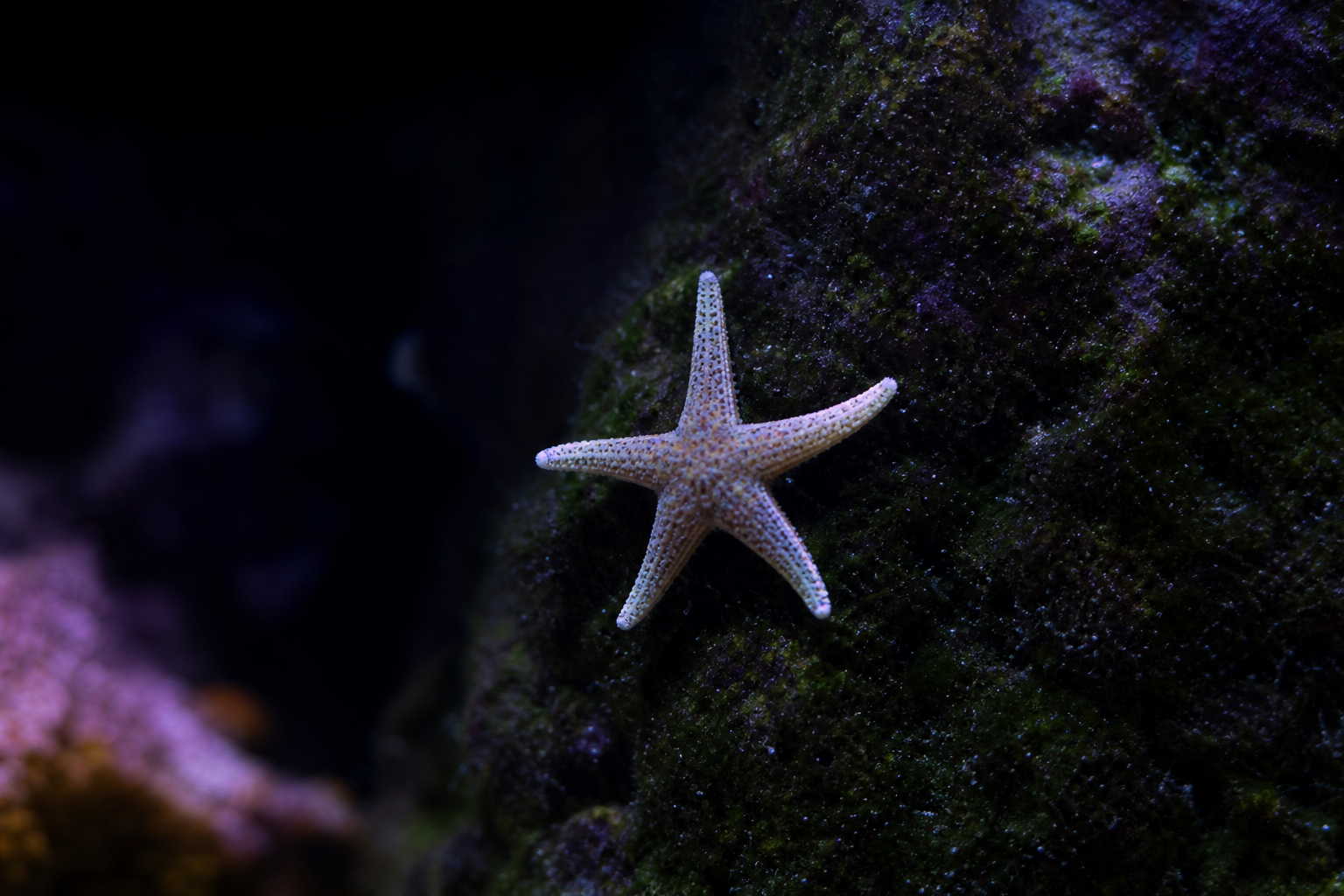
Asterina Starfish are tiny, hitchhiking sea stars that show up in a lot of reef tanks whether you planned for them or not. They’re small, usually gray, white, or mottled, and you’ll most often notice them crawling on glass or rock after lights out.
They also have one of the most mixed reputations in the hobby.
Some reefkeepers consider Asterina harmless cleanup crew. Others swear they’ve watched them damage coral. The truth lives in the middle: most Asterina are benign grazers, but in large numbers—or in certain situations—they can become a problem.
The key with Asterina isn’t panic. It’s population awareness and context.
Quick Care Snapshot
Difficulty: Easy
Tank size: Any
Tank maturity: Any (most arrive as hitchhikers)
Lighting: Not relevant
Flow: Normal reef flow
Placement: Rockwork, glass, overflow, sand
Feeding: Algae, biofilm, detritus
Reef safe: Usually yes, with caveats
Primary role: Grazer / cleanup crew
Biggest risk: Population explosions and coral irritation in some tanks
Natural Background
Asterina starfish are small sea stars commonly found on reef surfaces where they graze on:
• algae films
• biofilm
• detritus
• microscopic growth on rock
In the wild, they’re part of the normal reef background fauna. In aquariums, they behave the same way—but without natural population controls unless predators are present.
They reproduce readily in closed systems, which is why a few can turn into dozens seemingly overnight.
Tank Requirements
Stability over specifics
Asterina are extremely tolerant of normal reef conditions. If your tank supports algae and biofilm, it supports Asterina.
They don’t require:
• special lighting
• special feeding
• special placement
What they do respond to is food availability.
Nutrient environment
• Tanks with abundant film algae and detritus often see population growth.
• Very clean tanks may see populations stabilize or decline naturally.
Asterina presence often reflects what’s happening at the micro level in your tank.
Feeding
Asterina feed by grazing.
What they eat
• film algae
• biofilm
• detritus
• microscopic growth on rock and glass
They are not active predators and do not hunt fish or inverts.
Supplemental feeding
Not required. If you’re feeding them intentionally, your tank is probably already overfed.
Compatibility
With reef tanks
This is where opinions diverge.
Most Asterina are harmless and coexist with corals without issue. However:
• In high numbers, grazing pressure can irritate coral tissue.
• Weak, stressed, or damaged corals may be more vulnerable.
• Some reefkeepers report repeated coral contact in tanks with large Asterina populations.
This is less about “Asterina are evil” and more about too many mouths in one place.
With fish
No issues. Fish ignore them.
With inverts
Generally peaceful. Larger inverts may eat them.
Natural population control
Some reef systems naturally keep Asterina in check via:
• predation
• limited food availability
• competition with other grazers
Common Mistakes
1) Panic-removing a few harmless starfish
Seeing one or two is not a crisis.
2) Ignoring a population explosion
Dozens covering glass and rock means something is fueling them.
3) Assuming all coral issues are caused by Asterina
They’re often blamed when underlying coral stress is the real problem.
4) Overcorrecting with drastic measures
Chemical treatments or tank tear-downs are almost always unnecessary.
5) Expecting them to behave like a “designed” cleanup crew
They’re opportunists, not programmed janitors.
Notes & Variations
“Are Asterina reef safe?”
Usually yes—in reasonable numbers.
Problems tend to arise when:
• populations explode
• food availability is high
• corals are already stressed
“Should I remove them?”
Situational:
• A few? Leave them.
• Many? Consider manual removal or addressing nutrient/algae availability.
“They’re on my coral”
Occasional contact isn’t proof of predation. Repeated presence on the same coral, especially if tissue damage is visible, is worth addressing.
Population control options
• manual removal
• reducing excess nutrients
• encouraging natural predators (where appropriate)
Final Thoughts
Asterina starfish are one of the best examples of why reefkeeping isn’t black-and-white. They’re not automatically pests, and they’re not automatically beneficial heroes either.
They’re indicators.
In balanced systems, they’re background noise—doing a little grazing and staying out of the way. In unbalanced systems, they multiply and get blamed for problems they didn’t create alone.
Manage the system, not just the starfish.