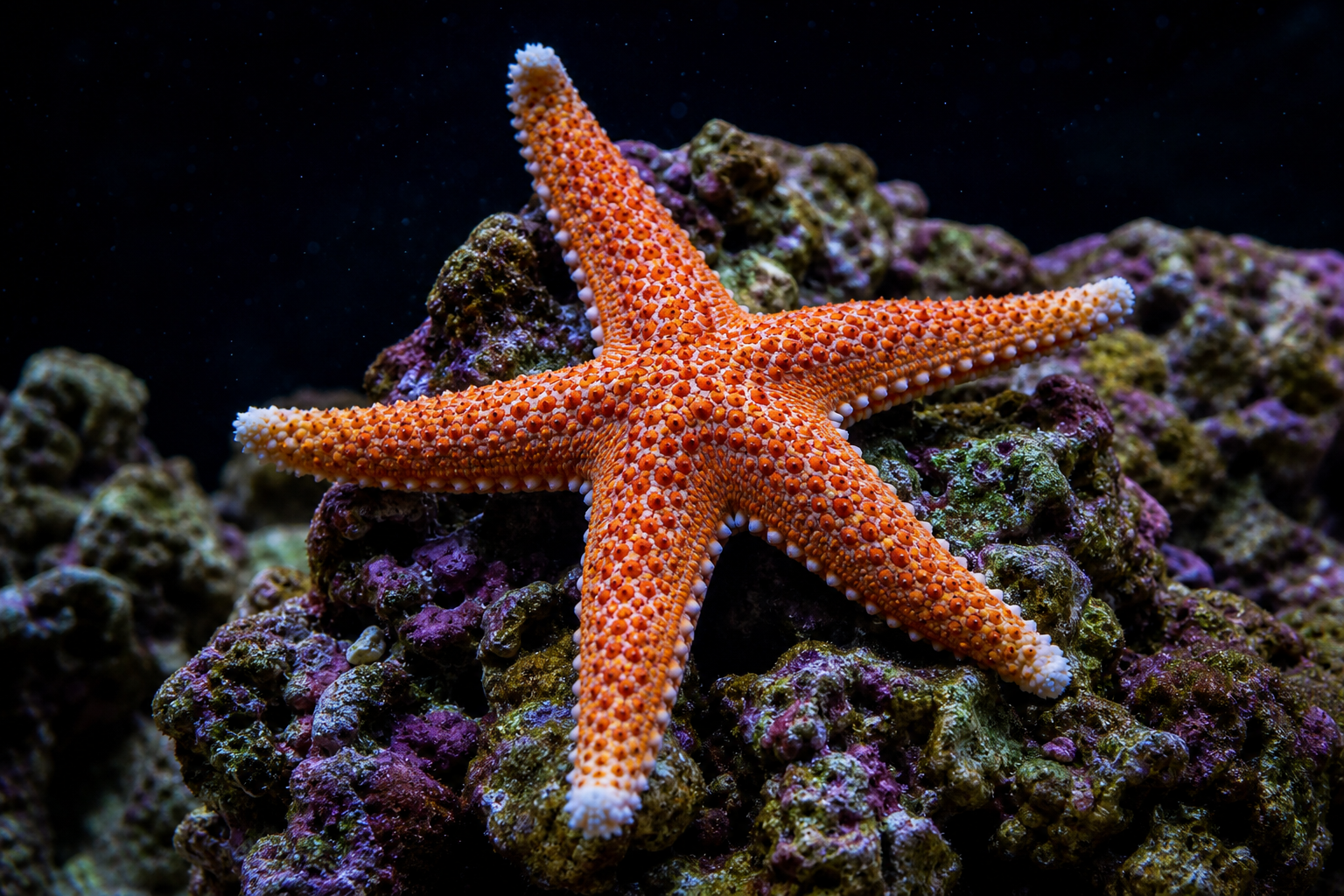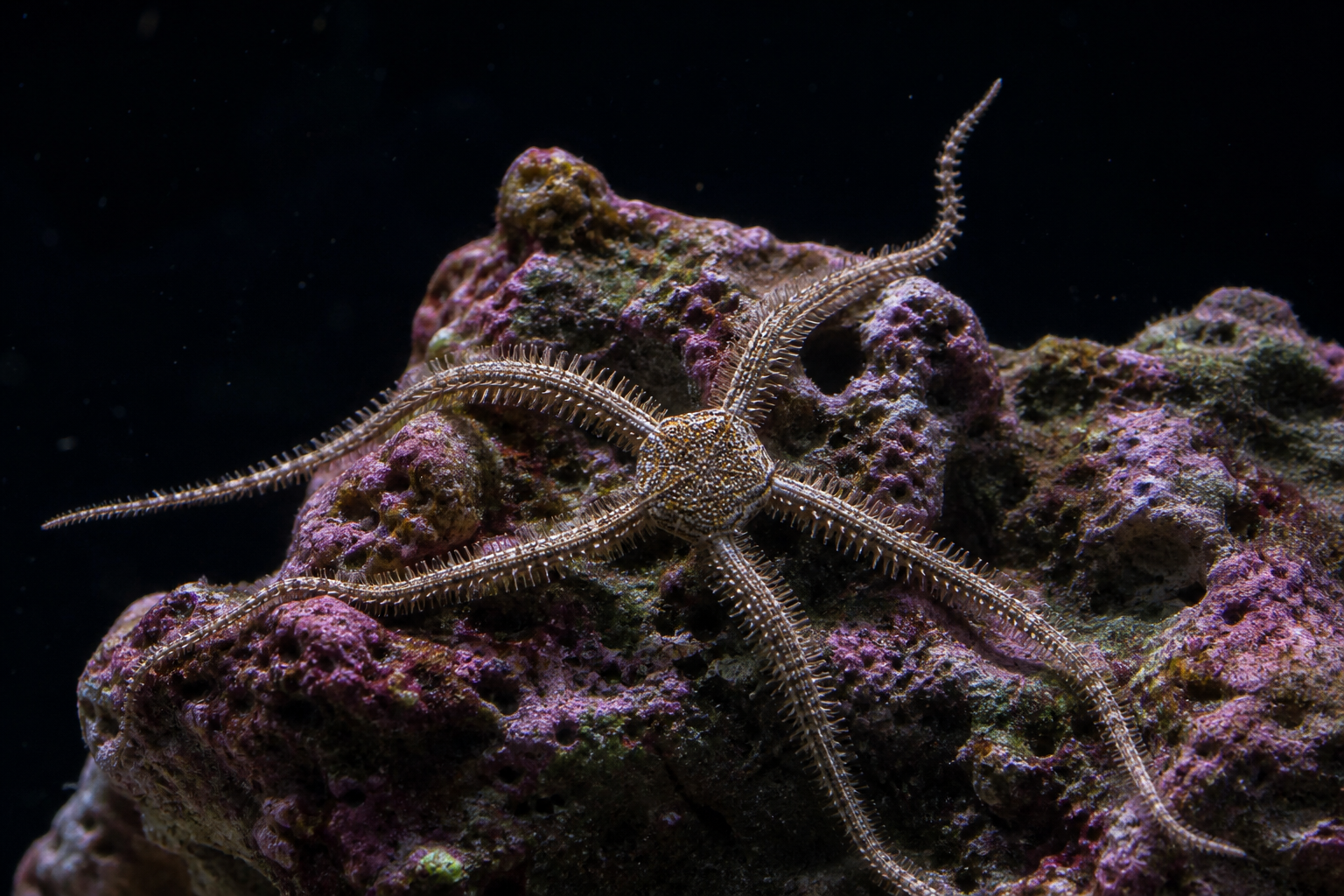
Overview
The Sand-Sifting Starfish is one of the most misunderstood invertebrates in reef aquariums. It’s often marketed as a helpful “sand cleaner,” and in the short term, it absolutely is. It plows through the substrate, turns the sand bright white, and makes the tank look spotless.
The problem is what happens after that.
Sand-sifting starfish don’t just clean sand—they consume the life within it. In most home aquariums, that food source is finite. Once it’s gone, the starfish slowly starves, even though it may look “fine” for months.
So the honest framing is this:
Sand-sifting starfish are effective sand cleaners and one of the most common slow-failure inverts in reef tanks.
They can work in very specific systems. In most reefs, they are a temporary solution with a permanent cost.
Quick Care Snapshot
Difficulty: Advanced (due to feeding sustainability)
Minimum tank size: 75 gallons (larger footprint strongly preferred)
Tank maturity: 9–12+ months minimum
Lighting: Not relevant
Flow: Moderate
Placement: Sandbed
Feeding: Natural sandbed microfauna (not target-fed)
Reef safe: With caution
Temperament: Peaceful
Biggest risk: Starvation after sandbed depletion
Natural Background
In the wild, sand-sifting starfish roam vast sandy areas filled with:
• worms
• micro-crustaceans
• detritus
• organic material
• microbial life
They ingest sand, digest the living material within it, and expel clean sand behind them.
In the ocean, this works because the food supply is effectively endless.
In an aquarium, it is not.
A closed sandbed cannot replenish microfauna fast enough to sustain one long-term in most systems.
Tank Requirements
Tank maturity is non-negotiable
Sand-sifting starfish should only be considered in tanks that have:
• a deep, established sandbed
• visible microfauna activity
• minimal recent disturbances to the substrate
• long-term stability
Young tanks—even if “cycled”—do not qualify.
Sandbed requirements (this is the core issue)
They require:
• a large sandbed footprint
• undisturbed zones
• a healthy population of sand-dwelling organisms
Shallow, decorative sandbeds are not sufficient.
Water stability
They are sensitive to:
• salinity swings
• temperature swings
• sudden changes in nutrient levels
Slow, stable conditions are critical.
Feeding
This is where most failures occur.
What they actually eat
Sand-sifting starfish feed on:
• worms
• pods
• microfauna
• organic material living in the sand
They do not reliably accept:
• frozen foods
• pellets
• target feeding
Once the sandbed is depleted, feeding them directly usually does not save them.
The starvation timeline
A common pattern:
• looks great for 3–6 months
• sand looks pristine
• microfauna population collapses
• starfish slowly declines
• sudden death blamed on “random causes”
This is not random. It’s starvation.
Compatibility
With reef tanks
They are peaceful and don’t bother corals directly.
With sandbed ecosystems
This is the real compatibility issue:
• they compete with and consume beneficial sandbed life
• they reduce biodiversity
• they can destabilize nutrient processing in the substrate
With fish and inverts
Fish ignore them. Other sandbed-dependent inverts may suffer indirectly from food depletion.
Common Mistakes
1) Buying one to “fix dirty sand”
It cleans sand by consuming the ecosystem that keeps sand healthy long-term.
2) Adding to small or young tanks
Even large tanks can be too small if the sandbed isn’t mature.
3) Assuming it can be target-fed
In most cases, it cannot.
4) Misreading slow starvation
They often look normal until the decline is advanced.
5) Using it instead of proper husbandry
Flow, stocking balance, and maintenance solve sand issues more sustainably.
Notes & Variations
“Is it reef safe?”
Technically yes—but ecologically disruptive in most reef tanks.
“Can it work long-term?”
Only in:
• very large systems
• with deep, expansive sandbeds
• where sand fauna can replenish faster than it consumes them
This is rare in home aquariums.
Better alternatives for sand maintenance
• balanced flow
• diverse cleanup crew
• sand-dwelling snails
• manual siphoning during maintenance
Final Thoughts
Sand-sifting starfish are one of those animals that reveal the difference between looking clean and being healthy.
They give immediate visual results, which makes them appealing—but they do so by quietly removing the foundation of a healthy sandbed. In most home reefs, that tradeoff isn’t worth it.
If your goal is a thriving, biodiverse reef, this is an animal that requires serious thought and very specific conditions. For most tanks, it’s better to pass.