Overview
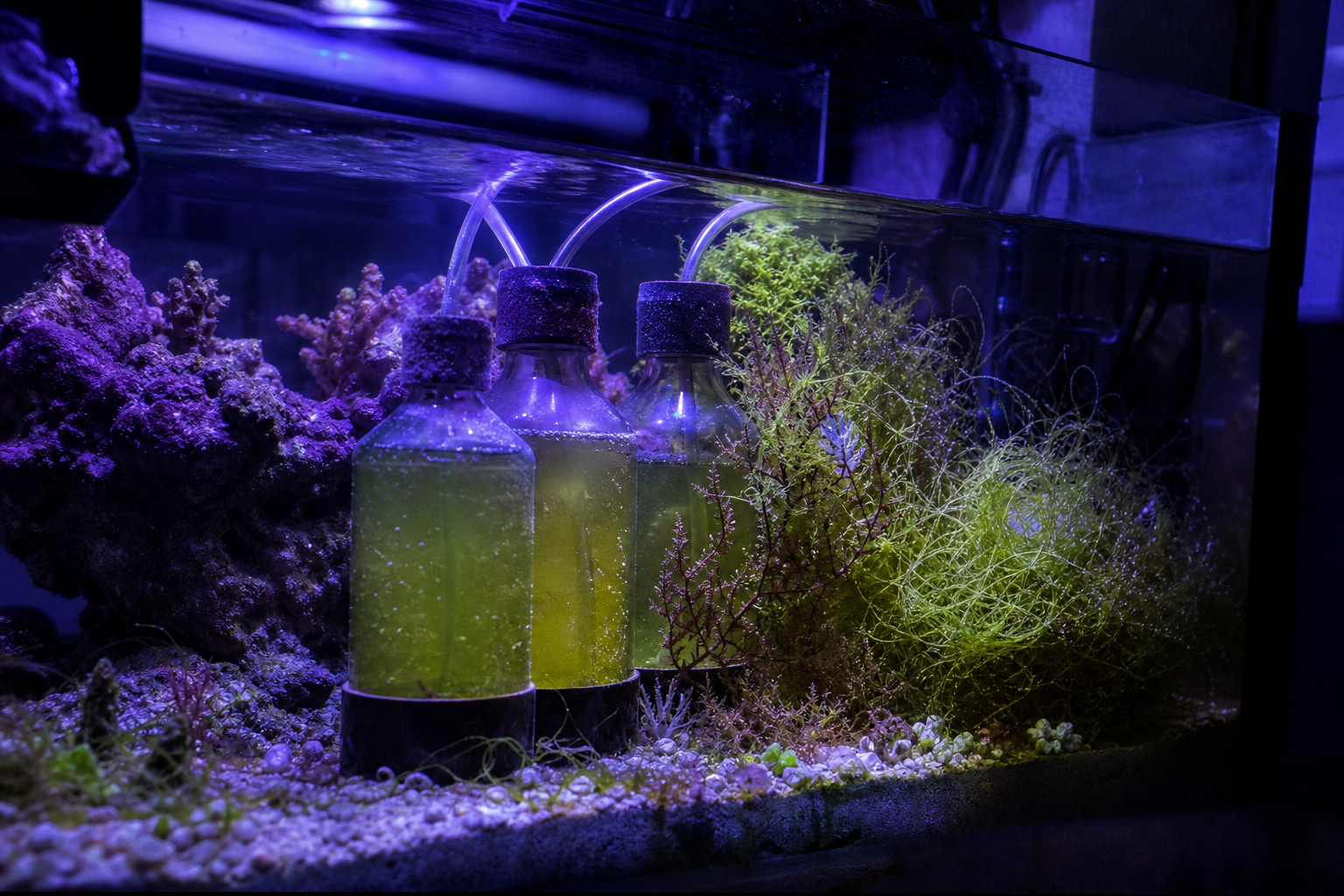
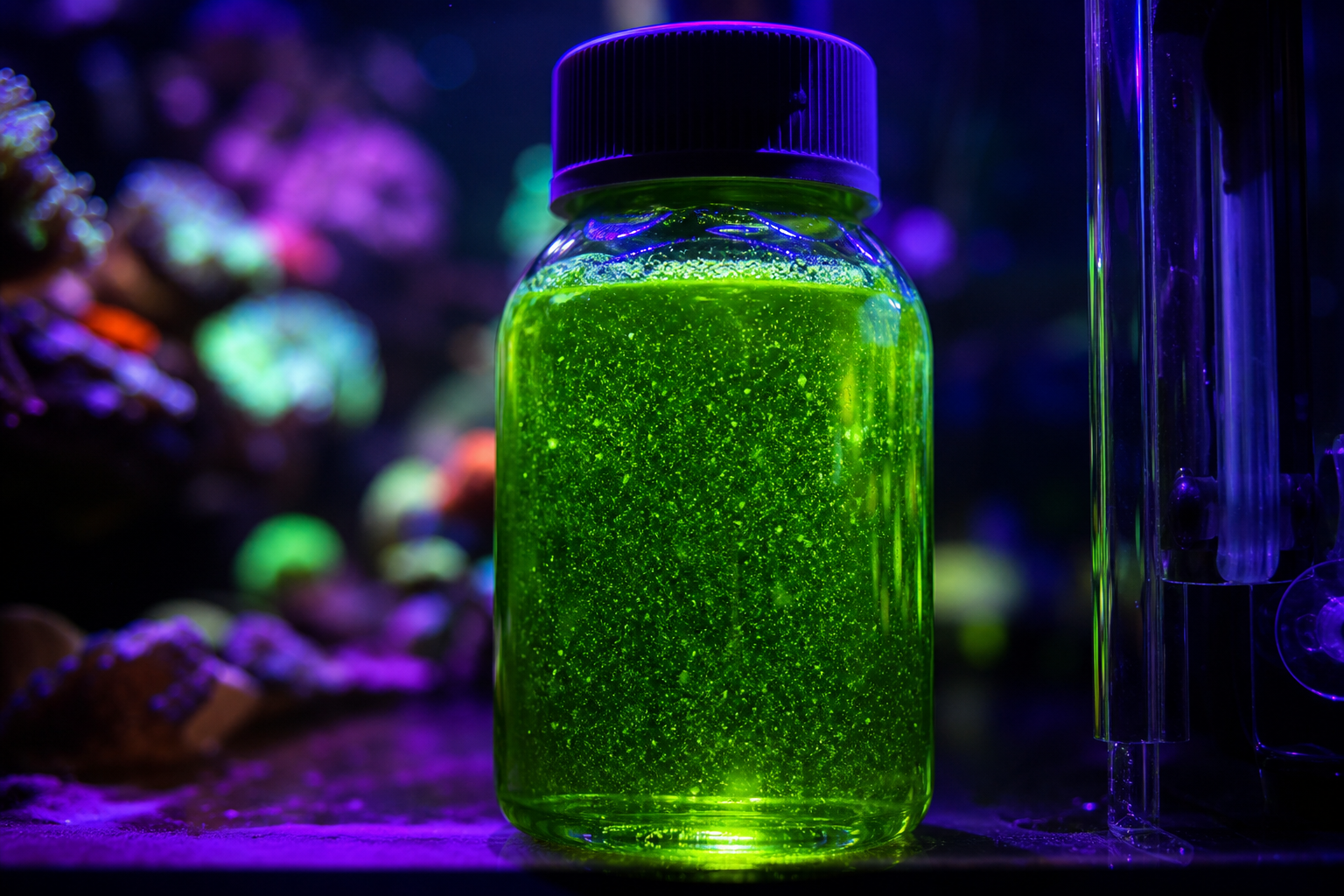
Phytoplankton is one of the most important living inputs you can add to a saltwater aquarium. Think of it as reef fuel, not livestock.
In a home aquarium, phytoplankton functions as:
• a primary food source for pods and filter feeders
• a nutritional supplement for certain inverts and corals
• a stabilizing input for the lower end of the food web
When used correctly, phyto supports a healthier, more resilient ecosystem. When used carelessly, it can cloud water, spike nutrients, or simply get wasted.
So the goal with phytoplankton isn’t “keeping it alive in the tank.”
The goal is using it intentionally to support the organisms that depend on it.
Quick Care Snapshot
Difficulty: Easy (but easy to misuse)
Tank size: Any size (dose scales with volume)
Tank maturity: Any, but most beneficial in established systems
Lighting: Not required in-display (only relevant for culturing)
Flow: Normal reef flow
Placement: Broadcast into water column
Feeding: This is the food
Reef safe: Yes, when dosed appropriately
Primary purpose: Feeding pods, filter feeders, and supporting biodiversity
Biggest risk: Overdosing and nutrient spikes
Natural Background
In the ocean, phytoplankton forms the base of the marine food web. It’s consumed by zooplankton, which are then eaten by larger organisms, and so on up the chain.
In reef aquariums, we don’t have that massive dilution and export capacity the ocean does—so while phyto plays the same role, we have to manage it with intention.
In practical terms:
• You’re not recreating the ocean.
• You’re supplementing a closed system.
Tank Requirements
The tank doesn’t need anything special — your mindset does
Phytoplankton doesn’t “live” long-term in most display tanks. It’s either:
• consumed,
• filtered out,
• or removed via skimming and export.
That’s normal.
What matters is whether your tank has:
• organisms that use phytoplankton (pods, filter feeders, some corals)
• enough export capacity to handle what isn’t consumed
Water parameters
Normal reef parameters are fine:
• Salinity: stable
• Temperature: stable
• Nutrients: monitored
If your tank already struggles with nitrate or phosphate control, phyto dosing should be conservative.
Feeding
This is where phytoplankton actually shines.
What phytoplankton feeds
Primarily:
• copepods
• amphipods
• other microfauna
Secondarily (depending on species and system):
• some filter-feeding inverts
• some corals (indirectly, via pod populations)
How often to dose
There is no universal schedule, but common successful approaches include:
• small daily doses
• or modest doses a few times per week
Consistency matters more than volume.
How to dose
• Add directly to the water column
• Many people dose when lights are off or dimmed (to reduce immediate export)
• Turn off UV temporarily if used, as it will neutralize phytoplankton
If your skimmer pulls dark green sludge shortly after dosing, that means:
• the phyto wasn’t consumed
• or the dose was too large
Compatibility
With reef tanks
Phytoplankton is generally safe for:
• mixed reefs
• nano tanks
• fish-only systems
As long as it’s dosed responsibly.
With pods
This is where phyto really earns its keep.
• Healthy pod populations almost always correlate with phyto availability.
• If you’re culturing or sustaining pods, phyto is foundational.
With corals
Some corals may benefit indirectly, but phyto is not a magic coral food. Its biggest value is ecosystem support, not instant polyp response.
With filtration
• Protein skimmers will remove phytoplankton
• Mechanical filtration will remove it
• UV sterilizers will kill it
This isn’t “bad,” it just means timing and dosing matter.
Common Mistakes
1) Treating phytoplankton like coral food
It’s primarily food web support, not a direct coral feeding solution.
2) Overdosing
More is not better. Excess phyto becomes:
• nutrient pollution
• skimmate
• cloudy water
3) Ignoring nutrient impact
Phyto still adds organic load. If nutrients climb, reduce dosing.
4) Expecting it to “fix” pod problems instantly
Phyto supports pod populations over time. It’s not an overnight switch.
5) Forgetting export
If nothing consumes it and nothing exports it, it accumulates.
Notes & Variations
Bottled vs cultured
From a tank-care perspective, both function the same way:
• the tank doesn’t care where the phyto came from
• it only cares how much is added and how often
Green water vs clear water
Clear water after dosing usually means:
• phyto was consumed
• phyto was exported
• or the dose was small (which is often fine)
Persistent green water usually means overdosing or insufficient export.
“Do I need phytoplankton?”
Not every tank needs it.
• If you don’t keep pods, filter feeders, or pod-dependent fish, it may offer little benefit.
• If you do, it can be a major quality-of-life improvement for the system.
Final Thoughts
Phytoplankton is one of those reef tools that rewards restraint. Used lightly and consistently, it quietly improves biodiversity, pod health, and system resilience. Used aggressively or blindly, it just becomes green waste.
The best way to think about phyto is this:
It doesn’t make your reef flashy — it makes it functional.
And long-term, functional reefs are the ones that thrive.