Overview
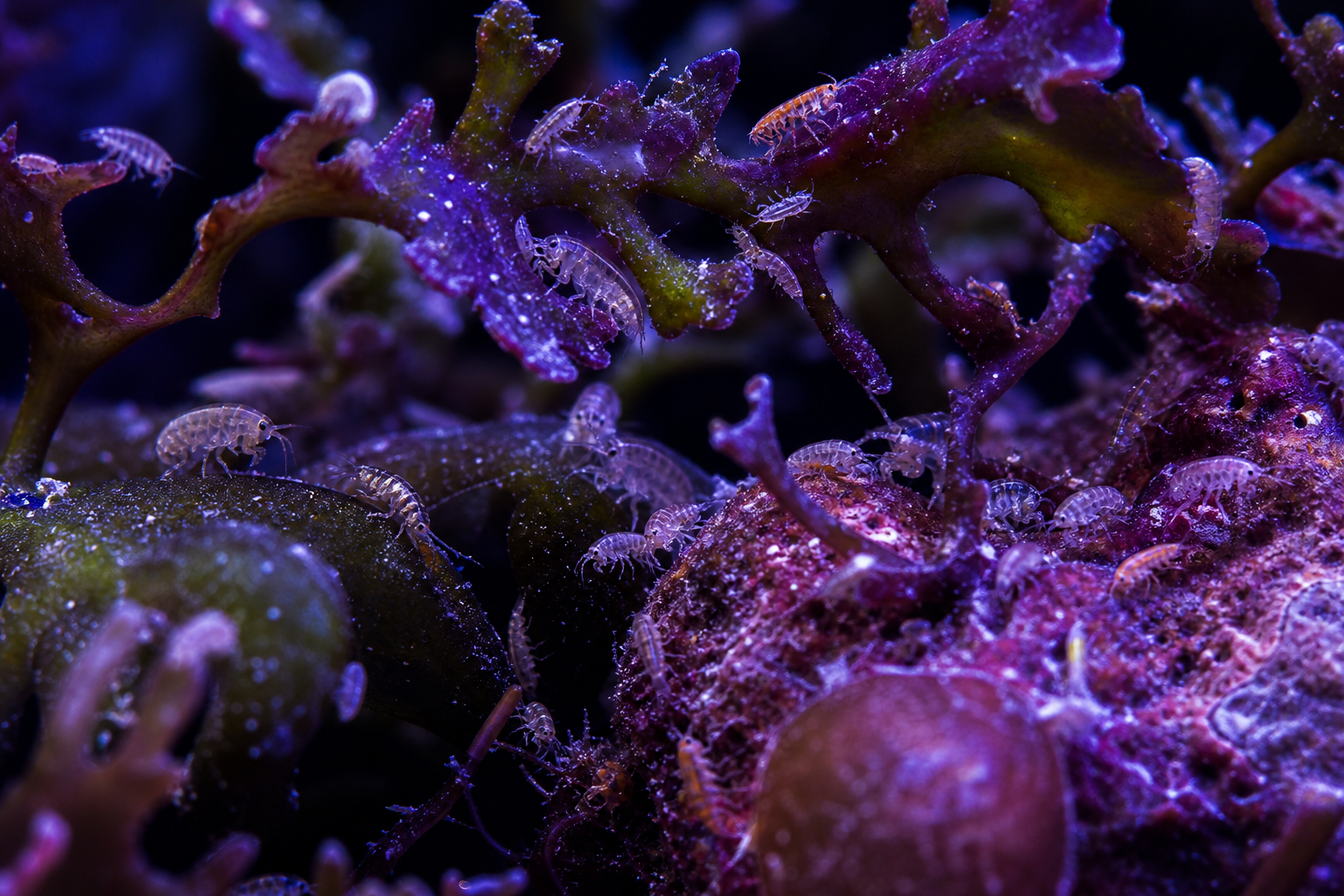
Amphipods are one of those reef inhabitants that do a lot of work without ever asking for attention. You’ll rarely see them front and center during the day, but they’re constantly active behind the scenes—cleaning, grazing, recycling nutrients, and serving as live food for fish.
In a healthy reef tank, amphipods are a sign of a functioning micro-ecosystem. They aren’t display livestock, and you don’t “place” them like a coral or an anemone. You support them, and they reward you by making the system more resilient and natural.
If you care about biodiversity, natural feeding behaviors, and long-term tank stability, amphipods are a net positive almost every time.
Quick Care Snapshot
Difficulty: Easy
Tank size: Any (nano to large systems)
Tank maturity: Best in established tanks
Lighting: Not relevant
Flow: Normal reef flow
Placement: Live rock, sandbed, refugium
Feeding: Detritus, biofilm, leftover food, algae
Reef safe: Yes
Primary role: Clean-up crew + live food source
Biggest risk: Starvation in ultra-clean systems
Natural Background
Amphipods are small crustaceans found throughout marine environments, especially in rock crevices, algae beds, and sediment. In the wild, they’re part of the reef’s recycling crew, breaking down organic material and converting it into usable energy higher up the food chain.
In aquariums, they occupy the same niche:
• scavengers
• grazers
• prey for fish and other predators
They thrive in places where food accumulates naturally—rockwork, refugiums, and sandbeds.
Tank Requirements
Stability matters more than parameters
Amphipods don’t demand special water chemistry. What they do need is:
• stable salinity and temperature
• oxygenated water
• places to hide and reproduce
Sudden tank crashes, medication use, or aggressive cleaning can wipe out populations quickly.
Habitat is key
Healthy amphipod populations depend on structure:
• porous live rock
• macroalgae
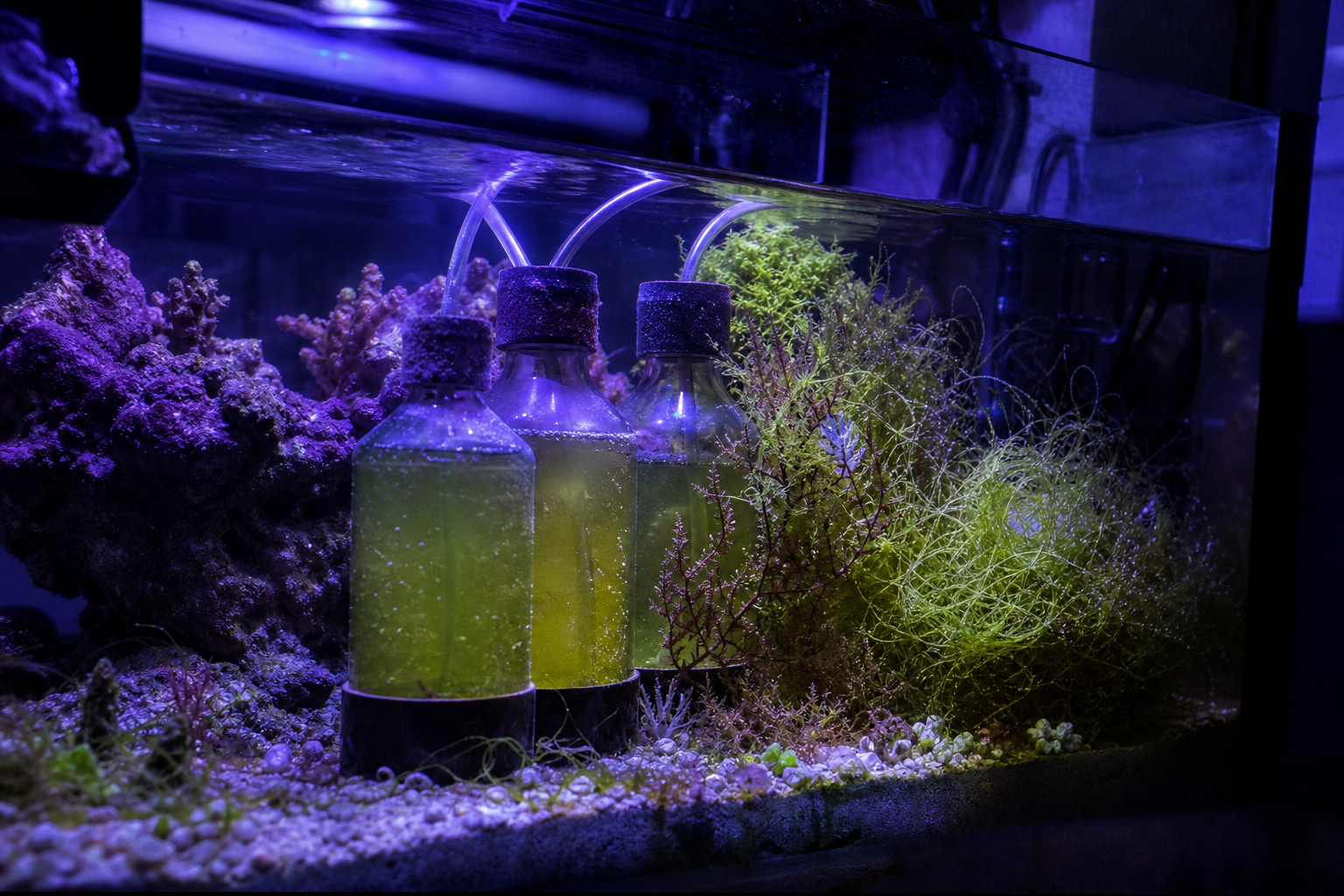
• refugiums
• rubble zones
Bare tanks with little micro-habitat tend to support fewer pods.
Nutrient balance
Amphipods do best in tanks that aren’t stripped sterile. If your tank has:
• some detritus
• light algae growth
• regular feeding
Feeding
Amphipods are not picky, and that’s part of their value.
What they eat
• detritus
• leftover fish food
• biofilm
• microalgae
• decaying organic matter
In most established tanks, they feed themselves.
Supplementing food
In very clean systems or refugiums designed for pod culture, populations can be supported by:
• regular fish feeding
• occasional phytoplankton dosing
• allowing some organic material to remain instead of over-cleaning
If amphipod numbers crash, starvation is often the cause.
Compatibility
With reef tanks
Amphipods are compatible with:
• mixed reefs
• fish-only systems
• nano tanks
They don’t harm corals or fish.
With fish
Many fish love amphipods as live food.
• wrasses
• mandarins
• dragonets
• small reef fish
This is normal and desirable, but heavy predation can keep populations low unless there’s a refuge area.
With inverts
Generally peaceful. Large predatory inverts may eat them, but amphipods don’t pose a threat to other livestock.
Common Mistakes
1) Expecting to “see” them all the time
Amphipods are mostly nocturnal. If you don’t see them during the day, that’s normal.
2) Over-cleaning the tank
Ultra-clean systems remove the food amphipods rely on.
3) Adding pod-eating fish without a refuge
If predators have access everywhere, populations can’t replenish.
4) Assuming amphipods fix nutrient problems
They help recycle waste, but they’re not a substitute for filtration or maintenance.
5) Panicking when populations fluctuate
Boom-and-bust cycles are normal, especially after changes in feeding or stocking.
Notes & Variations
Amphipods vs copepods
• Amphipods are generally larger and more visible.
• Copepods are smaller and more numerous.
• Both play important but slightly different roles in the food web.
Refugiums and amphipods
Refugiums are one of the best ways to maintain stable amphipod populations:
• fewer predators
• constant food
• safe reproduction zones
“Are they pests?”
In healthy reef tanks, amphipods are almost always beneficial. True “problem” cases are rare and usually tied to extreme population imbalances.
Final Thoughts
Amphipods don’t win beauty contests, but they win endurance events. They’re a quiet backbone of healthy reef systems, helping convert waste into life and supporting natural feeding behaviors in fish.
If your reef has amphipods thriving, it usually means you’re doing something right.