Overview
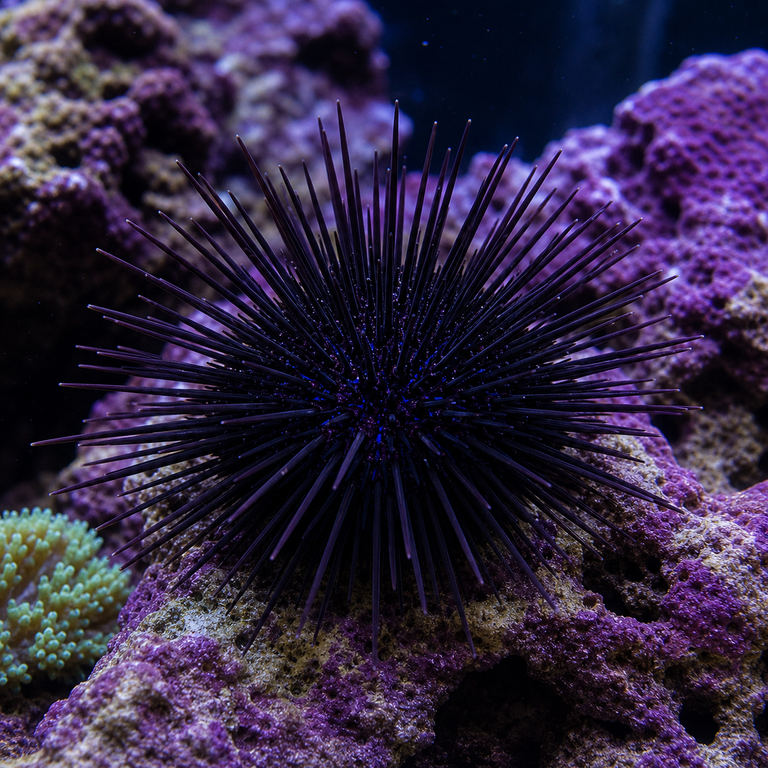
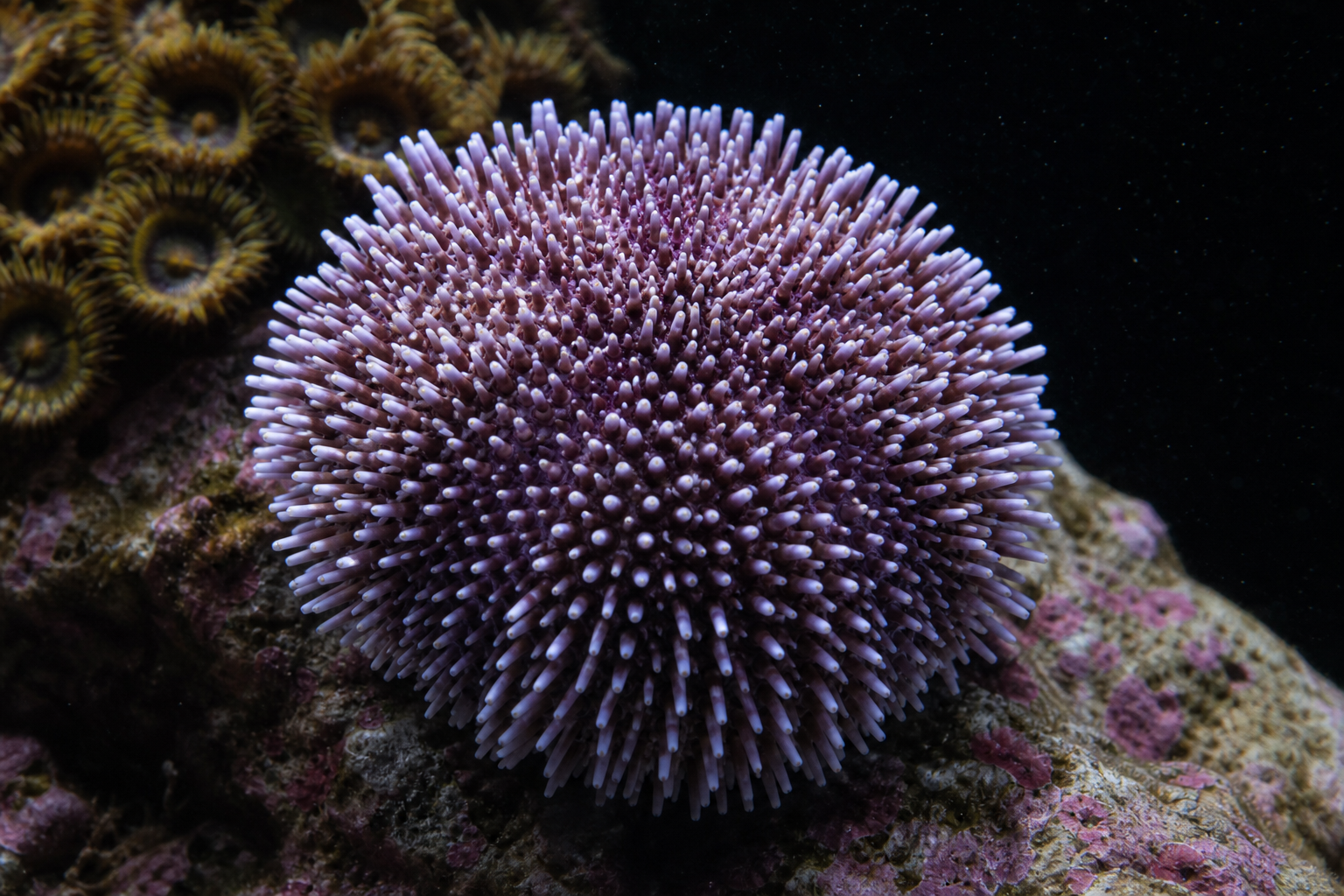
The Pincushion Urchin is one of the most reef-friendly urchins you can keep—and one of the easiest to underestimate. It’s small, round, and usually looks harmless… right up until you realize it can climb glass, squeeze into rockwork, and redecorate your reef if things aren’t secured.
Compared to larger, heavier urchins, pincushions are gentler grazers and generally much safer in mixed reefs. They’re excellent at controlling film algae and biofilm, and they tend to cause far less mechanical damage than bigger bulldozer-style urchins.
That said, they’re still urchins. They eat constantly, they have strength for their size, and they don’t understand aquascaping aesthetics. If you give them food and secure your tank, they’re one of the best low-drama algae grazers available.
Quick Care Snapshot
Difficulty: Easy
Minimum tank size: 20 gallons (larger is easier)
Tank maturity: 3–6+ months recommended
Lighting: Not critical
Flow: Moderate
Placement: Rockwork, glass, and hard surfaces
Feeding: Algae, biofilm, supplemental algae if needed
Reef safe: Yes, with minor caution
Temperament: Peaceful grazer
Biggest risk: Starvation in ultra-clean tanks, knocking over unsecured frags
Natural Background
Pincushion urchins live on shallow reefs where they graze constantly on algae and biofilm. Their short, dense spines provide protection without the leverage or destructive force of larger urchins.
In the wild, they:
• graze continuously
• climb over rocks and reef surfaces
• move freely across hard substrates
That behavior translates very well to aquariums, which is why they’re so commonly recommended for reef tanks.
Tank Requirements
Stability over precision
Pincushion urchins are tolerant of standard reef conditions as long as:
• salinity is stable
• temperature is stable
• oxygen levels are good
They don’t like sudden swings, but they’re not especially delicate.
Habitat
They do best in tanks with:
• ample rockwork
• algae-covered surfaces
• secure coral placement
Minimalist tanks with no grazing surfaces limit their usefulness.
Flow
Moderate flow is ideal:
• enough to keep algae growth healthy
• not so strong that it constantly dislodges the urchin
They can handle a range of flow, but extremes aren’t ideal.
Feeding
Pincushion urchins are constant grazers.
What they eat
• film algae
• turf algae
• biofilm
• some coralline algae
In many tanks, natural algae growth is enough—at least initially.
Supplemental feeding
In clean or mature systems where algae becomes scarce:
• provide dried algae sheets
• allow some algae to grow instead of scraping everything spotless
Starving urchins may:
• lose spines
• slow down
• decline quietly over time
Compatibility
With reef tanks
Pincushion urchins are among the most reef-safe urchins:
• they don’t sting corals
• they rarely damage coral tissue
However:
• they can knock over loose frags
• they can move small, unsecured items
With corals
Generally safe, but:
• secure frags well
• avoid balancing corals loosely on rock
They may graze algae near coral bases, which is usually harmless.
With fish
Fish ignore them.
With inverts
Peaceful with other inverts. No significant issues.
Common Mistakes
1) Adding one to an ultra-clean tank
No algae = no food.
2) Not securing frags
If it’s loose, it may get knocked over.
3) Assuming “small urchin = no impact”
They’re small, but persistent and strong.
4) Letting them starve quietly
Spine loss is often the first warning sign.
5) Expecting them to solve all algae problems
They help, but they’re not a replacement for proper nutrient management.
Notes & Variations
“It’s climbing the glass”
Normal behavior. They graze wherever algae exists.
“It’s eating coralline”
Yes—especially if other algae is scarce. This is normal grazing behavior.
Signs of health
Good signs:
• intact, dense spines
• steady movement
• consistent grazing
Red flags:
• spine loss
• lethargy
• shrinking body
• staying in one spot for long periods
Final Thoughts
Pincushion urchins are one of the best examples of a cleanup crew animal that actually fits mixed reef tanks. They’re effective without being destructive, active without being chaotic, and hardy without being careless.
As long as you feed them when algae runs low and secure your aquascape, they’re an excellent addition to most reef systems.