Overview
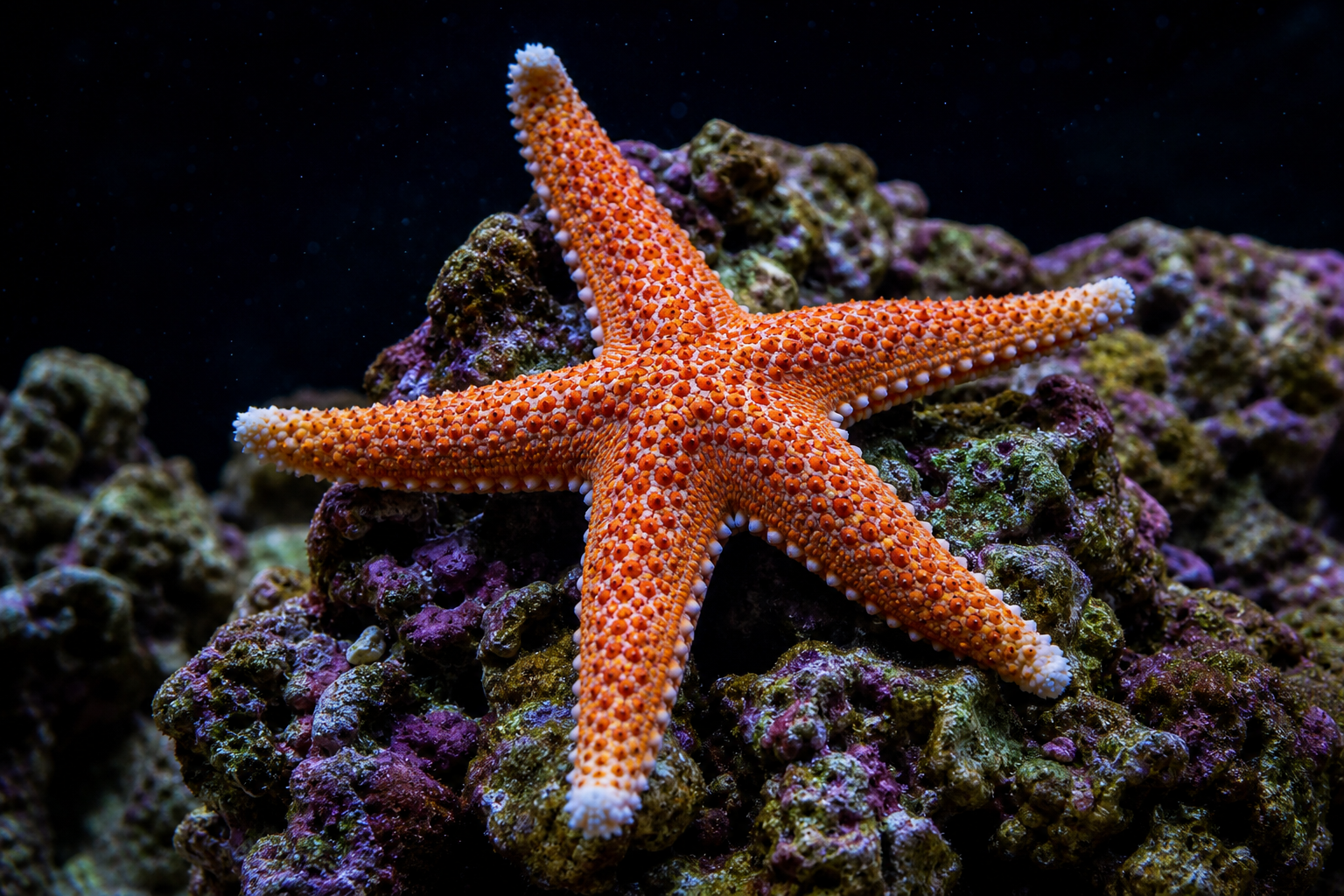
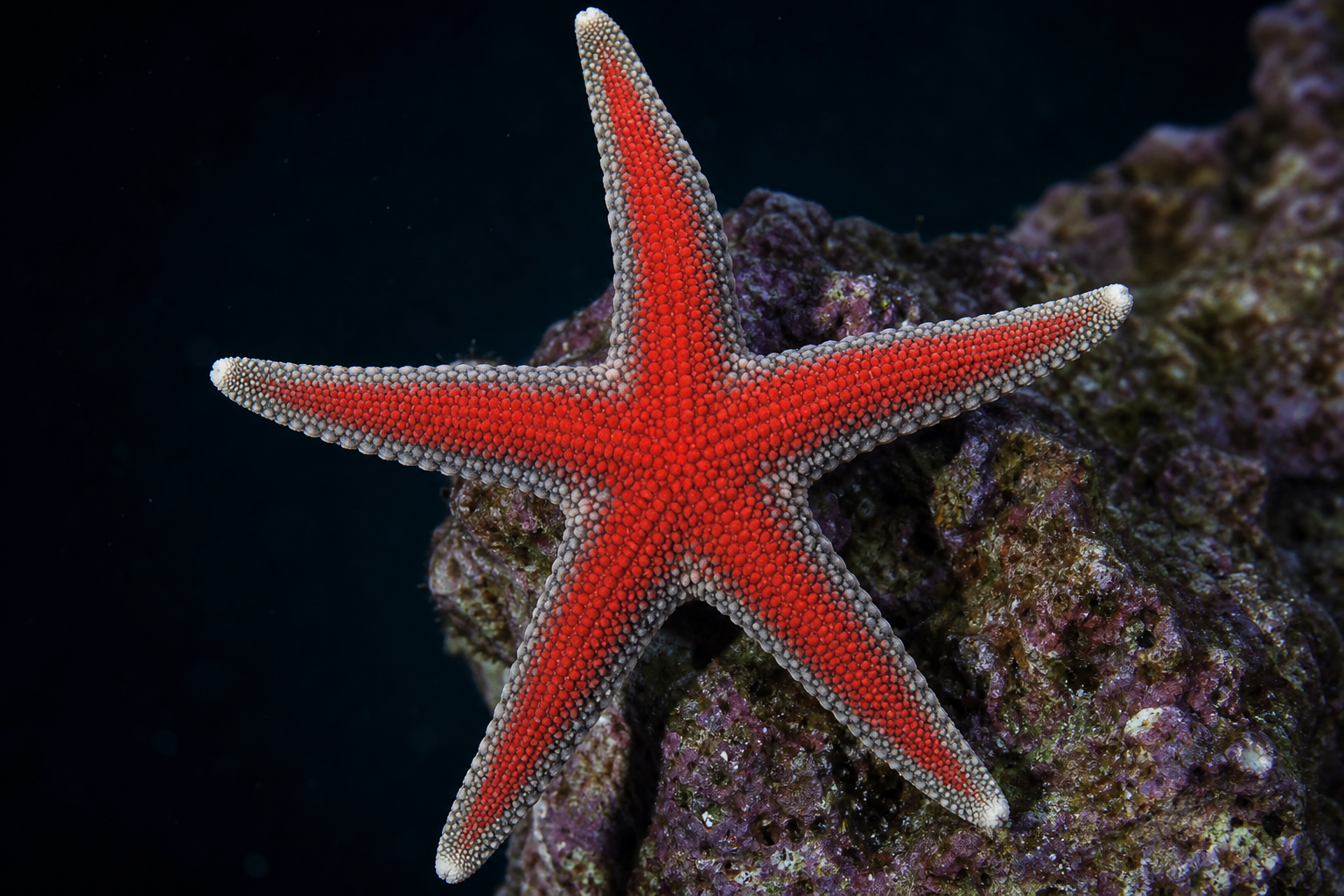
Fromia Starfish are some of the most visually appealing sea stars you’ll see in the reef hobby—bold colors, clean patterns, and that unmistakable “living artwork” look. They’re also one of the most misunderstood and frequently lost starfish kept in home aquariums.
The reason isn’t mystery or bad luck. It’s mismatch.
Fromia starfish are slow-feeding, specialized grazers that rely on mature reef surfaces and stable conditions. They don’t scavenge leftover food like brittle stars, and they don’t clean sand like sand-sifting stars. They quietly graze biofilms and microbial life on rock over long periods of time.
That makes them rewarding in the right system—and unforgiving in the wrong one.
Quick Care Snapshot
Difficulty: Advanced (due to feeding and stability requirements)
Minimum tank size: 75 gallons (larger, mature systems preferred)
Tank maturity: 9–12+ months strongly recommended
Lighting: Not critical
Flow: Moderate, indirect
Placement: Live rock and reef surfaces
Feeding: Natural biofilm and microfauna (not target-fed)
Reef safe: Yes
Temperament: Peaceful
Biggest risk: Starvation in immature or ultra-clean tanks
Natural Background
In the wild, Fromia starfish inhabit reef environments where rock surfaces are coated in a complex mix of:
• microbial films
• sponges
• algae films
• organic matter
They move slowly, grazing continuously. They are not opportunistic scavengers—they depend on what’s already growing on the reef.
In a closed aquarium, this means:
• food availability is limited by tank maturity
• over-clean systems are dangerous
• starvation is slow, silent, and often mistaken for “random death”
Tank Requirements
Tank maturity is non-negotiable
This is the single most important factor for Fromia success.
A suitable tank has:
• established live rock
• visible biofilm growth
• microfauna diversity
• long-term stability
Brand-new or aggressively cleaned tanks simply don’t provide enough food.
Water stability
Fromia starfish are sensitive to swings:
• salinity changes
• temperature swings
• alkalinity instability
They don’t tolerate rapid corrections well. Consistency matters more than hitting “perfect” numbers.
Flow
Moderate, indirect flow is ideal:
• enough to keep surfaces oxygenated
• not so strong that it constantly dislodges the starfish
Placement
Fromia should be placed on:
• established live rock
• reef surfaces with visible growth
Avoid placing them directly on sand where food availability is limited.
Feeding
This is where most Fromia starfish fail.
What they eat
Fromia primarily feed on:
• microbial films
• encrusting life on live rock
• naturally occurring reef surface growth
They do not reliably accept:
• meaty foods
• pellets
• target feeding
If a tank doesn’t already support this type of grazing, adding food usually doesn’t fix the problem.
Compatibility
With reef tanks
Fromia are reef safe and peaceful.
With corals
No stinging, no predation. They coexist well with corals.
With fish
Fish ignore them.
With inverts
Generally peaceful, but:
• aggressive crabs
• large predatory inverts…can harass or damage them.
Competition
In tanks with many biofilm grazers, food competition can become an issue over time.
Common Mistakes
1) Adding to a young tank
Even “cycled” tanks are often too new.
2) Assuming they eat leftover food
They don’t behave like scavengers.
3) Keeping them in ultra-clean systems
Over-skimming, heavy filtration, and constant scrubbing remove their food source.
4) Misreading slow starvation
Fromia often look “fine” for months before declining rapidly.
5) Handling or exposing to air repeatedly
They are sensitive to stress and rough handling.
Notes & Variations
Signs of health
Good signs:
• slow, steady movement
• intact arms with no lesions
• consistent activity over weeks and months
Red flags:
• shrinking arms
• white or eroded patches
• lack of movement for extended periods
• sudden limb loss
Acclimation matters
Slow acclimation is critical. Rapid salinity changes are especially dangerous.
“Can they recover?”
Sometimes—but once starvation damage sets in, recovery is difficult. Prevention is far more reliable than rescue.
Final Thoughts
Fromia starfish are not beginner cleanup crew. They’re indicator animals that tell you whether your reef is mature enough to support specialized grazers.
When kept in a large, established, biologically rich system, they can live for years and add quiet beauty to the reef. When kept in new or overly polished tanks, they slowly starve—often without obvious warning signs.
If you’re patient, deliberate, and honest about your tank’s maturity, Fromia can be a success. If not, they’re best admired from afar.