Overview
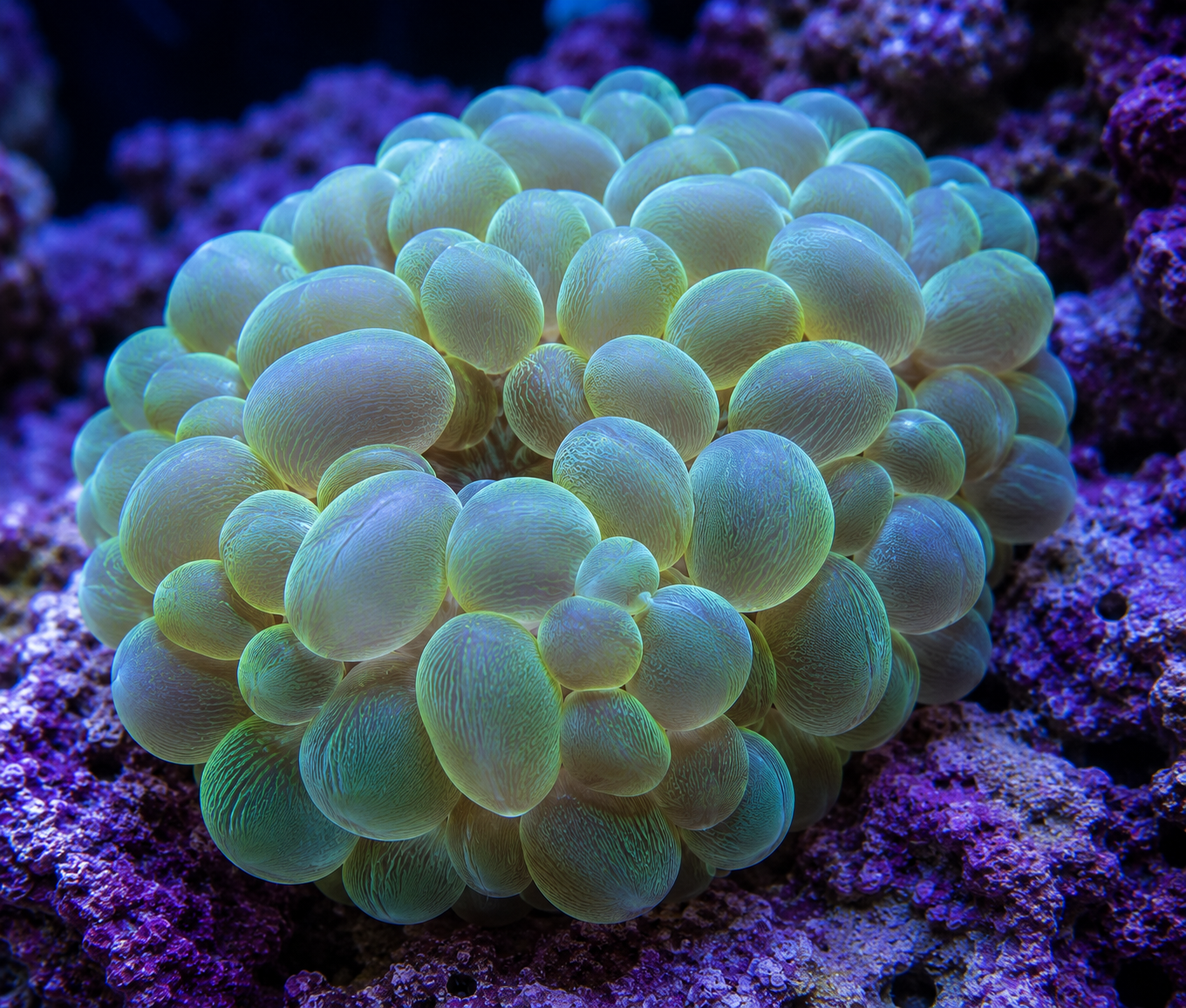
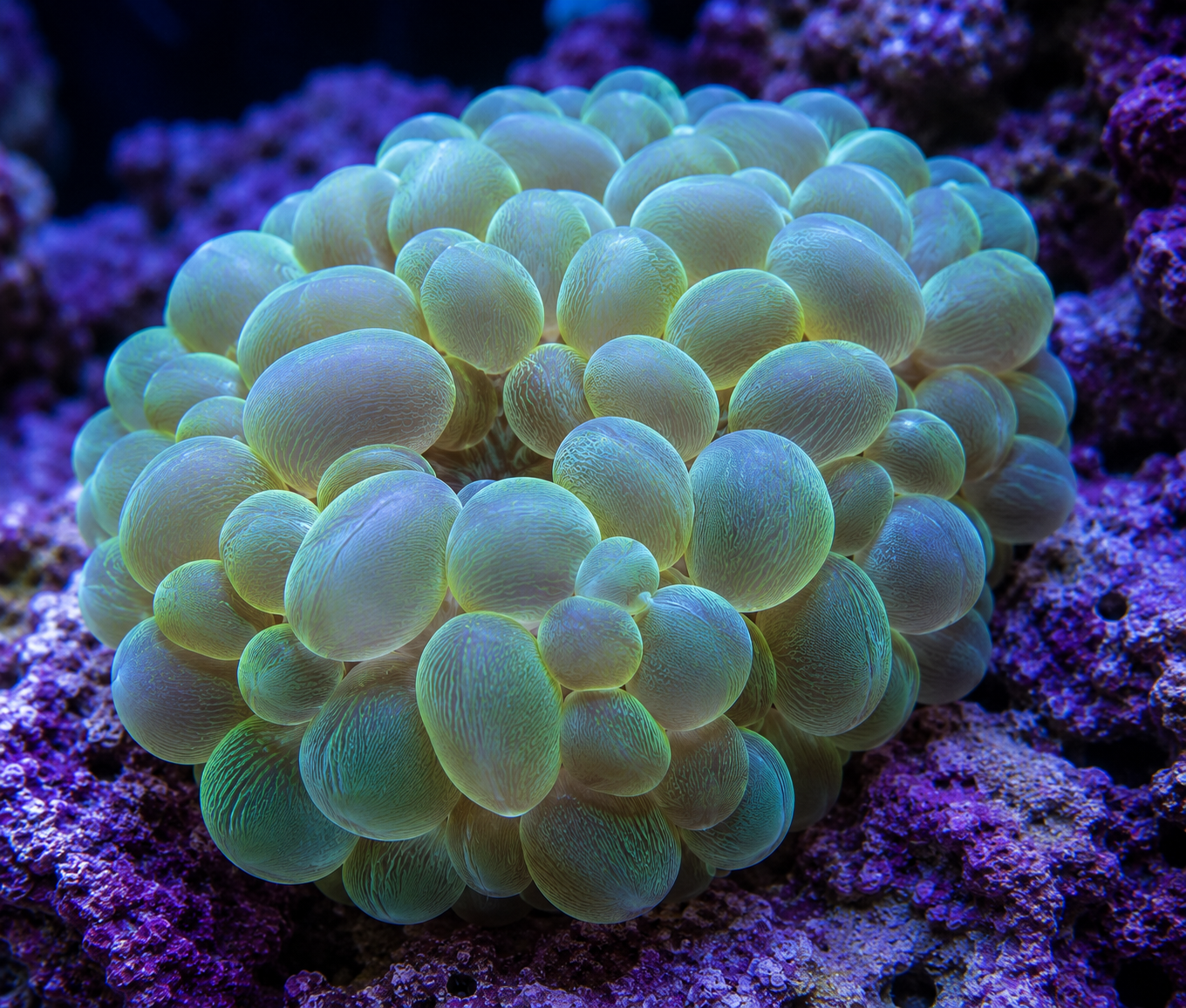
Bubble coral stands out because it does not really look like much else in a reef tank. When it is open, the inflated bubbles are the whole point. When it is unhappy, those same bubbles quickly show stress from flow, sand, or handling.
It is not a coral that likes rough treatment.
Quick Care Snapshot
- Difficulty: Moderate
- Lighting: Low to moderate
- Flow: Low, gentle, indirect
- Placement: Low to mid, protected from bumps and sand
- Feeding: Optional but acceptable in small amounts
- Main risk: physical damage and nighttime stinging
Tank Requirements
Bubble coral usually does best with:
- a calm placement zone
- no strong direct flow
- stable salinity and temperature
- enough room to expand and send out sweepers
If the tissue is always getting pushed hard, the coral usually tells you fast.
Placement And Compatibility
This coral needs more personal space than people think.
Good placement usually means:
- no sharp rock rubbing on the tissue
- no sand blowing across it
- enough room from neighbors, especially at night
- a spot where it can expand naturally
Common Mistakes
- Putting it in stronger flow than it can handle
The tissue is easy to irritate.
- Letting sand or rubble hit it repeatedly
Physical irritation adds up.
- Crowding it with nearby corals
Nighttime sweepers matter.
- Touching or moving it too much
Calm placement works better.
Final Thoughts
Bubble coral is unusual but not especially mysterious. Give it a calm spot, stable water, and room, and it usually tells you the rest.