Overview
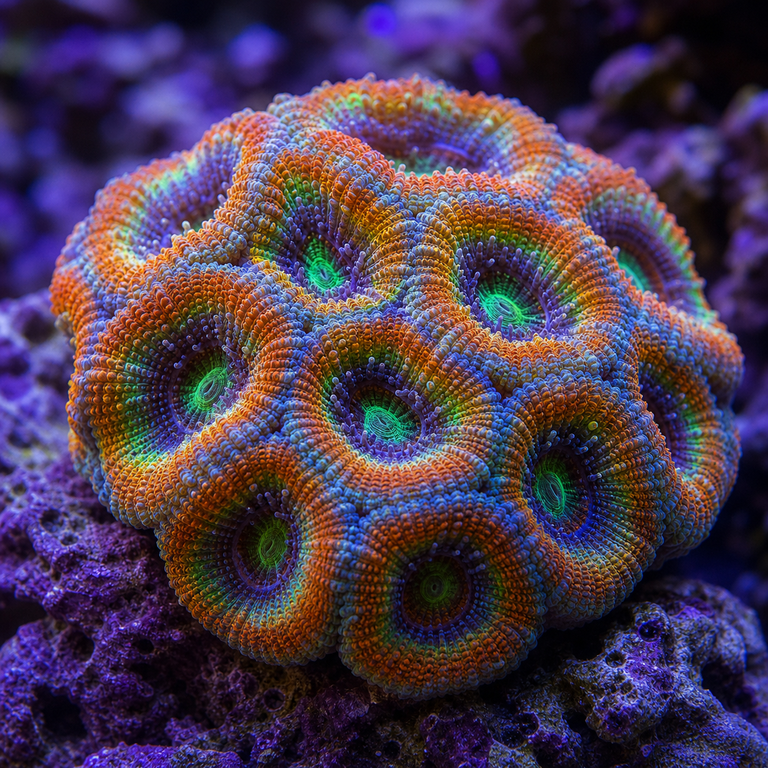
Acan corals are popular because they are colorful, fleshy, and fairly manageable once the basics are right. They are not the hardest LPS corals by a long shot, but they do best when the tank is stable and the flow is not beating on them.
They also tend to respond well to feeding, which makes them enjoyable to keep.
Quick Care Snapshot
- Difficulty: Easy to moderate
- Lighting: Low to moderate
- Flow: Low to moderate, indirect
- Placement: Low to mid in many tanks
- Feeding: Helpful but not mandatory
- Main risk: tissue stress from rough flow or crowding
Tank Requirements
Acans usually do best with:
- stable salinity and temperature
- gentle flow that lets polyps stay full
- moderate nutrient levels
- enough space from aggressive neighbors
If they stay shrunken, the first things to question are flow, placement, and stability.
Placement And Feeding
Good placement usually means:
- no sand constantly landing on the tissue
- no direct blast from a powerhead
- enough room for the colony to expand
Small target feedings can help with growth, but overdoing it can just make maintenance harder.
Common Mistakes
- Putting them in stronger flow than they want
Puffy tissue does not like being pushed around.
- Packing them too close to other LPS corals
Space still matters.
- Confusing easy with indestructible
Stability still matters.
- Overfeeding because they take food well
More is not always better.
Final Thoughts
Acans are one of the better LPS choices if you want color and visible feeding response without stepping into especially difficult coral care.