Overview
The Serpent Star is one of the most useful and least flashy invertebrates you can add to a reef tank—and that’s exactly why it works so well.
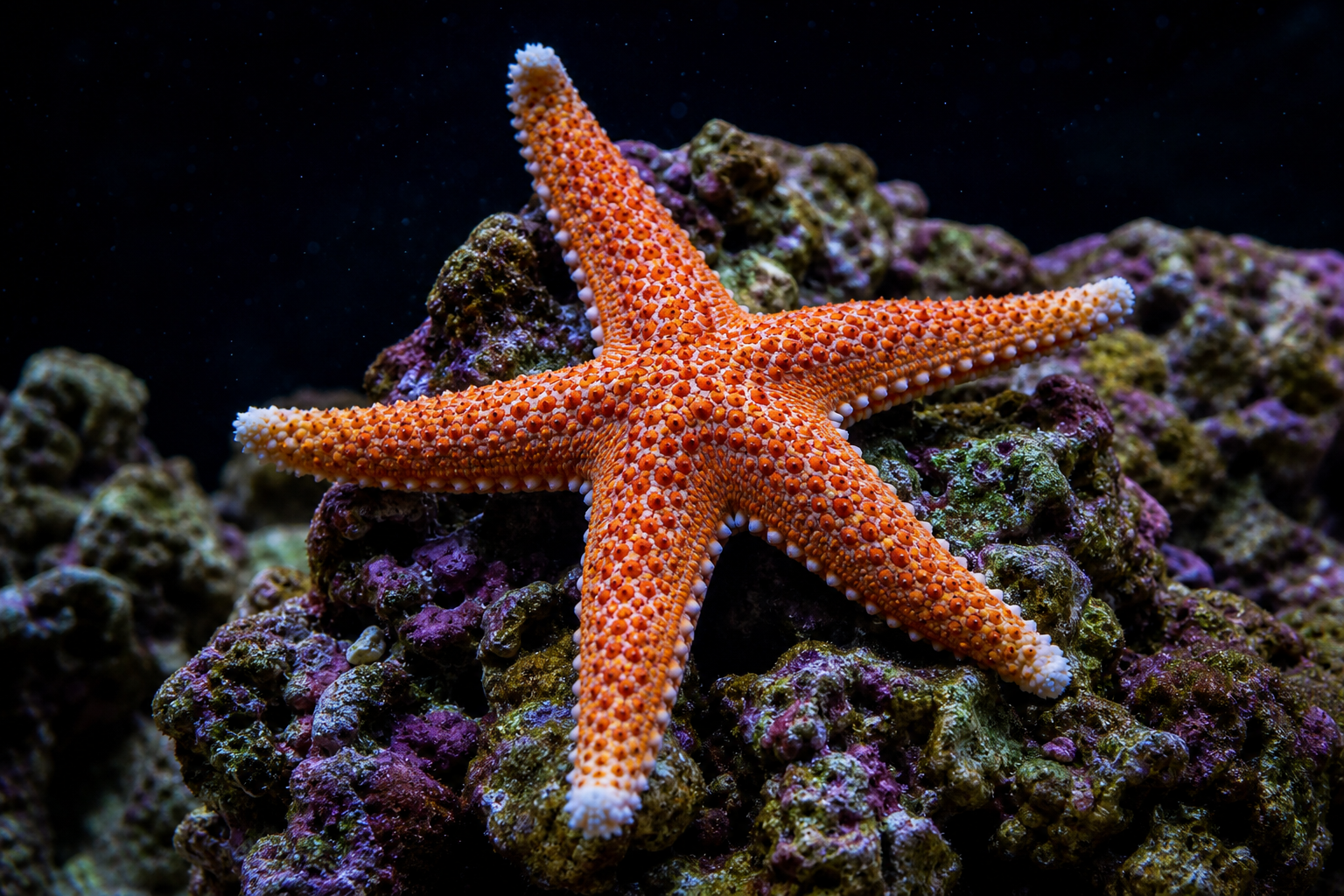
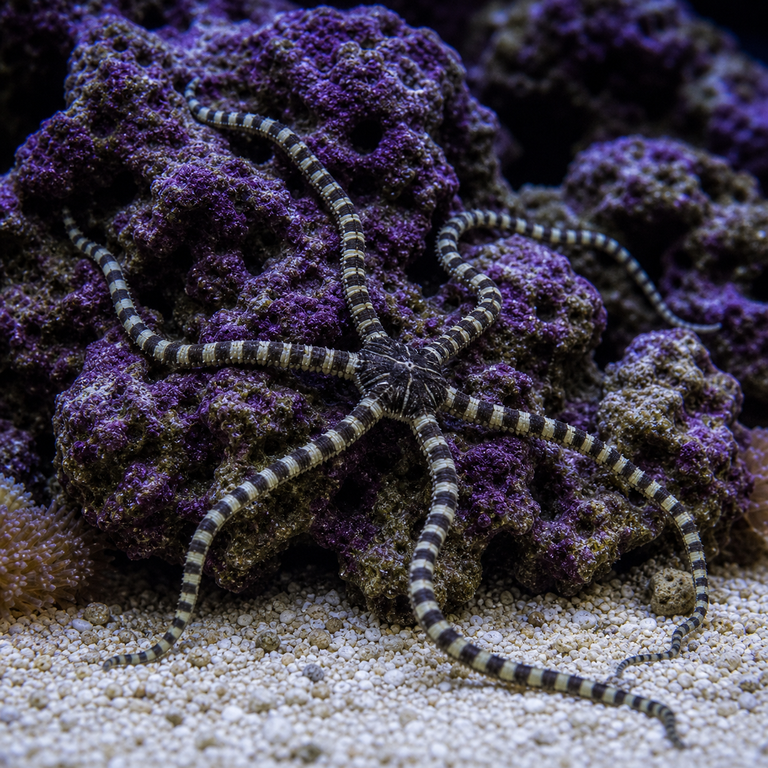
Unlike decorative starfish that slowly graze and quietly starve, serpent stars are active scavengers. They hide in rockwork during the day, extend arms at night (or feeding time), and help clean up leftover food before it becomes a nutrient problem.
They’re not sand cleaners. They’re not display animals. They’re reef janitors—and very good ones when used appropriately.
If you want an invertebrate that contributes to tank health without demanding special care, serpent stars are usually a solid, low-drama choice.
Quick Care Snapshot
Difficulty: Easy
Minimum tank size: 30 gallons (bigger is better)
Tank maturity: Any, best in established systems
Lighting: Not relevant
Flow: Moderate
Placement: Rockwork and crevices
Feeding: Leftover food, meaty scraps, detritus
Reef safe: Yes (with size awareness)
Temperament: Peaceful scavenger
Biggest risk: Starvation in ultra-clean tanks or predation in very small tanks
Natural Background
In the wild, serpent stars live tucked into reef crevices, extending their long arms to capture food drifting by. They are opportunistic scavengers, not grazers.
That natural behavior translates well to aquariums:
• they hide during the day
• they become active during feeding
• they respond quickly to food cues
They play a role similar to brittle stars, but serpent stars tend to be thicker-bodied and slower-moving, which makes them easier to manage in reef tanks.
Tank Requirements
Stability over specifics
Serpent stars are tolerant of a wide range of normal reef conditions, as long as:
• salinity is stable
• temperature doesn’t swing
• oxygen levels are reasonable
They don’t like sudden changes or aggressive treatments.
Habitat
They need:
• rockwork with crevices
• shaded areas to hide
• access to food falling into the rock structure
Bare tanks with minimal structure are not ideal.
Flow
Moderate flow works well:
• enough to deliver food particles
• not so strong that it dislodges them from hiding spots
They’re flexible here, but extreme flow can keep them stressed.
Feeding
Serpent stars are scavengers, not sand sifters or biofilm grazers.
What they eat
• leftover fish food
• meaty scraps
• detritus
• sinking foods
In most reef tanks, they feed themselves naturally.
Supplemental feeding
In very clean systems or lightly stocked tanks, you may need to:
• occasionally target-feed a small sinking meaty food
• ensure food reaches the rockwork where they hide
If you never see arms reaching out during feeding time, food availability may be too low.
Compatibility
With reef tanks
Serpent stars are generally reef safe and do not bother corals.
With fish
They coexist peacefully with fish. Healthy fish are not at risk.
With inverts
Usually peaceful with other inverts.
Important note:
• Very large serpent stars can opportunistically grab extremely small or weak animals.
• This is rare and usually associated with oversized individuals in small tanks.
Size and context matter.
Common Mistakes
1) Expecting it to clean sand
Serpent stars live in rockwork and clean leftovers—not sand.
2) Adding to ultra-clean tanks
No food = slow starvation.
3) Assuming you’ll see it all the time
They are mostly nocturnal and shy.
4) Overstocking in small tanks
Large individuals need space and sufficient food.
5) Confusing serpent stars with other starfish
They behave very differently than grazing or sand-sifting species.
Notes & Variations
Serpent star vs brittle star
• Serpent stars: thicker arms, slower, better scavengers
• Brittle stars: thinner arms, faster, more active
Both can be useful, but serpent stars tend to be more predictable.
Signs of health
Good signs:
• arms extend during feeding
• body stays hidden and intact
• consistent activity over time
Red flags:
• shrinking arms
• lack of movement for long periods
• visible damage or missing limbs without regrowth
Regeneration
Serpent stars can regenerate lost arms if conditions are good.
Final Thoughts
Serpent stars are a great example of “boring done right.” They don’t add color or drama, but they quietly improve tank hygiene and stability by cleaning up what other animals miss.
If your reef is lightly stocked, heavily filtered, or already very clean, they may struggle. But in most mixed reefs with regular feeding, they earn their keep.