Overview
Mantis shrimp (Stomatopoda) are one of the most famous reef hitchhikers — half nightmare, half legend. They’re not actually shrimp; they’re stomatopods, a group of insanely capable predators with lightning-fast strikes and complex behavior. In a reef tank, they usually show up the same way: you start noticing mysterious clicking sounds, missing snails or hermits, and a cleanup crew that keeps “disappearing.”
Here’s the thing: mantis shrimp are incredible animals. They’re intelligent, interactive, and honestly fascinating to keep. But they’re usually considered a pest in a mixed reef because many species will hunt inverts, and some can damage small fish or crack shells.
So the practical hobbyist take is:
• Amazing animal
• Wrong place (most of the time) for a standard reef display
Quick Care Snapshot
Common Name: Mantis Shrimp
Scientific Name: Stomatopoda (order; many species)
Reef Safe: No (predatory; can kill inverts; some risk to fish)
Difficulty: Easy to keep, hard to catch
Temperament: Predatory, territorial
Activity: Often crepuscular/nocturnal, but many become bold
Diet: Meaty foods, snails, crabs, shrimp, small fish (species-dependent)
Main Signs: Clicking sounds, missing cleanup crew, shell piles
Best “Care” Goal: Remove from reef display (or keep in a dedicated tank)
Natural Background
Mantis shrimp live in burrows in reef rubble and rock, hunting with specialized arms designed for either:
• Smashing (breaking shells and hard prey)
• Spearing (snatching soft-bodied prey and fish)
They’re highly evolved hunters with excellent vision and fast reactions. In the ocean, they’re part of the reef’s predator web. In our tanks, they become the apex predator of the cleanup crew.
Most mantis shrimp enter reef tanks as hitchhikers in:
• Live rock
• Rubble bases
• Coral frags attached to rock chunks
Tank Requirements
A mantis shrimp doesn’t need anything special to survive in your reef tank other than:
• Rockwork with holes/crevices
• Food (which your tank provides in abundance)
They establish in:
• Rock piles
• Under ledges
• Deep crevices near the sand line
What they do to the rockwork
They often excavate and rearrange rubble, creating a “den” with a clear entrance. You might see:
• A specific hole they always retreat to
• Piles of shell fragments nearby
• Rubble pushed into a doorway
Feeding
Mantis shrimp are carnivores. They eat:
• Snails
• Hermits
• Small crabs
• Shrimp
• Meaty foods (chunks of seafood, frozen foods)
• Sometimes fish (depending on species)
Even if you feed the tank heavily, a mantis still hunts. Feeding doesn’t “satisfy” the predator instinct — it just keeps them healthy while they continue being a predator.
Compatibility
With corals
Most mantis shrimp don’t directly eat coral. But they can:
• Move rubble and undermine coral mounts
• Knock over frags
• Create stability issues in rock structures
With cleanup crew
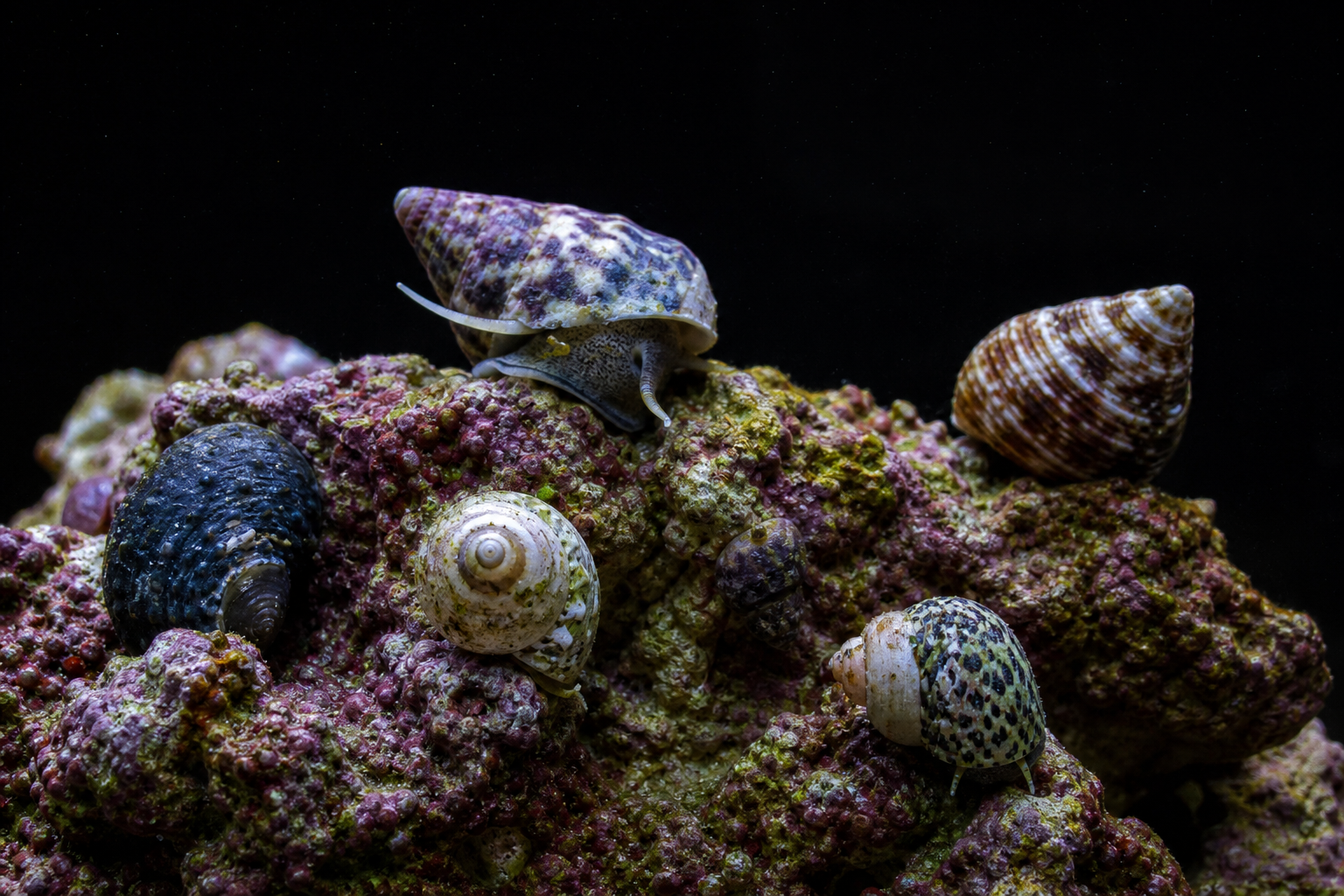
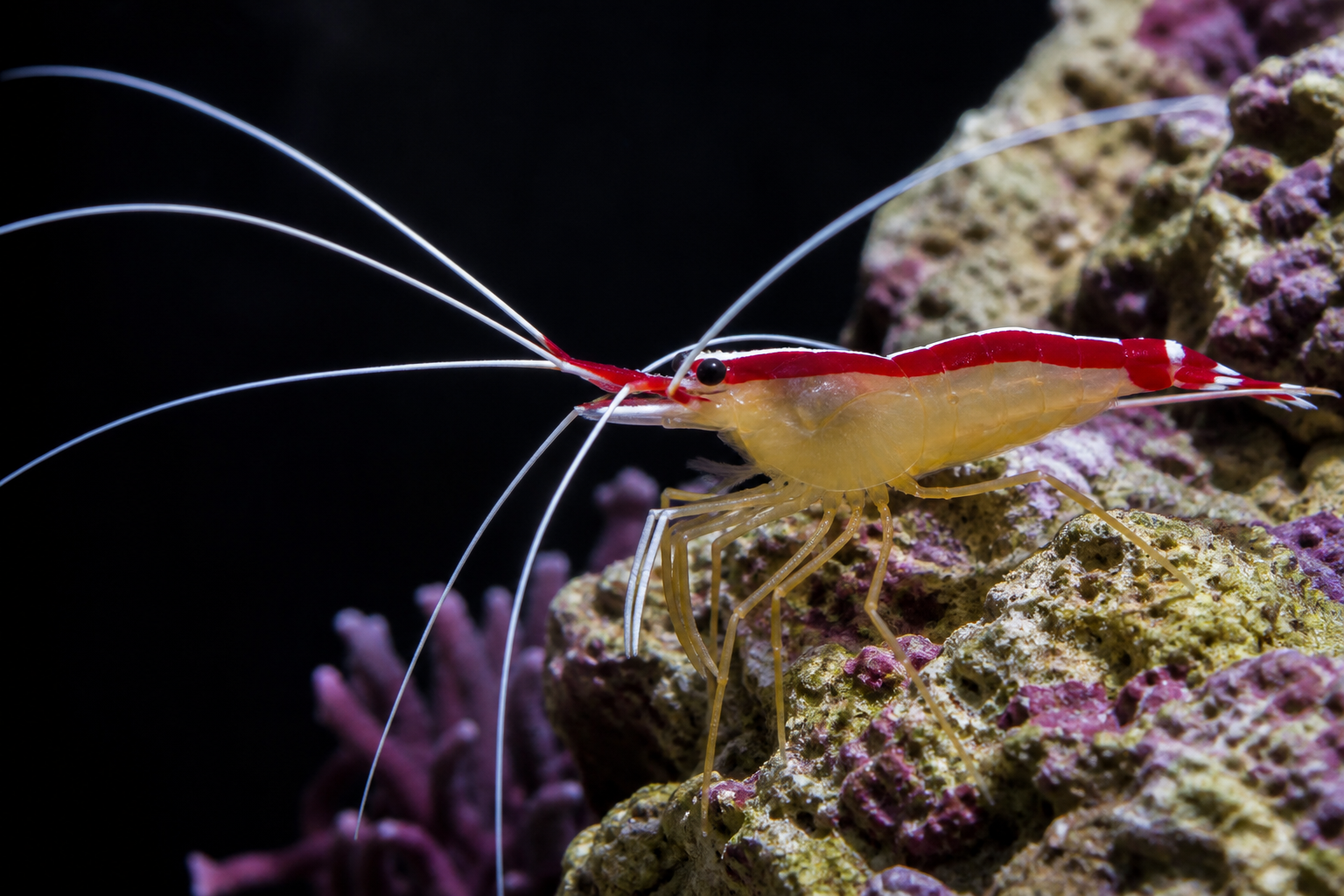
This is the main conflict. A mantis shrimp can wipe out:
• Snails
• Hermits
• Cleaner shrimp
• Small crabs
With fish
Species-dependent. Many mantis shrimp are more focused on inverts, but:
• Spearing types are more fish-oriented
• Even “smashers” may take small or sleeping fish if the opportunity is right
With other inverts
Assume anything slow-moving or shelled is at risk.
Common Mistakes
1) Assuming the clicking is “normal tank sounds”
Reef tanks make noise, sure — but repetitive, sharp clicking (especially at night) paired with missing inverts is a big red flag.
2) Blaming fish for missing snails
People often blame wrasses, crabs, or “snails just dying.” If you’re finding empty shells, cracked shells, or a disappearing cleanup crew, consider a hidden predator.
3) Waiting until the population crash
The earlier you deal with it, the easier it is. Once a mantis is deep in the rockwork and fully established, removal becomes a real project.
4) Destabilizing your rockwork in a panic
Trying to rip rock apart quickly can damage corals and cause a mini-disaster. If you’re going to remove it, do it methodically.
5) Thinking it’s always “bad”
They’re not evil — they’re predators doing predator things. The mistake is keeping a predator in a community tank not designed for it.
Notes & Variations
Signs hobbyists use to confirm
• Clicking sounds (especially after lights out)
• Missing snails/hermits
• Shell piles near a specific rock
• A consistent burrow entrance
• Seeing a fast, confident “peek” from a hole
Smashing vs spearing (practical difference)
• Smashers: more likely to break shells and kill snails/crabs
• Spearers: more likely to ambush fish and shrimp
In many reef hitchhiker situations, people are dealing with a smasher-type, but you shouldn’t assume.
Keeping one on purpose
Plenty of hobbyists keep mantis shrimp intentionally — just usually in a species tank, because they’re too capable for a mixed reef.
Final Thoughts
Mantis shrimp are one of the few “pests” that are actually so cool people end up falling in love with them. But in a mixed reef, the math is simple: you built a peaceful community tank, and you accidentally introduced a specialized predator.
So you’ve got two good paths:
• Remove it from the display to protect your livestock
• Or commit to it as a featured animal in its own setup later