Overview
Majano anemones are one of those classic reef-tank hitchhikers that look kind of cute… right up until they don’t. They’re small, hardy anemones that can pop up on frag plugs and live rock, often in shaded cracks or along the edges of rockwork. In a reef aquarium, they’re considered a pest anemone because they can sting corals, spread over time, and compete for space.
Majanos are also frustrating because they don’t always look “evil.” Some have a bubbly, compact look that makes people hesitate. That hesitation is usually what lets them establish.
If you see one, treat it like you’d treat Aiptasia: early action beats later regret.
Quick Care Snapshot
Common Name: Majano Anemone
Scientific Name: Anemonia sp. (commonly referred to in the hobby as “majano”)
Reef Safe: No (stings corals; can spread)
Difficulty: Easy to keep, difficult to eradicate once established
Temperament: Aggressive stinger (for its size)
Lighting: Tolerant (low to high)
Flow: Moderate preferred (adaptable)
Diet: Photosynthetic + opportunistic feeder
How It Spreads: Budding / splitting, fragmentation
Best “Care” Goal: Containment and removal, not long-term husbandry
Natural Background
In the wild, small anemones like this live on rock surfaces where they can capture passing food and benefit from light. Like many cnidarians, majanos typically host symbiotic algae, so they can gain energy from light — but they’ll also take advantage of feeding in the water column.
In our tanks, they behave like a tough little opportunist: they settle into cracks, grab food, and slowly claim real estate.
Tank Requirements
Majanos don’t need special parameters. They’re successful in reef tanks because they tolerate the same conditions we aim for with corals.
They tend to thrive when:
• There are plenty of small crevices and protected spots
• The tank has regular feeding
• Nutrients and micro-food are available (even in “clean” tanks)
• They aren’t challenged early
Practical takeaways
• Check frag plugs, especially around the base where tissue meets plug.
• Inspect shaded rock faces, overflow teeth, and the edges of rock structures.
• Don’t assume they won’t survive because your tank is “too clean.” They’re built for survival.
Feeding
Majanos are opportunistic:
• They benefit from light
• They capture small foods in the water
• They’ll take meaty particles when available
Even if you never directly feed them, they’ll eat what your corals and fish leave behind.
Why feeding matters
Heavy feeding doesn’t “create” majanos, but it can absolutely accelerate their growth and reproduction once they’re in the tank.
Compatibility
With corals
Majanos are not coral-friendly. They can:
• Sting nearby coral tissue
• Cause chronic retraction
• Slowly win space over time
• Stress LPS especially if they set up shop close by
With fish
Most fish ignore them.
With inverts
Most cleanup crew doesn’t touch them. There are predators people try, but consistency varies — and predators can introduce new problems in a reef.
The “predator” reality check
Biological control can help in some systems, but don’t plan your reef around a predator being perfectly reliable. Think of predators as pressure, not a guaranteed fix.
Common Mistakes
1) Waiting because it “looks interesting”
This is the #1 majano mistake. People pause because it’s not as obviously ugly as Aiptasia. By the time it’s clearly a problem, it’s multiplied.
2) Scraping or crushing
Physical removal can backfire. If you rip, crush, or partially detach it, you risk:
• Leaving tissue behind
• Spreading fragments
• Encouraging it to retract deeper and relocate
3) Treating only what you can see
If you spot one in the display, there may be more:
• On the underside of rock shelves
• In the overflow
• In the sump
• On frag racks
4) Overcorrecting tank conditions
Trying to “nuke” majanos by swinging parameters usually harms your corals more than the pest.
Notes & Variations
Identification notes
Majanos are commonly confused with:
• Small bubble-tip anemones (especially juveniles)
• Harmless hitchhiker anemones in some systems
• Certain coral polyps when they’re tucked into rock
Common majano traits:
• Compact, anemone-like body
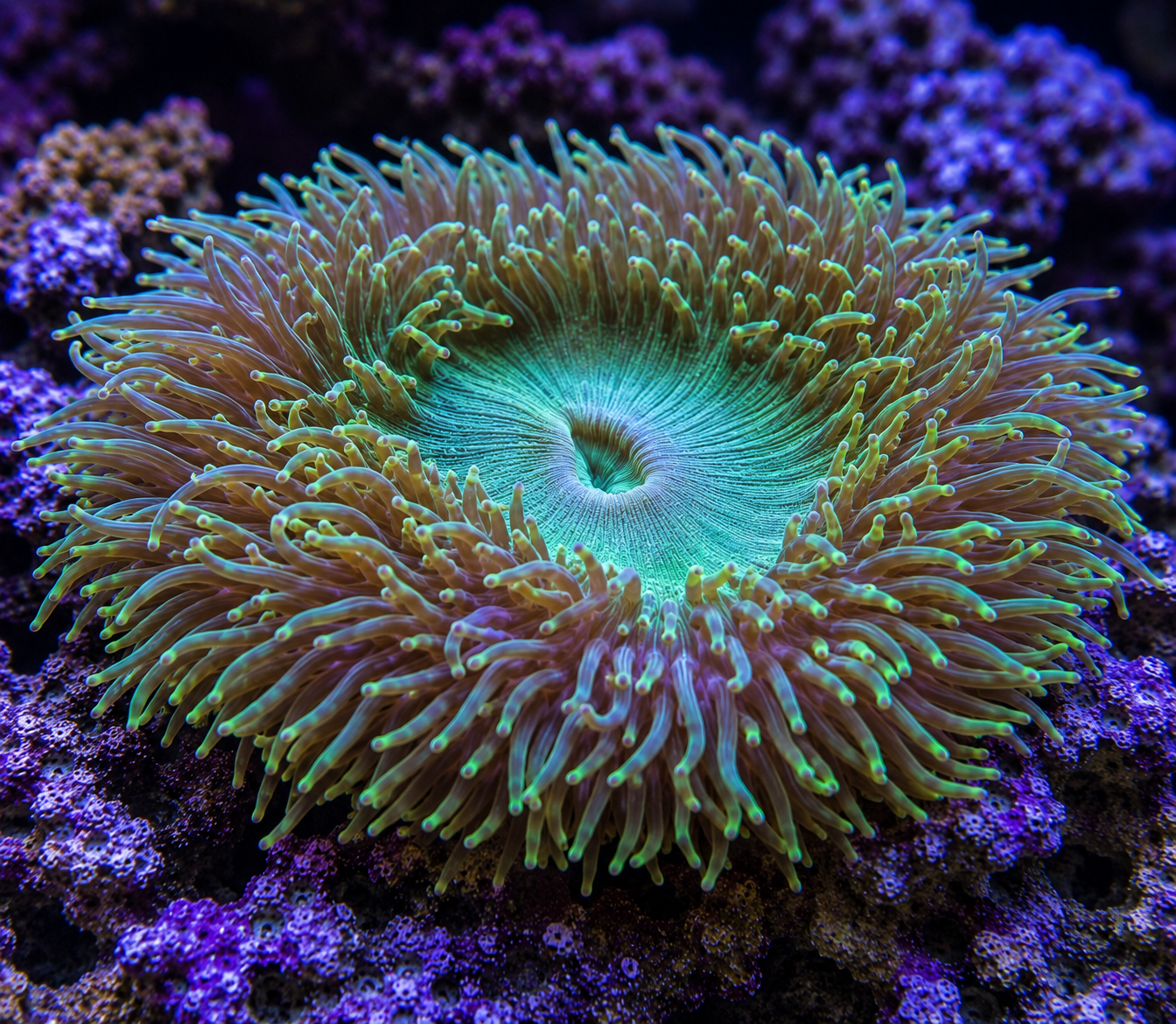
• Tentacles that can appear shorter and more “bubbly” than Aiptasia
• Often greenish, brownish, or tan depending on lighting and symbionts
• Usually found in crevices and on frag bases
The practical identification mindset
You don’t need perfect taxonomy to make the right call. If it behaves like a pest anemone (shows up uninvited, stings neighbors, spreads), treat it as one.
Final Thoughts
Majanos are a perfect example of why reefing rewards decisiveness. They aren’t dangerous, but they’re persistent — and they exploit hesitation.
Your best tools are:
• Inspection habits (especially on frags/plugs)
• Early response
• Consistency over drama
If you stay on top of them early, they’re manageable. If you ignore them, they become a long-term battle.