Overview
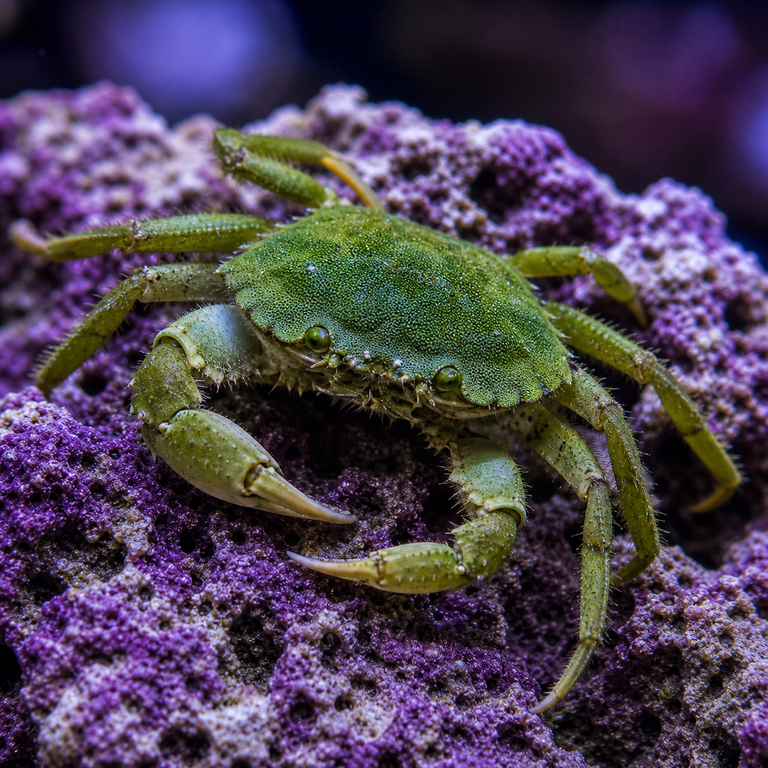
The Emerald Crab is one of the most polarizing invertebrates in reefkeeping. Some hobbyists swear by them as algae-eating heroes. Others swear they’ll never keep one again.
Both camps are right.
Emerald crabs are opportunistic omnivores. When there’s algae—especially bubble algae—they’re often model citizens. When food becomes scarce, they don’t starve politely. They adapt. That adaptability is what makes them useful and risky.
If you understand what an Emerald Crab is (and what it isn’t), they can be a very effective, low-maintenance tool. If you treat them like a guaranteed “reef-safe cleanup crew,” they can surprise you in all the wrong ways.
Quick Care Snapshot
Difficulty: Easy to intermediate
Minimum tank size: 30 gallons
Tank maturity: 3–6+ months recommended
Lighting: Not relevant
Flow: Moderate
Placement: Rockwork and crevices
Feeding: Algae, biofilm, opportunistic omnivore
Reef safe: With caution
Temperament: Semi-peaceful, opportunistic
Biggest risks: Starvation leading to coral or invert picking
Natural Background
In the wild, emerald crabs live among reef rock where they:
• graze algae
• scavenge organic material
• take advantage of whatever food is available
They are not specialized herbivores. They’re built to survive changing conditions, which means they’ll switch diets if needed.
In aquariums, this flexibility is exactly why:
• they can solve certain algae problems
• they can also cause issues when those problems are gone
Tank Requirements
Stability matters more than space
Emerald crabs are hardy under normal reef conditions:
• stable salinity
• stable temperature
• normal oxygen levels
They don’t demand specific parameters, but they do react poorly to sudden changes.
Habitat
They prefer:
• rockwork with crevices
• shaded hiding spots
• areas where algae and biofilm grow
Bare tanks or minimal aquascapes leave them exposed and stressed.
Flow
Moderate flow is ideal:
• enough to keep algae growth healthy
• not so strong that it constantly dislodges the crab
They’ll move to calmer zones if flow is too intense.
Feeding
This is where most emerald crab issues begin.
What they eat
Primary foods:
• film algae
• turf algae
• bubble algae
• biofilm
Secondary foods (if algae is limited):
• leftover fish food
• meaty scraps
• whatever they can reach
Supplemental feeding (important)
Once algae is under control, you should:
• provide supplemental food occasionally
• ensure they’re not forced to “get creative”
A hungry emerald crab is far more likely to:
• nip coral tissue
• harass snails
• steal food aggressively
Feeding small amounts intentionally is far better than letting them decide what’s edible.
Compatibility
With reef tanks
Emerald crabs are reef safe with conditions:
• well-fed crabs are usually fine
• starving crabs become risky
They are best used as targeted problem solvers, not permanent cleanup crew you forget about.
With corals
Risk increases when:
• algae is depleted
• the crab grows larger
• corals are fleshy or stressed
Most issues are opportunistic, not aggressive.
With fish
Generally fine. Fish ignore them.
With inverts
Potential issues include:
• harassing snails
• stealing food from slow feeders
• conflicts with other crabs in small tanks
Common Mistakes
1) Adding one and never feeding it
Once algae is gone, starvation drives bad behavior.
2) Treating it like a guaranteed reef-safe crab
They are conditional reef safe, not automatic.
3) Keeping large individuals in small tanks
Bigger crabs need more food and space.
4) Ignoring behavior changes
A crab that suddenly becomes bold or aggressive is often hungry.
5) Using them as a permanent solution
They’re best used intentionally, not as background cleanup crew.
Notes & Variations
“Is it eating my coral?”
Ask this first:
• Is algae still available?
• Has feeding been consistent?
If food is scarce, coral nipping becomes more likely.
Signs of a healthy emerald crab
Good signs:
• active grazing on algae
• hiding during the day
• calm behavior during feeding
Red flags:
• constant coral contact
• aggressive food stealing
• damaged inverts
• roaming openly all day searching for food
Removal
If an emerald crab becomes problematic, removal is often easier early than later. Don’t wait for damage to escalate.
Final Thoughts
Emerald crabs are tools, not decorations.
Used intentionally—fed appropriately and monitored—they can be extremely effective algae controllers. Left unattended in clean tanks, they often get blamed for doing exactly what they evolved to do: survive.
If you want a “set and forget” invert, this isn’t it.
If you want a flexible, intelligent algae grazer and you’re willing to manage it, emerald crabs can absolutely earn their place.