Overview
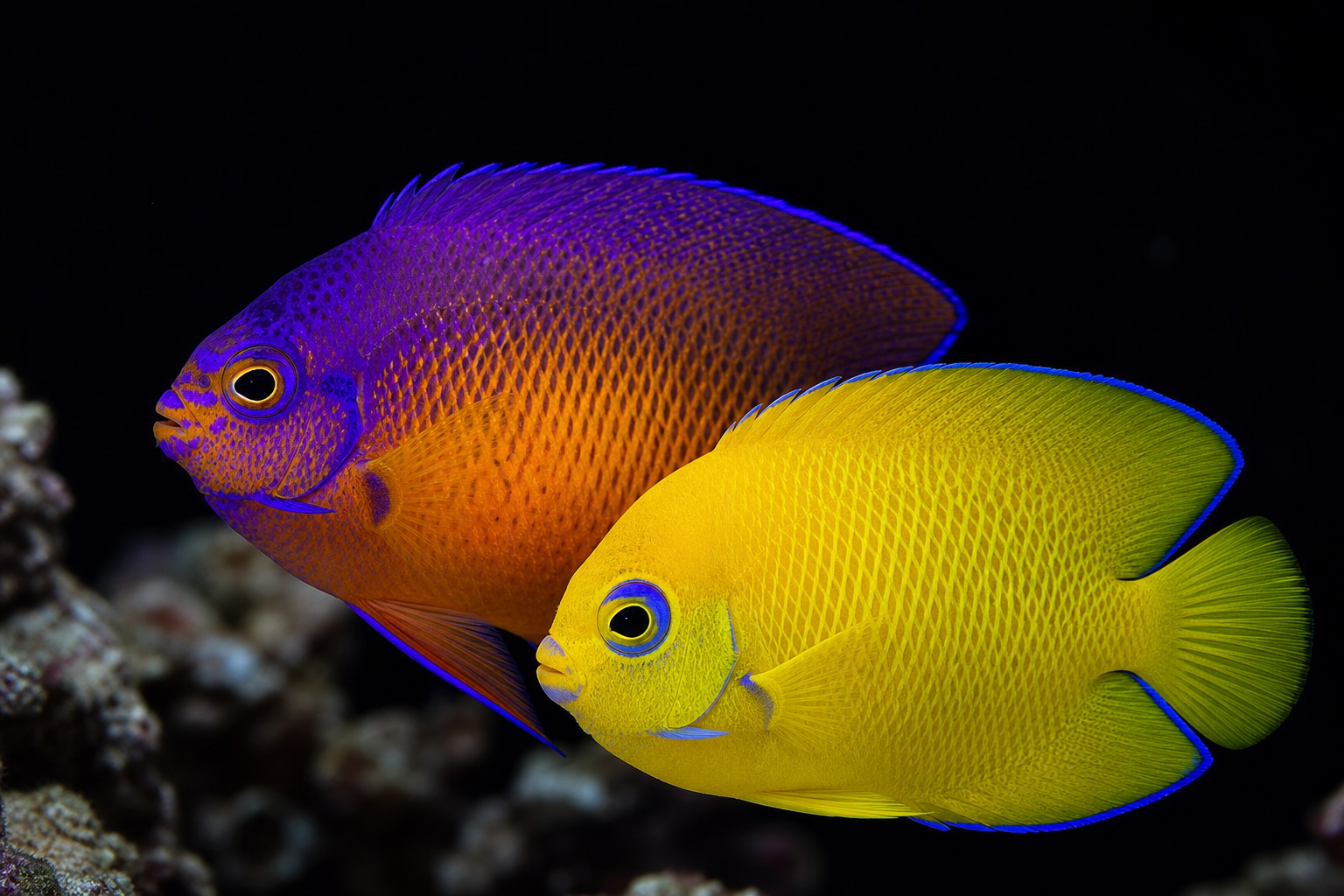
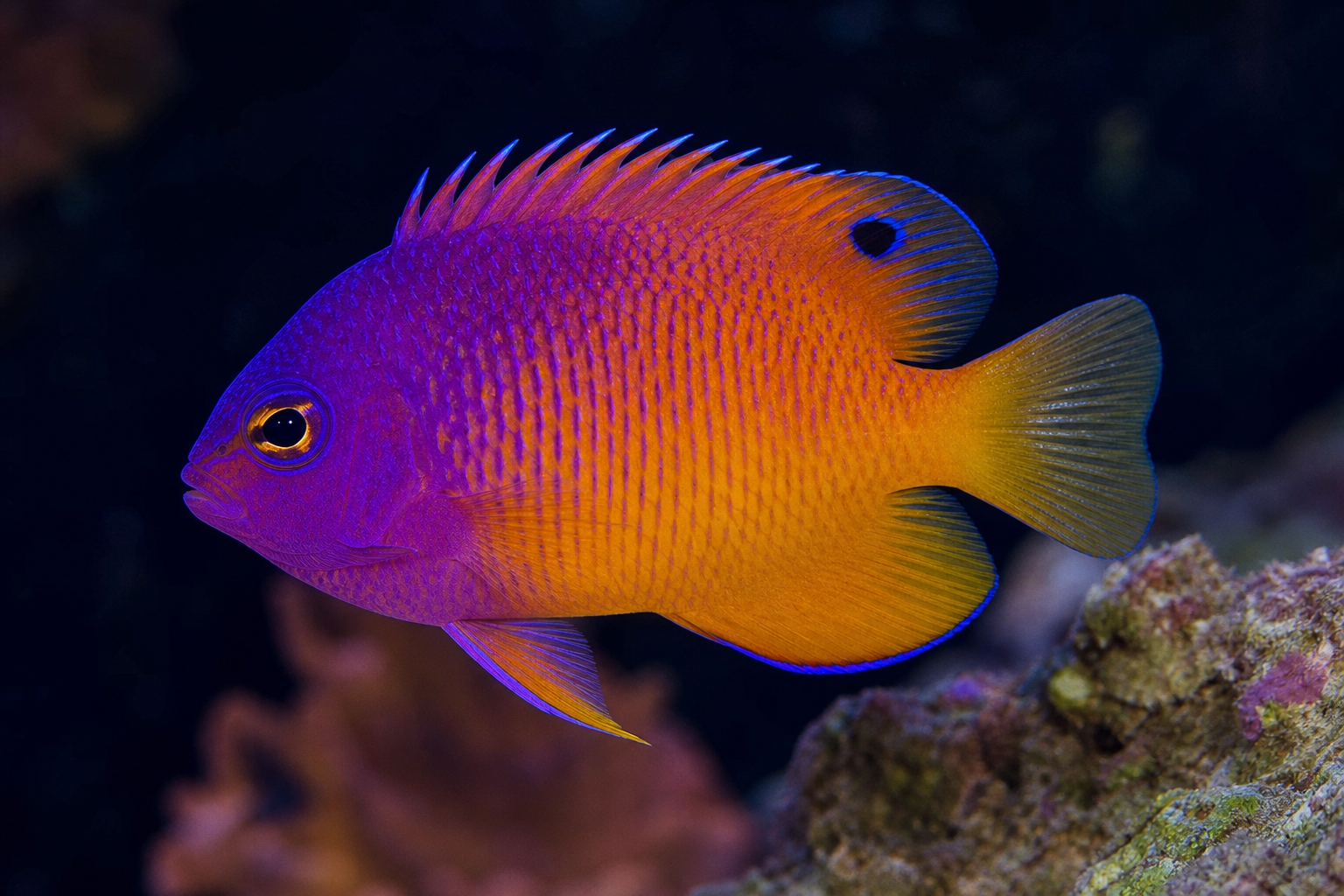
The Coral Beauty Angelfish is one of the most popular “dwarf angels” in the reef hobby—and it’s easy to see why. It’s colorful, active, constantly exploring the rockwork, and it adds a different kind of movement than most common beginner fish. A Coral Beauty can become a true centerpiece fish in a medium-sized reef tank.
The big thing to understand is that Coral Beauties are reef safe-ish, not reef safe in the same way a clownfish is. Many hobbyists keep them in reef tanks successfully for years, but some individuals will nip at certain corals or clam mantles. If you want a dwarf angel, you accept a small amount of risk, plan your tank accordingly, and watch behavior closely—especially early on.
Quick Care Snapshot
Reef Safe: Usually, with caution (may nip corals/clams)
Difficulty: Moderate
Temperament: Semi-aggressive (especially toward similar fish)
Minimum Tank Size: 55 gallons (75+ is more comfortable)
Best Kept As: Single
Diet: Omnivore grazer (needs variety)
Water Conditions: Stable reef parameters; low stress helps long-term success
Special Note: Provide mature rockwork for grazing and shelter
Natural Background
Coral Beauties live around reef rock and spend their day picking at surfaces for algae, biofilm, and small natural foods. That constant grazing and exploring is exactly what you’ll see in a home aquarium. They’re curious fish that weave through rockwork, inspect everything, and claim a “route” through the tank.
Because they’re built to graze, they do best in tanks with:
• plenty of live rock or mature rock surfaces
• hiding spots and caves
• a stable environment with good water quality
A Coral Beauty that feels secure is more active and shows better color.
Tank Requirements
Tank size & layout
• 55 gallons minimum is a practical baseline.
• 75+ gallons makes stocking and temperament management easier.
• Provide rockwork with caves, ledges, and grazing surfaces, plus open areas for swimming.
Tank maturity
Coral Beauties do best in tanks that aren’t “brand new and sterile.” A bit of natural growth on rockwork gives them something to pick at between meals and helps them settle in.
Flow & lighting
• Flow: Moderate to strong is fine, as long as there are calmer zones around rockwork.
• Lighting: Not demanding for the fish, but strong reef lighting often brings out their best coloration.
Lid / jumping
Not a classic jumper, but a lid is still smart—especially in tanks with other jump-prone fish.
Feeding
Feeding variety is key for dwarf angels. A Coral Beauty that’s underfed or bored is more likely to nip at corals.
What to feed
A balanced routine includes:
• quality pellets as a staple
• frozen foods:
• mysis
• finely chopped marine blends
• plant-based and grazing-friendly foods:
• algae-based pellets/flakes
• occasional dried seaweed/nori
Feeding tips
• Feed consistently and don’t let the fish rely only on “picking at rocks.”
• A well-fed Coral Beauty is typically less likely to cause problems in a reef.
How often
• Once daily can work, but many tanks do better with two smaller feedings.
• Keep it consistent—angels do well with routine.
Compatibility
Coral Beauties can fit well in community reefs, but temperament matters.
Good tankmates
Often compatible with:
• clownfish
• gobies and blennies
• cardinalfish
• many reef-safe wrasses
• tangs in larger tanks (introduced thoughtfully)
Watch-outs
• Other dwarf angels: often leads to fighting unless the tank is large and planned carefully.
• Similar-shaped fish: may trigger territorial behavior.
• Timid fish: can be stressed by an angel that constantly patrols rockwork.
Reef compatibility (the real talk)
Many Coral Beauties behave perfectly in reefs. Some don’t.
They are most likely to nip:
• certain fleshy LPS corals
• polyps that stay open and look “tasty”
• clam mantles
This doesn’t always happen, but it’s the main reason this fish is considered “reef safe with caution.”
Common Mistakes
1) Assuming it’s 100% reef safe
This is the biggest misunderstanding. If you want zero risk, don’t choose a dwarf angel.
2) Adding it to a small or cramped tank
In tight spaces, a Coral Beauty can become more territorial and stress other fish.
3) Not feeding enough variety
A limited diet can lead to poor health and increased nipping behavior. Variety helps keep them satisfied.
4) Adding it before timid fish are established
A bold angel added early may “own” the rockwork and make the tank feel less welcoming for shy species.
5) Ignoring early nipping signs
Occasional curious pecks aren’t always a problem, but repeated targeting of a coral or clam usually escalates. If you see consistent nipping, you may need to:
• increase feeding
• rearrange rockwork
• or remove the fish (worst case)
Notes & Variations
Common names
- Coral Beauty Angelfish
- Coral Beauty Angel
Scientific name
- Centropyge bispinosa
Behavior notes
• Constant rockwork exploration is normal.
• They often pick a few favorite caves to sleep in.
• They may posture at similar fish and defend territory.
Visual notes
Colors can range from more purple/blue to more orange depending on the individual and lighting. A healthy Coral Beauty looks vibrant and moves confidently through the tank.
Final Thoughts
The Coral Beauty Angelfish is a fantastic fish if you want color, movement, and personality beyond the typical beginner lineup. The secret is going in with the right expectations: it’s usually reef compatible, but not guaranteed reef safe. Provide a spacious tank with mature rockwork, feed a varied diet, and keep a close eye on coral behavior early on. When it works—and it often does—you get a bold, beautiful centerpiece fish that makes your reef feel more alive.