Overview
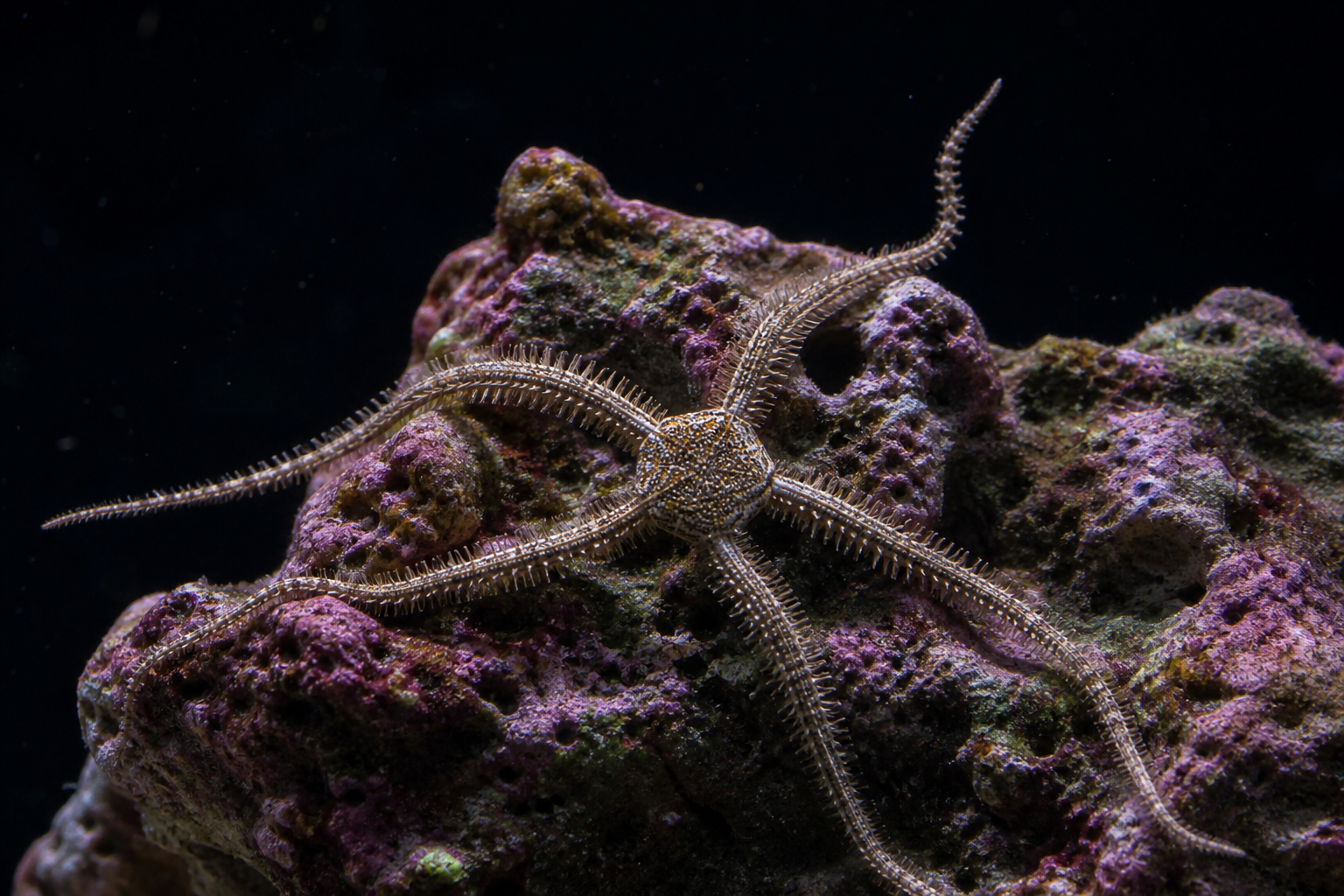
The Brittle Star is one of the most common and useful scavengers you’ll find in reef aquariums. Fast, flexible, and surprisingly strong, brittle stars spend most of their time hidden deep in rockwork—until food hits the water. Then suddenly, arms shoot out like spaghetti on a mission.
They’re not show animals, and they’re not sand cleaners. Brittle stars are opportunistic scavengers that help keep leftover food from becoming a nutrient problem. When used correctly, they’re quiet contributors to reef stability. When misunderstood, they’re either underfed or blamed for things they didn’t do.
Think of brittle stars as the reef’s cleanup assistants, not its janitors or predators.
Quick Care Snapshot
Difficulty: Easy
Minimum tank size: 30 gallons (larger preferred for bigger individuals)
Tank maturity: Any, best in established systems
Lighting: Not relevant
Flow: Moderate
Placement: Rockwork and crevices
Feeding: Leftover food, meaty scraps, detritus
Reef safe: Yes (with size awareness)
Temperament: Opportunistic scavenger
Biggest risk: Starvation in ultra-clean tanks; oversized individuals in small systems
Natural Background
In the wild, brittle stars live tucked into reef crevices, rubble zones, and under ledges. They extend their long, thin arms into the water column to grab food particles drifting by. They’re fast, reactive, and built for ambush scavenging—not slow grazing.
That behavior translates extremely well to aquariums:
• hide most of the day
• explode into action during feeding
• retreat once food is captured
They play an important role in breaking down organic waste before it decomposes.
Tank Requirements
Stability over specifics
Brittle stars are tolerant of normal reef conditions as long as:
• salinity is stable
• temperature doesn’t swing
• oxygen levels are reasonable
They do not handle sudden changes, medications, or extreme parameter shifts well.
Habitat
They need:
• plenty of rockwork
• deep crevices or caves
• shaded areas to hide
Bare tanks or minimalist aquascapes limit their usefulness and comfort.
Flow
Moderate flow works best:
• enough to deliver food particles
• not so strong that it constantly dislodges them
Very high, direct flow can keep them stressed and retracted.
Feeding
Brittle stars are scavengers, not sand sifters or algae grazers.
What they eat
• leftover fish food
• sinking meaty foods
• detritus
• food particles that fall into rockwork
In most stocked reef tanks, they feed themselves.
Supplemental feeding
In very clean or lightly stocked systems:
• occasional target-feeding with a small meaty food may be needed
• ensure food reaches the rockwork where they hide
If arms never extend during feeding time, food availability may be too low.
Compatibility
With reef tanks
Brittle stars are generally reef safe and do not harm corals.
With fish
Healthy fish are not at risk. Brittle stars do not actively hunt fish.
Important nuance:
• Very large individuals can opportunistically grab very small, weak, or sleeping animals
• This is rare and usually associated with oversized stars in small tanks
Context and scale matter.
With inverts
Usually peaceful with other inverts. Large predatory crabs may harass them.
Common Mistakes
1) Expecting it to clean sand
Brittle stars live in rockwork and clean leftovers—not sand.
2) Assuming you’ll see it often
They’re mostly nocturnal and shy.
3) Adding to ultra-clean tanks
No food means slow starvation.
4) Overstocking in small systems
Large brittle stars need space and food availability.
5) Blaming them for unrelated fish losses
They’re often accused after the fact, not the cause.
Notes & Variations
Brittle star vs serpent star
• Brittle stars: thinner arms, faster movement, more reactive
• Serpent stars: thicker arms, slower, slightly more deliberate scavengers
Both are useful; brittle stars are usually more “hands-on” during feeding.
Signs of health
Good signs:
• arms extend during feeding
• quick response to food
• intact central disk
• consistent hiding behavior
Red flags:
• shrinking arms
• missing limbs without regrowth
• inactivity for long periods
• visible tissue damage
Regeneration
Brittle stars can regenerate lost arms when conditions are good.
Final Thoughts
Brittle stars are one of the best examples of an invert that quietly earns its keep. They don’t clean sand, they don’t eat algae, and they don’t look impressive—but they reduce waste, support nutrient control, and help keep food from rotting in hidden places.
If your tank has rockwork and regular feeding, a brittle star is almost always a net positive.