Overview
Ball Anemones (Pseudocorynactis spp.) are one of the coolest—and most misunderstood—hitchhikers in reef tanks. They’re often sold or labeled as “orange ball anemones,” but they’re not true anemones in the hobby sense. They’re corallimorphs (same general neighborhood as mushrooms), and they behave like tiny ambush predators with a seriously strong sting for their size.
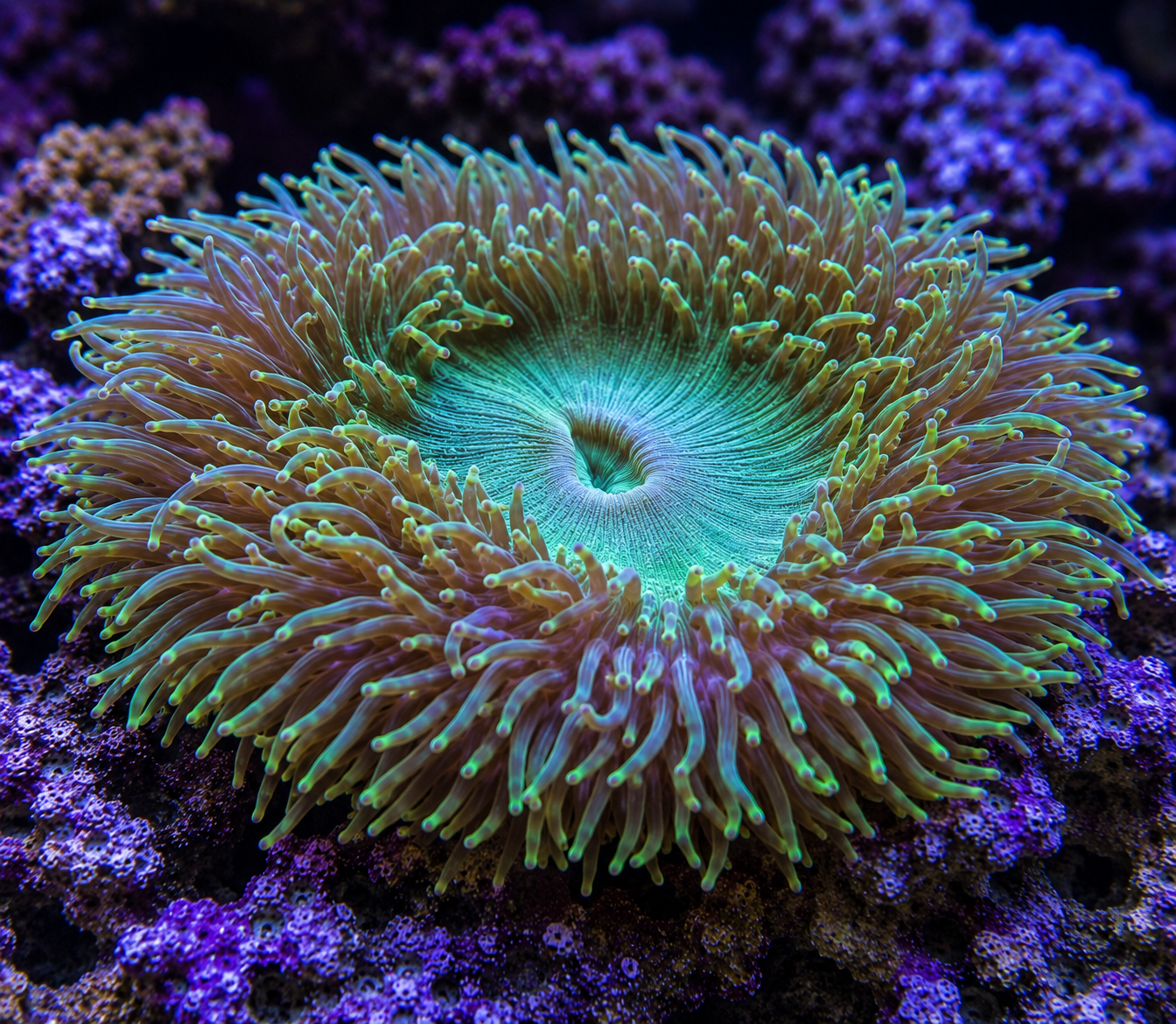
A healthy ball anemone looks like a little orange (or translucent) sphere with a ring of tentacles. They typically show up in shaded rock crevices, under ledges, or in caves. They’re fascinating, but they can also be a problem: they may sting nearby corals, and depending on the tank, they can irritate small fish or grab tiny prey.
This is one of those “it depends what you want” organisms. Some people love them and keep them intentionally. Others treat them as a pest because they pop up where you don’t want them and don’t play nice with neighbors.
Quick Care Snapshot
Common Name: Ball Anemone
Scientific Name: Pseudocorynactis spp.
Reef Safe: Caution (can sting corals; can grab small prey)
Difficulty: Easy to keep (hardy hitchhiker)
Temperament: Ambush predator / strong stinger
Lighting: Low to moderate preferred (often found in shade)
Flow: Low to moderate (too much flow can keep them closed)
Diet: Meaty micro-foods; will capture prey
Placement: Shaded crevices, caves, under ledges
Best Kept As: A “featured hitchhiker” or managed nuisance
Natural Background
In the wild, Pseudocorynactis species live in reef crevices and shaded areas where they can extend tentacles and capture passing food. They behave like opportunistic predators—less “photosynthetic display coral” and more “tiny reef ambush animal.”
In aquariums, they tend to settle in the same kinds of spots: protected cracks and overhangs where flow is gentle and they feel secure.
Tank Requirements
Ball anemones are surprisingly adaptable, but they have clear preferences:
Lighting
• Usually happiest in low to moderate light
• They often avoid direct bright light and may stay tucked into shade
Flow
• Prefer low to moderate flow
• If flow is too strong, they stay retracted and look “gone”
• If flow is too low and nutrients are high, they may multiply or spread more noticeably
Stability
They tolerate normal reef conditions well. If your tank is stable enough for common corals, it’s stable enough for ball anemones.
Where they “choose” to live
• Under ledges
• In holes in live rock
• In caves
• Along shaded vertical faces
Feeding
Ball anemones are feeders. They can catch:
• Fine meaty foods (mysis fragments, brine, chopped seafood dust)
• Coral foods with particle size
• Microfauna and tiny drifting prey
In many tanks, they’ll get enough indirectly from normal feeding. If you intentionally keep them and want them to thrive, they respond well to occasional small meaty feedings.
Real-world note
If you feed heavy and have a lot of shaded rockwork, you may see them expand in number or pop up in new places. Not always, but often enough that it’s worth mentioning.
Compatibility
With corals
Caution. They have a real sting. Issues include:
• Irritating nearby corals
• Causing chronic retraction if too close
• Winning space in a crevice where a coral is trying to encrust
With fish
Most fish ignore them, but small, slow, or sleeping fish near the rockwork can be at risk in rare cases. More commonly, they’ll grab tiny food and microfauna, not healthy fish—but their tentacles are sticky and they’re not “harmless.”
With invertebrates
They can grab tiny shrimp larvae, pods, and small drifting critters. They’re not a “cleanup crew friendly” animal if you’re thinking in those terms—they’re more like a miniature predator living in your rocks.
Common Mistakes
1) Treating them like a normal anemone
They don’t behave like bubble tips or rock flowers. People place expectations on them that don’t fit.
2) Putting them in high light/high flow and thinking they died
They often just stay retracted and hidden. They’re a “crevice animal.” If conditions aren’t comfortable, you won’t see them much.
3) Letting them settle right next to prized coral
If a ball anemone is camped in a crevice next to a favorite coral, the coral usually loses long term.
4) Overfeeding and then being shocked they “spread”
If you create a buffet and lots of sheltered habitat, you’re basically building perfect conditions for them.
5) Removing them carelessly
If you decide you don’t want them, ripping at them in tight rock crevices can cause rock damage or coral damage. They tend to be anchored in places that are annoying to access.
Notes & Variations
Color and appearance
Many hobbyists call them “orange ball anemones” because the common display is orange or amber. But you can see variation in:
• Color intensity
• Tentacle length
• How “ball-shaped” they look depending on extension
Day/night behavior
Some ball anemones appear more active:
• During lower light
• After feeding
• When the tank is quiet
So if you only look midday, you may miss them.
Why they’re in Corallimorphs
Because functionally and structurally, they behave more like corallimorph-type animals than true “reef anemones.” In your taxonomy, this is the correct home.
Final Thoughts
Ball anemones are one of those reef hitchhikers that sit right on the line between “awesome” and “annoying.” If you like oddball reef life, they’re super fun to observe—tiny, predatory, and strangely charismatic.
But if your goal is clean rockwork, peaceful coral placement, and no surprises, they can become a nuisance, especially if they set up shop where you can’t easily reach.