[es]
Overview
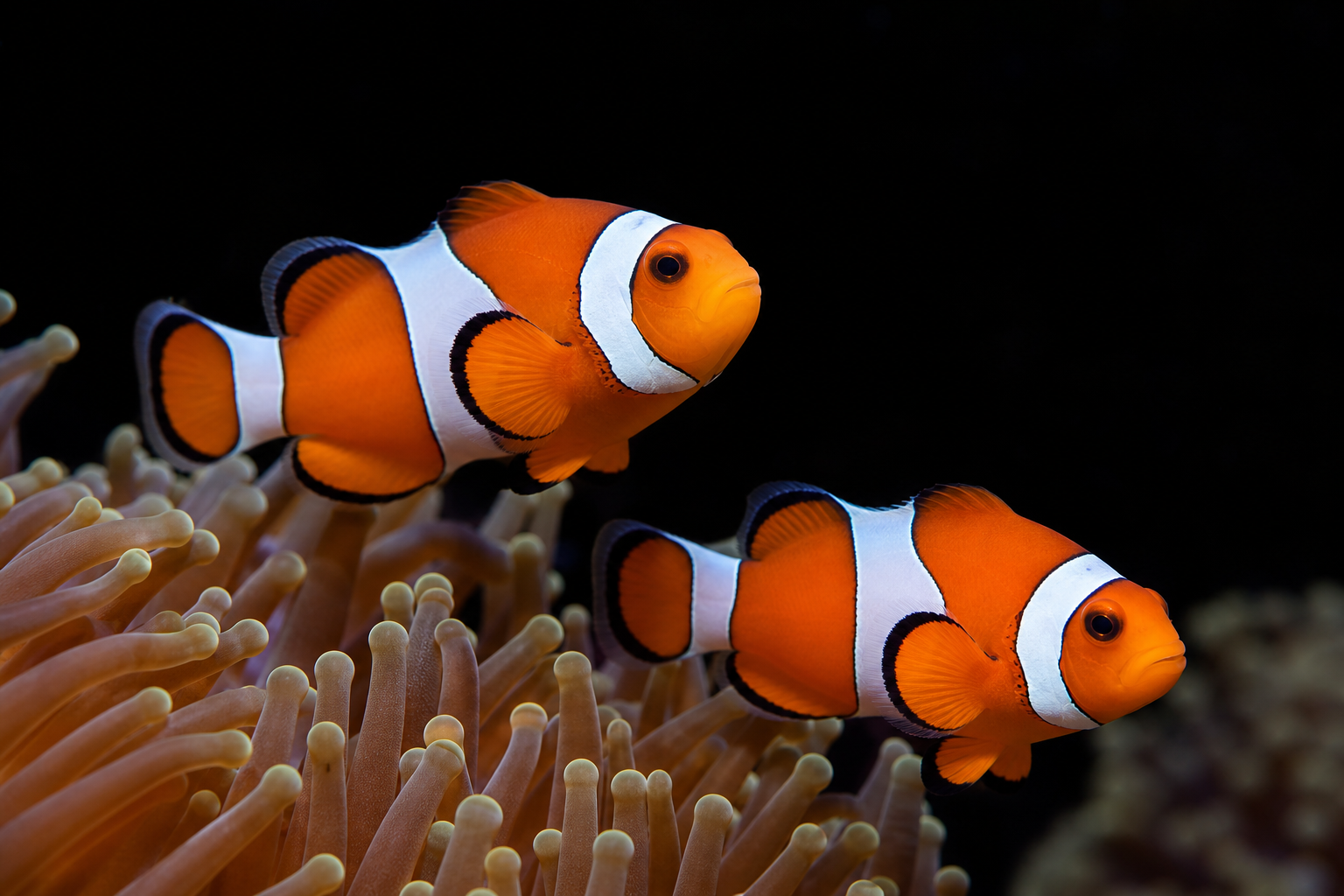
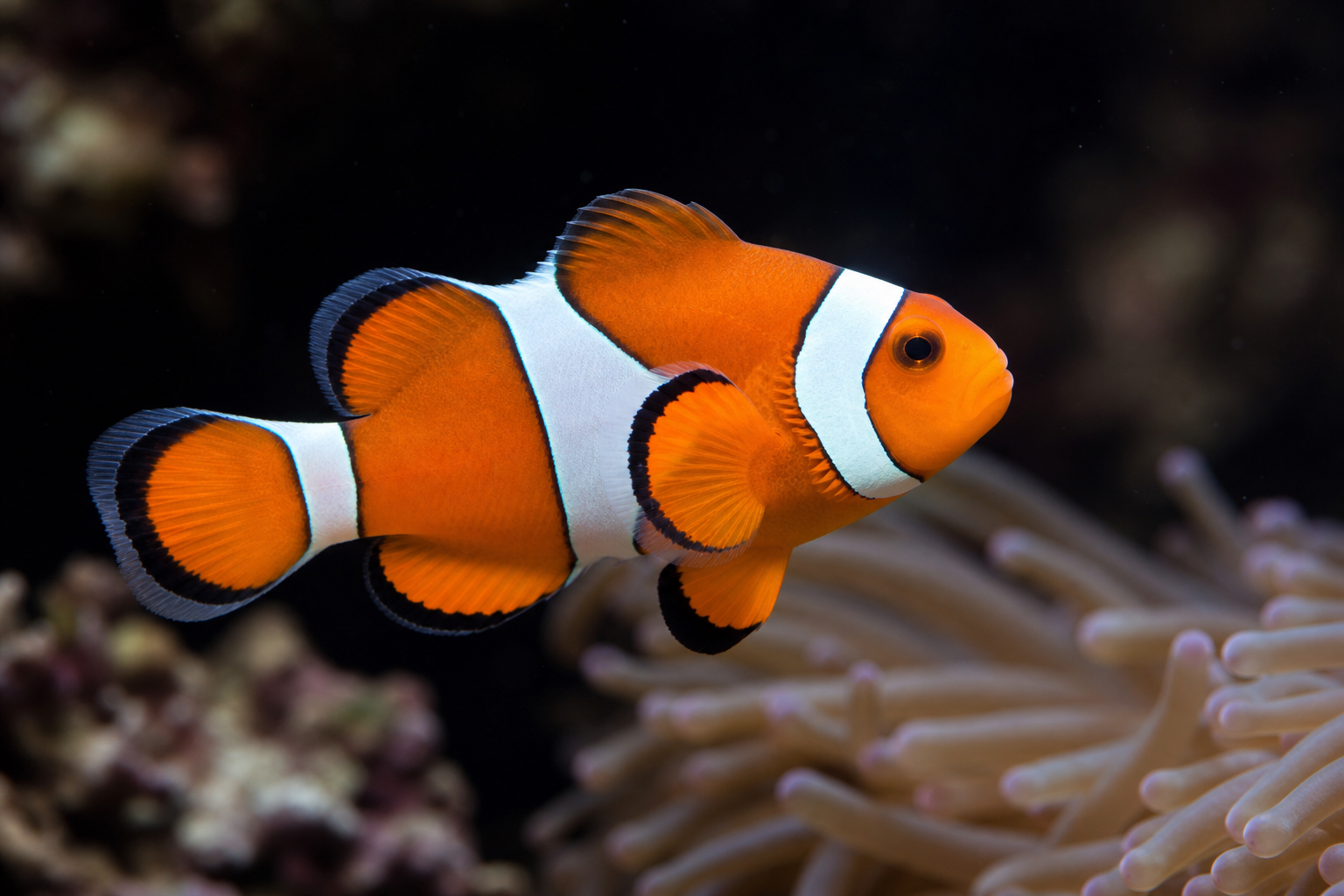
The Ocellaris Clownfish is one of the most popular saltwater fish in the hobby for a reason: it’s hardy, personable, and generally forgiving of beginner mistakes compared to many reef fish. It’s the classic “clownfish” many people picture—bright orange with crisp white bars (though color can vary), and a habit of picking a favorite spot in the tank and calling it home.
Ocellaris are great “first fish” for a reef tank when the system is properly cycled and stable. They’re active without being chaotic, they learn feeding routines quickly, and they’re usually well-behaved with tankmates if you plan your stocking thoughtfully.
Quick Care Snapshot
Reef Safe: Yes
Difficulty: Easy
Temperament: Semi-aggressive (especially as they mature or pair up)
Minimum Tank Size: 20 gallons (pair recommended in 30+ for comfort)
Best Kept As: Single or bonded pair
Diet: Omnivore (easy to feed)
Water Conditions: Stable, reef-appropriate parameters; consistency matters more than perfection
Lifespan: Often many years in good conditions
Special Note: They do not need an anemone to thrive
Natural Background
In the wild, clownfish live in close association with anemones, using them as protection and territory. In home aquariums, they’ll often “host” whatever feels similar—an anemone, a coral, a rock ledge, a powerhead corner, even a patch of sand. This hosting behavior is normal, but it can create issues if they decide to host something delicate or irritate a coral repeatedly.
You don’t need to recreate their exact wild setup for them to do well. What matters most is a stable tank, good nutrition, and avoiding aggressive tankmates that bully them.
Tank Requirements
Tank size & environment
- 20 gallons minimum for one.
- 30 gallons or larger is strongly recommended if you want a pair and more peaceful tankmate options.
- They appreciate structure: rockwork with caves/overhangs and a clear “home area.”
Water quality
Ocellaris are tolerant, but they still do best in stable reef conditions:
- Keep salinity stable (avoid big swings)
- Maintain steady temperature
- Keep ammonia and nitrite at zero
- Keep nutrients (nitrate/phosphate) reasonable—don’t chase zero, chase stability
Flow & lighting
- Flow: Moderate. They can handle a variety of flow patterns, but avoid blasting their preferred resting area with direct, constant high flow.
- Lighting: Not demanding for the fish. Lighting choices matter more for your corals than for the clownfish.
Timing
Don’t add clownfish on day one. Add them after the tank is fully cycled and you’ve verified stability for at least a short period. “Hardy” doesn’t mean “immune to new tank problems.”
Feeding
Ocellaris are easy eaters and usually learn feeding schedules quickly.
What to feed
A simple, effective routine:
- A quality pellet or flake as the staple
- Frozen foods 2–4x per week (mix it up):
- brine shrimp (better enriched)
- mysis shrimp
- finely chopped seafood blends
- Occasional treats are fine, but consistency beats variety if your routine is sustainable.
How often
- Once daily is fine for most tanks.
- Twice daily smaller feedings can be helpful for growth, pairs, or tanks with higher activity—just don’t overfeed.
Common feeding mistake
Overfeeding is one of the most common ways people accidentally create algae problems and nutrient swings. Clownfish will act hungry even when they’re not. Feed what they can finish quickly.
Compatibility
Ocellaris clownfish are “peaceful with an attitude.” They’re usually easy-going when small, but they can become territorial as they mature—especially as a bonded pair.
Best tankmates
Generally compatible with:
- peaceful gobies and blennies
- cardinals
- peaceful wrasses (depending on tank size and species)
- many reef-safe community fish
Things to watch out for
- Aggressive fish can harass them (and stressed clowns get sick more easily).
- Territory disputes: A mature pair may claim a corner and defend it.
- Hosting behavior: They may repeatedly rub or nip at a coral they “choose,” causing it to stay closed or get damaged.
Clownfish with other clownfish
- Keeping more than a pair is not a beginner move.
- Multiple clowns often leads to bullying unless you have a large tank, careful planning, and the right approach.
- For most hobbyists: one clownfish or one bonded pair is the correct choice.
Common Mistakes
1) Adding them too early
New tanks swing. Ocellaris can survive poor conditions longer than many fish, but they’re not “new tank proof.” If the tank isn’t stable, problems show up later as disease or unexplained losses.
2) Buying two random clowns and hoping they “pair”
Sometimes it works, sometimes it doesn’t. Pairing is easiest when:
- you buy an established bonded pair, or
- you start with two juveniles and let one become dominant over time (in a properly sized tank)
Avoid mixing similar-looking clown species without a plan.
3) Ignoring early aggression
Clownfish aggression often starts subtle:
- chasing
- cornering
- nipping at fins
- guarding a “host” area
If you see one fish constantly stressed, intervene early (rearrange rockwork, separate fish, or adjust stocking).
4) Overfeeding
This is the classic domino:
Overfeeding → nutrient spikes → algae → instability → stressed fish/corals.
5) Treating “hosting” like it’s required
Your clownfish doesn’t need an anemone. Adding an anemone too early is a common mistake because anemones generally need a more mature, stable tank than beginners realize.
Notes & Variations
Common names
- Ocellaris Clownfish
- Common Clownfish
- False Percula Clownfish (because it’s often confused with Percula)
Scientific Name
- Amphiprion ocellaris
Ocellaris vs Percula (quick clarity)
They look very similar. For most hobbyists, care is similar too. The important thing is not which one you picked—it’s that you:
- buy healthy fish
- quarantine if you can
- keep stable conditions
- stock compatible tankmates
Behavior quirks
- They may sleep in odd spots (even near the surface or in a corner).
- They may “waddle” through the water instead of darting like other fish.
- They often develop a strong routine and “greet” you at feeding time.
Final Thoughts
If you want a fish that’s hardy, interactive, reef safe, and genuinely fun to watch, the Ocellaris Clownfish is one of the best choices in the hobby. It’s forgiving enough for beginners, but still interesting long-term—especially if you keep a bonded pair and build a peaceful community around them.
If you remember one rule with clowns, it’s this: they’re easy to keep, but they’re not passive. Give them space, keep your tank stable, feed responsibly, and plan tankmates with their territorial streak in mind.