[es]
Overview
The Neon Goby is a small, reef-safe fish with a big reputation: it’s peaceful, hardy, and known for “cleaner” behavior—often picking at parasites and dead tissue on larger fish in the wild. In a home aquarium, it’s best thought of as a friendly, low-impact community fish that may occasionally provide some cleaning behavior, but shouldn’t be relied on as a medical solution.
Neon Gobies are great for beginner reef tanks because they’re small, don’t need a huge tank, and generally get along with almost everyone. They add subtle movement and personality, often perching on rockwork and making short little dashes to grab food. They’re also one of the few fish that can be kept singly, as a pair, or sometimes even in small groups—depending on tank size and layout.
Quick Care Snapshot
Reef Safe: Yes
Difficulty: Easy
Temperament: Peaceful
Minimum Tank Size: 10–20 gallons (20+ is easier long-term)
Best Kept As: Single, pair, or small group (with space)
Diet: Carnivore/Omnivore (easy eater)
Water Conditions: Stable reef parameters
Special Note: Known as a cleaner fish, but not a replacement for quarantine or treatment
Natural Background
Neon Gobies come from reef environments where they often set up “cleaning stations.” Larger fish will visit, and the goby will pick at parasites, dead skin, and small bits of food. It’s a cool behavior, and sometimes you’ll see hints of it in home tanks—especially if the goby feels safe and the larger fish are tolerant.
In aquariums, Neon Gobies also behave like classic small gobies:
• perching on rocks and coral rubble
• staying near a favorite area
• making quick dashes to grab food
• becoming more visible as they settle in
Tank Requirements
Tank size & layout
• 10–20 gallons can work depending on stability and stocking, but 20+ gallons is more forgiving and easier long-term.
• Provide rockwork and small perching areas. They don’t need big caves, but they do like having structure and “zones.”
Flow & lighting
• Flow: Moderate is ideal. They like calmer perches but can handle typical reef flow.
• Lighting: Not demanding.
Tank maturity
Neon Gobies do fine in stable, cycled tanks. They aren’t extremely demanding, but like all reef fish they do better when parameters are consistent and stress is low.
Lid / jumping
Not a famous jumper, but small fish can jump when startled. A lid is always a good reef practice.
Feeding
Neon Gobies are usually easy eaters, especially once they learn the feeding routine.
What to feed
They do well on:
• small pellets
• fine flakes
• frozen foods:
• mysis (chopped small if needed)
• enriched brine shrimp
• finely chopped marine blends
Feeding tips
• Because they’re small, offer appropriately sized food.
• In tanks with aggressive feeders, make sure the goby gets its share—sometimes they’re too polite to compete.
How often
• Once daily is often enough.
• Twice daily small feedings can be helpful in busy tanks or for new arrivals.
Compatibility
Neon Gobies are among the most community-friendly reef fish.
Good tankmates
Usually compatible with:
• clownfish
• gobies and blennies
• cardinalfish
• peaceful wrasses
• tangs and larger community fish (in larger tanks)
• reef-safe invertebrates
Watch-outs
• Aggressive fish may harass or eat very small gobies.
• Some larger fish may view tiny gobies as food if the goby is small enough—always consider mouth size and temperament.
• If keeping multiple Neon Gobies, make sure there is enough space and structure so they don’t constantly compete for the same perch.
Cleaner behavior expectations
They may occasionally pick at other fish, but don’t count on them to “fix” parasites or disease. Think of it as a bonus behavior, not a health plan.
Common Mistakes
1) Treating a Neon Goby as disease prevention
Cleaner fish are cool, but they don’t replace quarantine, observation, or treatment when needed.
2) Adding one to a tank with predatory or overly aggressive fish
Because they’re small, they can be bullied or eaten. Always match size and temperament.
3) Underfeeding in a tank with fast eaters
Neon Gobies can be outcompeted. Make sure food reaches them consistently.
4) Overcrowding in small tanks
They’re small, but space still matters. In tight tanks, even peaceful fish can get stressed.
5) Overreacting to shy behavior early on
New Neon Gobies may hide at first. Once they learn the tank is safe, they usually become bolder and more visible.
Notes & Variations
Common names
- Neon Goby
- Cleaner Goby
Scientific Name
- Elacatinus oceanops
Behavior notes
• Perching is normal.
• They often “dart” out to grab food and return to a perch.
• Some individuals will set up a favorite “station” and hang out there most of the day.
Visual notes
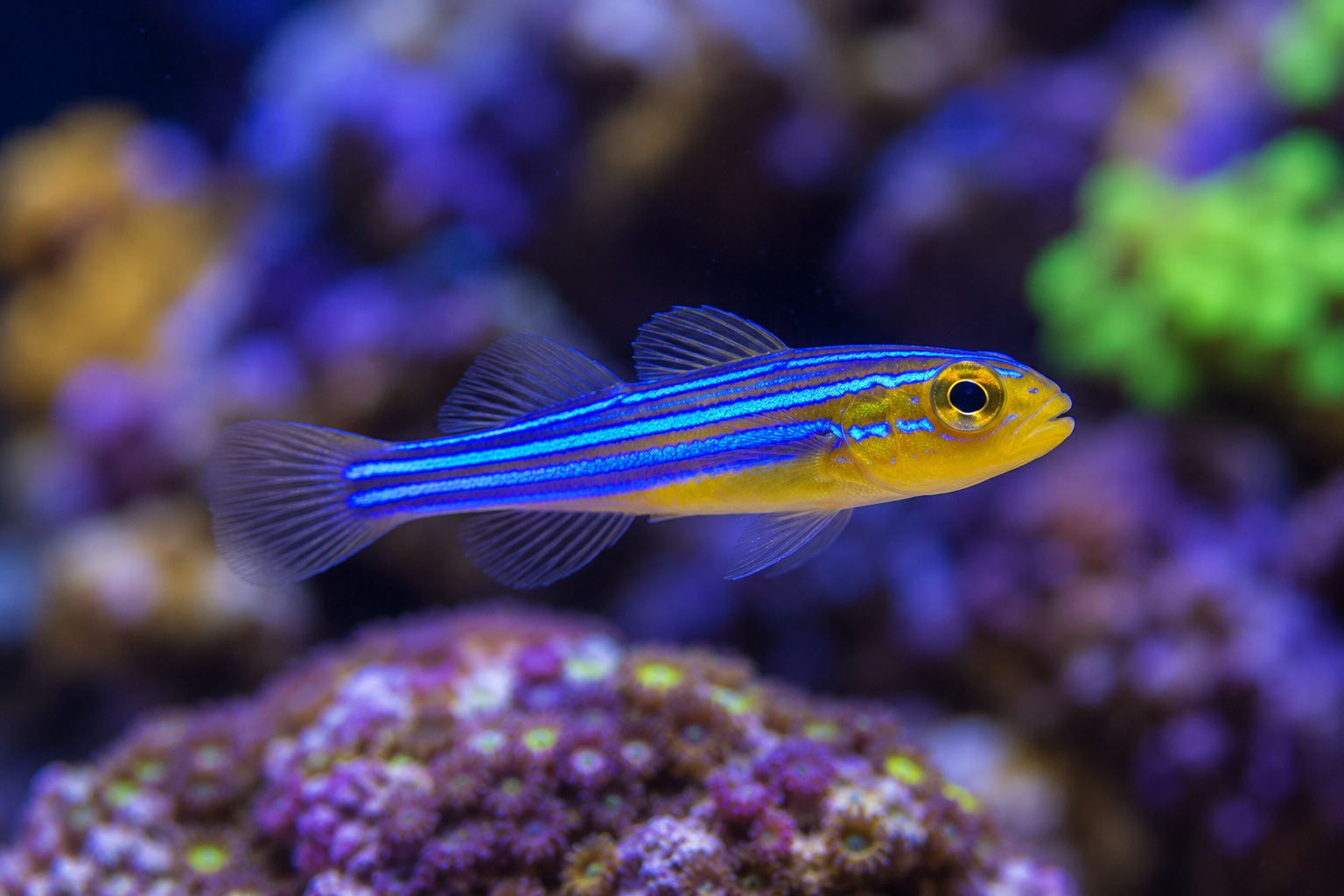
Their bright blue stripe is their signature. Healthy fish look alert, hold their fins well, and maintain a steady appetite.
Final Thoughts
The Neon Goby is one of the easiest, most reef-friendly fish you can add to a community aquarium. It’s small, peaceful, hardy, and adds subtle personality without causing trouble. If you choose tankmates wisely, feed appropriately sized food, and don’t expect it to be a disease cure, a Neon Goby can be a perfect “support fish” that fits into almost any reef setup.