[es]
Overview
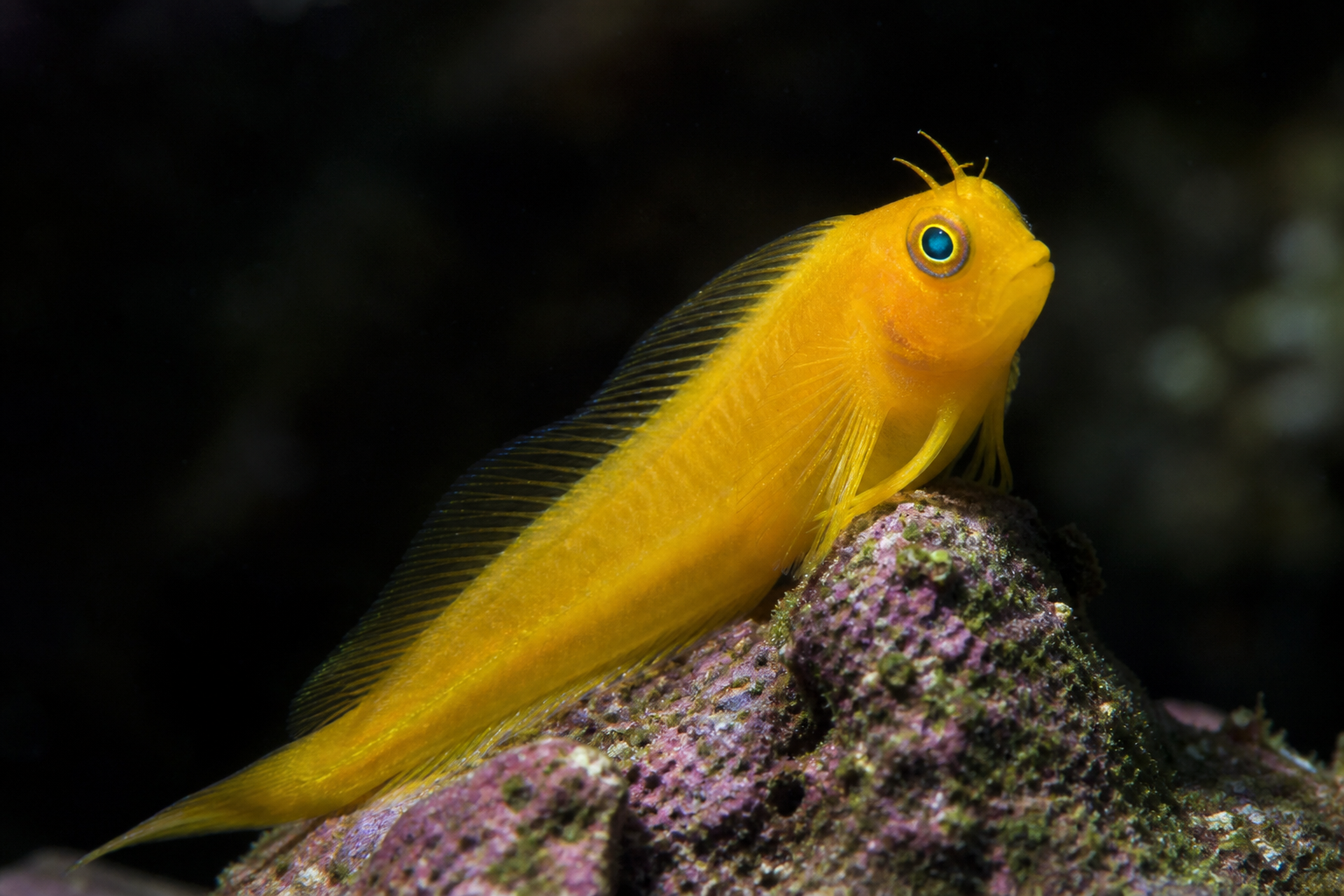
The Midas Blenny is a standout reef fish because it combines two great traits: blenny personality and open-water swimming. Unlike many blennies that perch and stay close to the rockwork, a Midas Blenny often swims out in the open like a small anthias—then darts back into a hole when it wants to feel secure. It’s bright, expressive, and very interactive once settled in.
Midas Blennies are generally hardy and easy to feed, which makes them a strong choice for hobbyists building a peaceful community reef. The main things to plan for are space, a secure hiding spot, and thoughtful tankmates, because a confident Midas can sometimes become territorial about its home hole.
Quick Care Snapshot
Reef Safe: Yes
Difficulty: Easy
Temperament: Peaceful to semi-territorial (especially around its home)
Minimum Tank Size: 30 gallons (55+ is more comfortable)
Best Kept As: Single
Diet: Omnivore (easy eater; enjoys meaty foods)
Water Conditions: Stable reef parameters
Special Note: Needs rockwork holes/caves and may jump when startled (lid recommended)
Natural Background
In the wild, Midas Blennies often live in groups around reef crevices and dart in and out of holes for safety. They spend time in the water column feeding on passing food, then retreat to rockwork when threatened. That’s why their aquarium behavior feels so dynamic—they’re not just perched on a rock all day.
In your tank, a happy Midas Blenny usually:
• picks a favorite hole or crevice
• patrols nearby rockwork
• swims out into the open when it feels safe
• rushes back home when spooked
Tank Requirements
Tank size & layout
• 30 gallons minimum, but 55+ gallons is a better long-term fit—especially if you want a peaceful community with multiple fish.
• Provide:
• open water space for swimming
• rockwork with at least one good “home hole”
• multiple hiding options if the tank includes other territorial fish
Rockwork and shelter
This is not optional. A Midas without a secure home tends to become shy, stressed, or overly defensive.
Flow & lighting
• Flow: Moderate is ideal. They can handle stronger flow if there are calmer areas.
• Lighting: Not demanding for the fish.
Lid / jumping
Midas Blennies can jump when startled—especially during acclimation or after sudden changes. A lid or mesh screen is a smart move.
Feeding
Midas Blennies are usually enthusiastic eaters and often become “front of the tank” fish at feeding time.
What to feed
They do well on:
• quality pellets (often readily accepted)
• frozen foods:
• mysis shrimp
• enriched brine shrimp
• chopped marine blends
• occasional plant-based foods are fine, but many Midas Blennies lean more meaty compared to algae-focused blennies
Feeding tips
• A well-fed Midas is less likely to become territorial.
• If you have faster fish in the tank, spread food out so the Midas isn’t forced to compete every time.
How often
• Once daily is fine for most established systems.
• Twice daily small feedings can be helpful in active tanks or if the fish is still settling in.
Compatibility
Midas Blennies are reef safe and usually community-friendly, but they can be protective of their home crevice.
Good tankmates
Often compatible with:
• clownfish
• gobies
• cardinalfish
• many peaceful wrasses
• tangs in larger tanks
• reef-safe invertebrates
Watch-outs
• Other blennies: can lead to territory disputes, especially in smaller tanks.
• Similar-shaped fish: may trigger chasing.
• Very aggressive fish: can intimidate the Midas and keep it hiding.
• Timid fish: a confident Midas might chase very shy fish away from “its” zone.
Reef compatibility
Safe with corals and invertebrates.
Common Mistakes
1) Not providing a proper home hole
This fish needs a place to retreat. Without it, it can stay stressed or become overly defensive.
2) Mixing with other blennies in a small tank
Blennies often compete for the same real estate. If you want more than one blenny-type fish, plan for a larger tank and lots of rockwork territory.
3) Thinking “blenny” means “algae eater”
A Midas Blenny is not a dedicated algae grazer like some other blennies. Choose it for personality and swimming behavior, not algae control.
4) Underestimating jump risk
Many losses happen during the first days or after a sudden scare. Use a lid and keep the environment calm during acclimation.
5) Adding it to a very crowded, aggressive community
In a tank full of pushy fish, a Midas may hide and eat poorly. It shines in calmer communities.
Notes & Variations
Common names
- Midas Blenny
- Golden Blenny (sometimes used)
Scientific Name
- Ecsenius midas
Behavior notes
• It may “hover” in open water like an anthias, then dart back into rockwork.
• It often becomes very interactive and will recognize feeding routines.
• Some individuals are extremely bold; others are more cautious at first.
Visual notes
Color can range from bright gold to slightly darker tones depending on lighting, mood, and health. A healthy Midas looks full-bodied and active.
Final Thoughts
The Midas Blenny is one of the best personality fish you can add to a reef tank—especially if you want something that swims in the open but still has that classic blenny charm. Give it a secure home in the rockwork, keep tankmates peaceful, feed it well, and use a lid. Do that, and a Midas Blenny often becomes a favorite fish that adds constant life, color, and character to the reef.