Overview
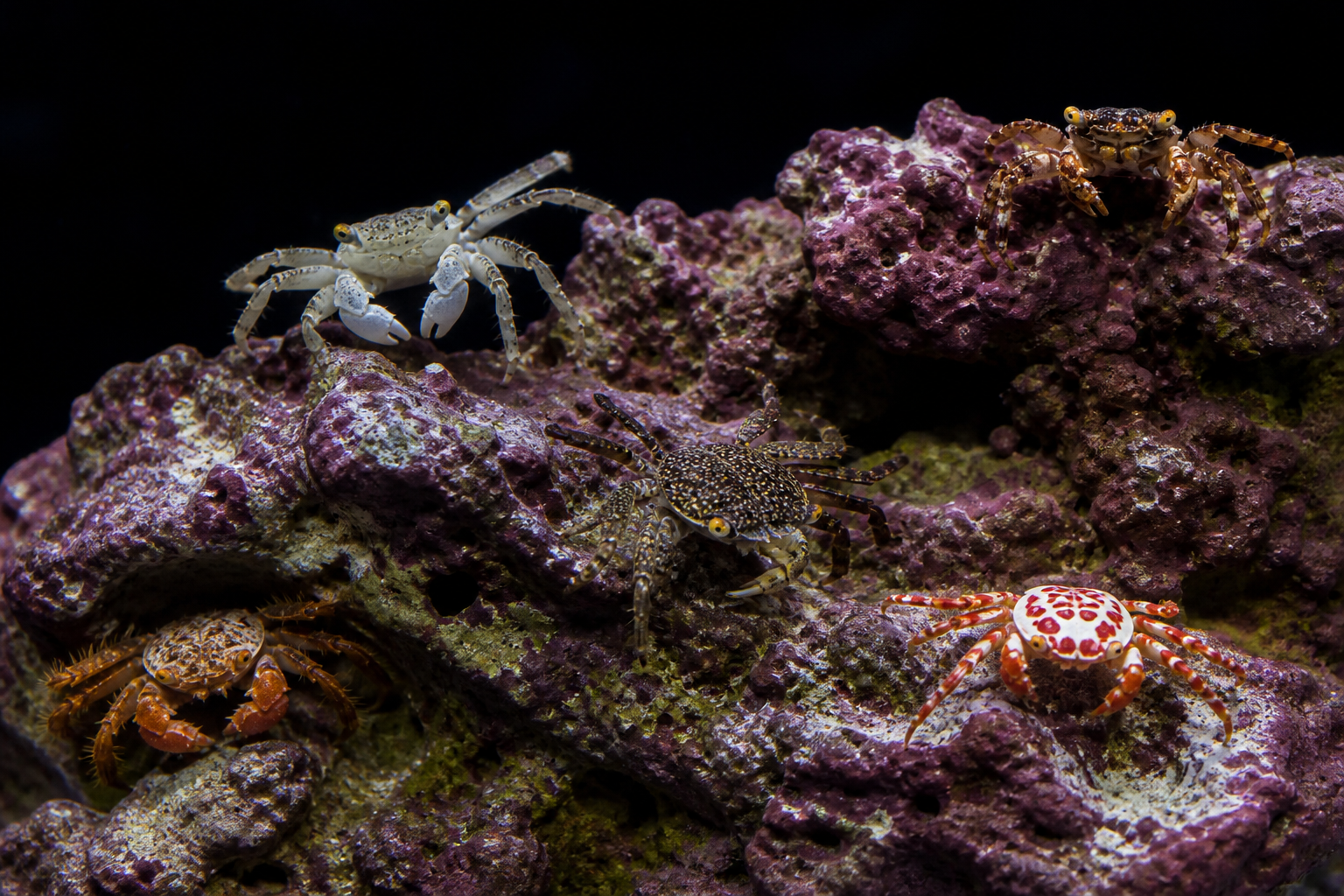
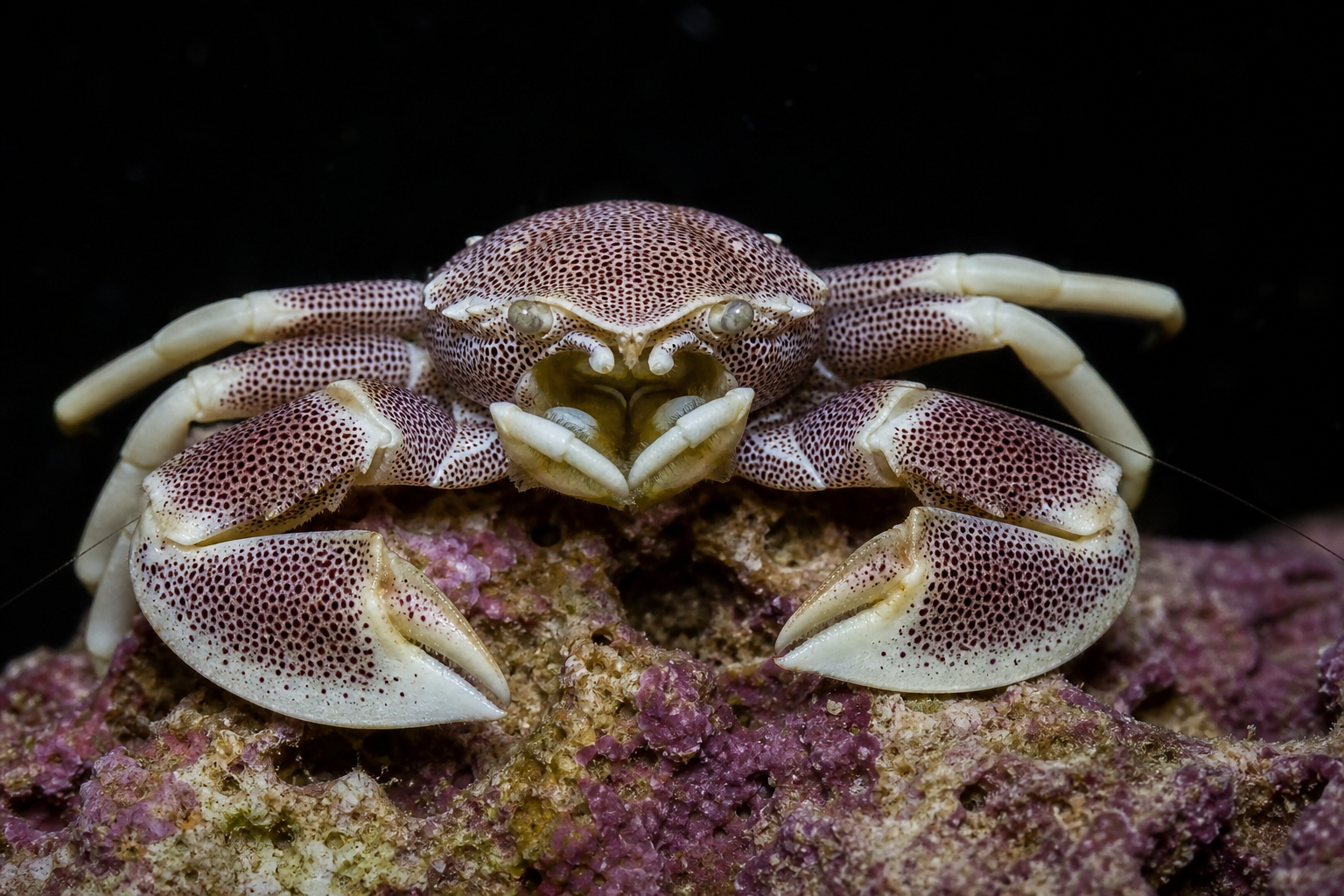
The Porcelain Crab is one of the most underrated “reef nerd” inverts you can keep. It looks like a crab, but it doesn’t act like the usual crab chaos. Instead of bulldozing, hunting, or stealing everything it can reach, porcelain crabs are primarily filter feeders—they wave little fan-like appendages in the water to catch food particles.
That makes them:
• peaceful
• interesting to watch (once you know what you’re looking for)
• surprisingly useful in the right system
The catch is simple: a porcelain crab needs a tank where there’s actually something in the water to filter. In ultra-clean systems with aggressive filtration and light feeding, they can slowly starve even though they seem “fine” for a while.
If you can provide consistent suspended food (naturally or intentionally), porcelain crabs can be hardy and fascinating long-term residents.
Quick Care Snapshot
Difficulty: Intermediate (mostly because of feeding)
Minimum tank size: 20 gallons
Tank maturity: 3–6+ months recommended
Lighting: Not relevant
Flow: Moderate (they need water movement to deliver food)
Placement: Rock crevices, often near flow; may associate with anemones
Feeding: Filter feeding + opportunistic scavenging
Reef safe: Yes
Temperament: Peaceful
Biggest risks: Starvation in ultra-clean tanks, predation by aggressive fish, getting outcompeted for food
Natural Background
Porcelain crabs live in reef environments where water movement constantly carries plankton and organic particles. They station themselves in cracks, under ledges, or near host inverts and “fan” food out of the water column.
They’re built for:
• catching suspended particles
• staying tucked into safe places
• living in moderate surge zones
In aquariums, they behave the same way:
• hide most of the day
• sit in a preferred perch
• fan-feed when flow and food are present
Tank Requirements
Stability (simple but important)
Porcelain crabs are fairly tolerant, but like all inverts they do best with:
• stable salinity
• stable temperature
• good oxygenation
They don’t handle sudden swings or harsh treatments well.
Flow (more important than people expect)
They need moderate flow because flow delivers food to their fans.
• too little flow = no food delivery
• too much direct blasting = they can’t feed comfortably
The best setup is a perch where flow passes by steadily, not a jet aimed directly at them.
Habitat
Provide:
• rockwork with crevices
• overhangs and shaded zones
• a place near flow where they can sit and fan-feed
Tanks with minimal rock structure often lead to more stress and less feeding.
Feeding
This is the whole game with porcelain crabs.
What they eat
Primarily:
• suspended fine foods
• micro-particles
• plankton-sized items
• “reef snow” style fines in the water column
Secondarily:
• leftover scraps they can reach
Practical feeding approach
A porcelain crab thrives in tanks where:
• fish are fed regularly (fine particles exist)
• corals are fed occasionally (fines remain suspended)
• the system isn’t stripped sterile
If your tank is ultra-clean, you may need to support them by:
• occasionally adding fine particulate foods (small amounts)
• feeding more consistently rather than dumping big meals
Signs it’s feeding
You’ll see it:
• extend feathery fans
• rhythmically sweep them through flow
• bring collected particles to its mouth
If it never fan-feeds, something is off: low flow, low food availability, or stress.
Compatibility
With reef tanks
Porcelain crabs are generally reef safe and don’t bother corals.
With fish
Main risk is predation:
• aggressive fish
• crab-hunting fish
• fish that pick at anything that moves
In peaceful reef communities, they do well.
With inverts
Usually peaceful. They can be outcompeted by larger crabs for hiding spots and scraps.
With anemones
Some porcelain crabs associate with anemones or other stinging inverts for protection. This can work well, but they don’t strictly require an anemone to survive.
Common Mistakes
1) Treating it like a scavenger crab
Porcelain crabs are filter feeders first. A tank with no suspended food is a slow death.
2) Keeping it in ultra-clean, low-feeding tanks
Great for SPS. Terrible for porcelain crab nutrition unless you supplement.
3) No flow near its perch
It can’t filter-feed without water movement.
4) Keeping with aggressive fish
They are small and vulnerable.
5) Expecting to see it constantly
They often hide until they feel safe, especially early on.
Notes & Variations
“It hides all the time”
Normal. Many porcelain crabs are shy, especially during the day.
Signs of health
Good signs:
• fan-feeding regularly
• active repositioning to find flow
• intact limbs and normal body condition
Red flags:
• never fan-feeds
• remains retracted constantly
• appears thin or lethargic
• missing limbs without recovery
Molting
Like other crustaceans, porcelain crabs molt. Leave molts alone until you confirm it’s not the crab itself.
9. Final Thoughts
Porcelain crabs are one of the most satisfying “if you know, you know” reef inverts. They don’t add loud color or dramatic movement, but they add realism—filter feeding behavior that feels like a functioning reef.
The key is simple: flow + suspended food. If you can provide those, porcelain crabs are peaceful, reef safe, and genuinely fascinating long term.