[es]
Overview
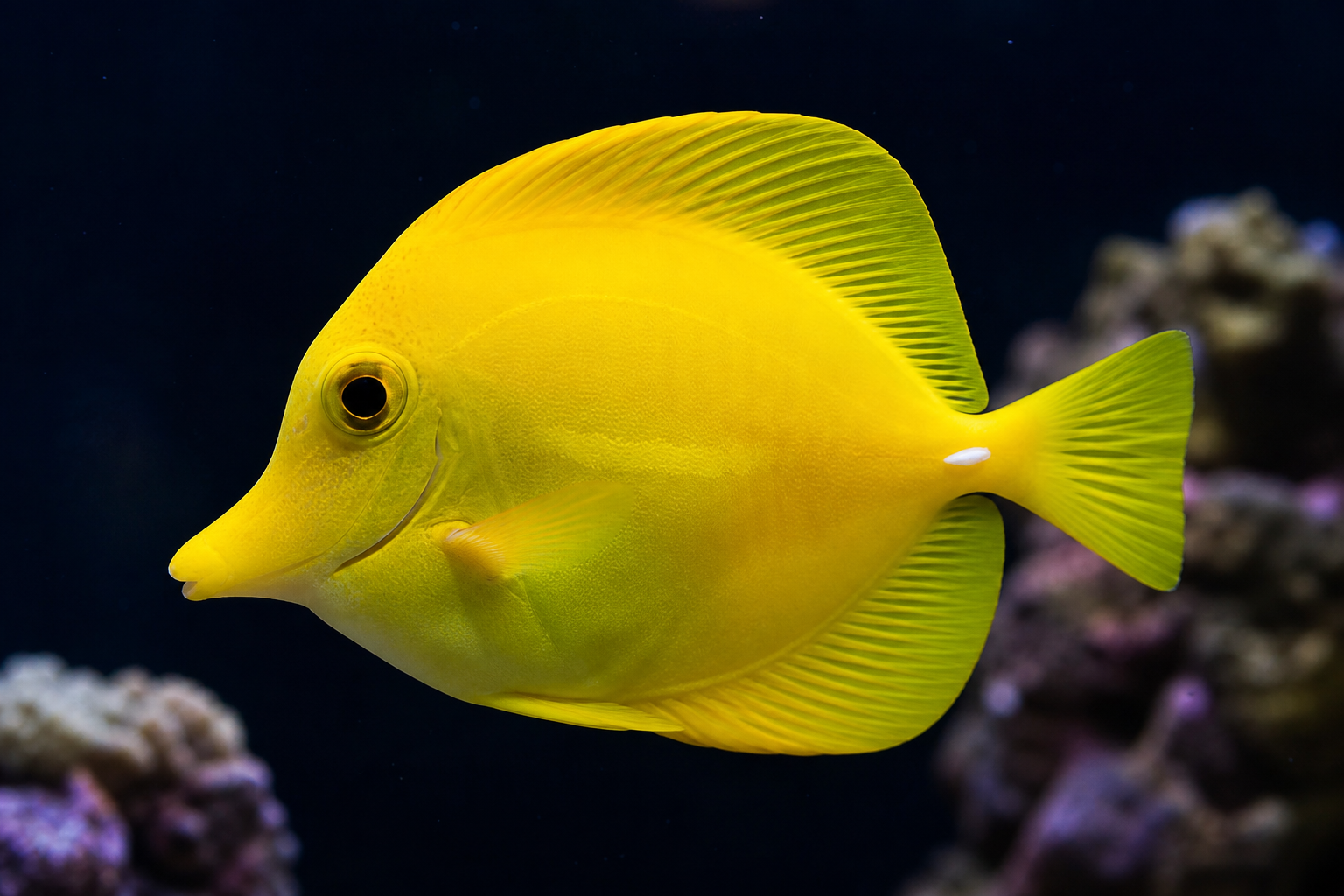
The Yellow Tang is one of the most iconic reef fish in the hobby—bright, solid yellow, constantly cruising the tank, and always picking at surfaces. It brings movement, color, and a “real reef” feel to a system in a way few fish can. Many hobbyists also like Yellow Tangs because they graze on algae and help keep rockwork and glass cleaner over time.
Yellow Tangs can be hardy in the right environment, but they’re not a beginner “starter fish” in the same way a clownfish is. They need space, stable water quality, and good nutrition, and they can be territorial—especially toward other tangs or similarly shaped fish. If you can meet their needs, they’re a rewarding long-term fish that becomes a centerpiece of the tank.
Quick Care Snapshot
Reef Safe: Yes
Difficulty: Moderate
Temperament: Semi-aggressive (territorial with tangs and similar fish)
Minimum Tank Size: 75 gallons (bigger is better)
Best Kept As: Single in most tanks
Diet: Herbivore grazer + supplemental foods
Water Conditions: Stable reef parameters; high oxygen and strong filtration help
Special Note: Needs swimming space and regular algae-based feeding
Natural Background
In the wild, Yellow Tangs spend their time cruising reef areas and grazing on algae. They’re constant movers—built for distance and foraging. That’s why tank size and layout matter so much: a tang isn’t just “a fish that fits,” it’s a fish that needs room to behave naturally.
Their grazing behavior is also why they’re commonly added to reef systems—when healthy and well-fed, they’re always browsing and helping manage algae growth as part of the tank’s ecosystem.
Tank Requirements
Tank size & swimming room
• 75 gallons minimum is a practical baseline for long-term success.
• 90–125+ gallons is better, especially if you want a more peaceful community and flexibility with tankmates.
• Prioritize length and open swimming lanes, not just total gallons.
Rockwork and layout
• Provide rockwork for grazing and security, but avoid building a wall that blocks swimming space.
• Create a mix of:
• open lanes for cruising
• surfaces to graze
• hiding spots for stress relief
Flow, oxygen, and filtration
Tangs appreciate:
• good water movement (they’re used to oxygen-rich reef environments)
• strong filtration and stable conditions
Lid / jumping
Not the most notorious jumper, but any fish can jump when startled. A lid is always a good idea, especially if you keep other jump-prone species.
Feeding
Feeding is one of the biggest success factors for Yellow Tangs.
What to feed
They are primarily herbivores and do best with:
• dried seaweed/nori (a staple for most tang keepers)
• algae-based pellets and flakes
• frozen foods with veggie content
• occasional meaty foods as a supplement (not the main diet)
Feeding tips
• Offer seaweed regularly (many hobbyists use a clip).
• Multiple smaller feedings can help keep them in good body condition.
• A hungry tang is more likely to become aggressive or pick at things it shouldn’t.
How often
• Daily algae-based feeding is recommended.
• In many tanks, 2 small feedings per day works better than one large feeding.
Compatibility
Yellow Tangs are reef safe with corals and most invertebrates. Compatibility issues are usually about territory and other fish.
Good tankmates
They often do well with:
• clownfish
• gobies and blennies
• cardinalfish
• many reef-safe wrasses
• peaceful community fish that aren’t tang-shaped
Watch-outs
• Other tangs: can trigger fighting, especially in smaller tanks or if introduced in the wrong order.
• Similar-shaped fish: they may chase fish that “look like competition.”
• Adding new fish later: if a Yellow Tang is established first, it may bully newcomers.
One tang rule (practical)
In many home systems, one tang is the easiest path to peace. Multiple tangs can be done, but it usually requires larger tanks, thoughtful planning, and careful introductions.
Common Mistakes
1) Putting a Yellow Tang in a tank that’s too small
This is the most common mistake. They may survive, but they often become stressed, aggressive, or unhealthy long-term without space.
2) Treating it like an algae “solution”
They graze, but they don’t fix the root causes of algae issues. Choose the fish because you want the fish.
3) Not feeding enough algae-based food
A tang that isn’t fed properly may lose weight, become more aggressive, and struggle with long-term health.
4) Adding it too early in a tank’s stocking plan
Tangs can become territorial “owners” of the tank. Often better to add them after more timid fish are settled (and in larger systems, sometimes as one of the later additions).
5) Ignoring signs of stress
A stressed tang may:
• hide constantly
• breathe rapidly
• show faded color
• become unusually aggressive
• stop grazing
Stress usually means something is off: tank size, tankmates, water quality, or diet.
Notes & Variations
Common names
- Yellow Tang
Scientific name
- Zebrasoma flavescens
Behavior notes
• Constant cruising and grazing is normal.
• They often pick a “sleeping spot” in the rockwork at night.
• They may flash or posture when asserting territory—especially around other tangs.
Practical note about “spikes”
Yellow Tangs have a sharp defensive spine near the tail. They don’t use it to attack randomly, but it can cause injury during fights or when being handled. Use care during transfers or netting.
Final Thoughts
The Yellow Tang is a classic for a reason: it’s beautiful, active, and genuinely helps create a natural reef vibe. The key is meeting its needs—space, stable water, and a consistent herbivore diet. If you can provide a tank with real swimming room and keep it well-fed, a Yellow Tang can be a long-term centerpiece that stays vibrant and busy for years. If you try to squeeze it into a small system or underfeed it, you’ll often end up with stress, aggression, and long-term health problems.