[es]
Overview
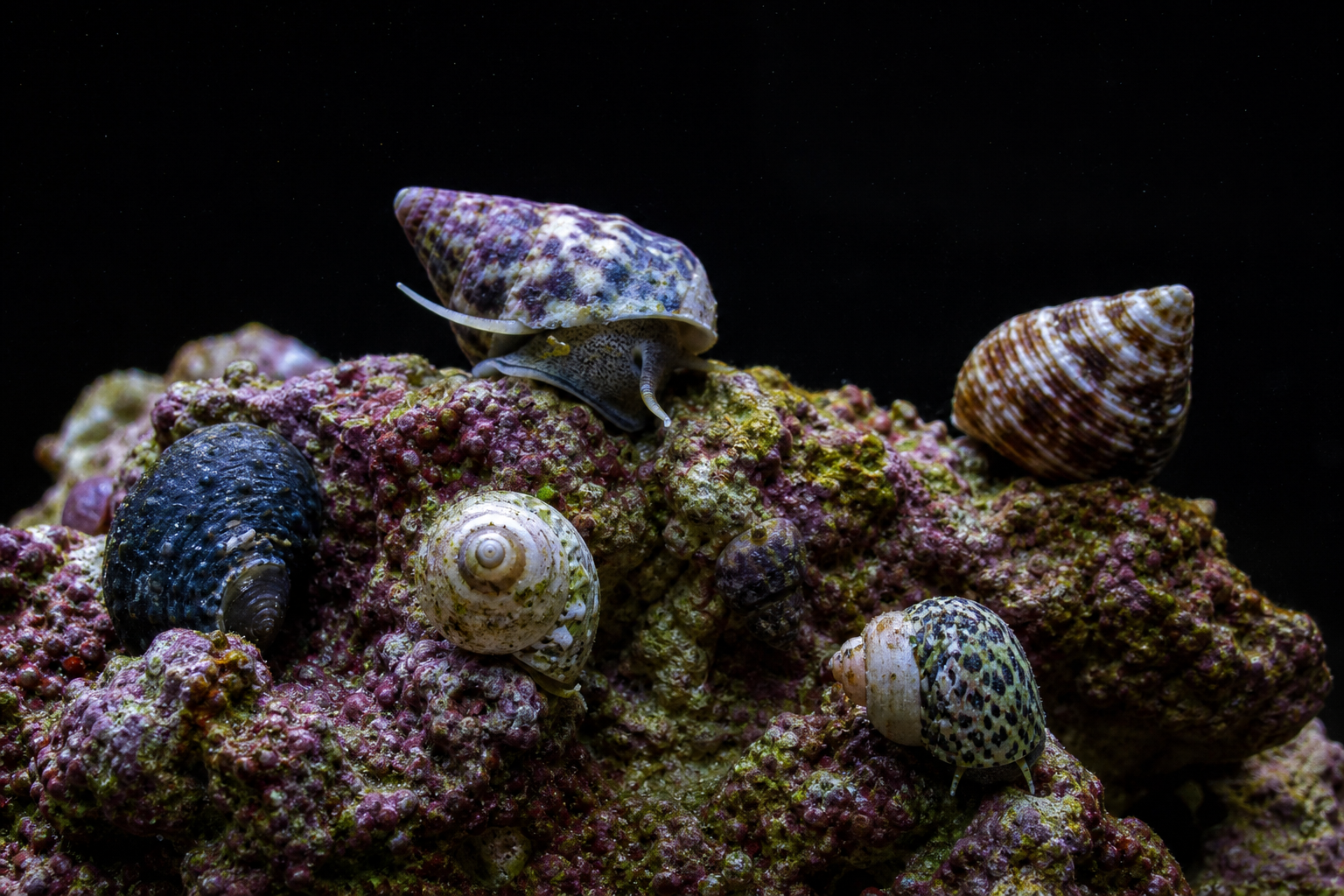
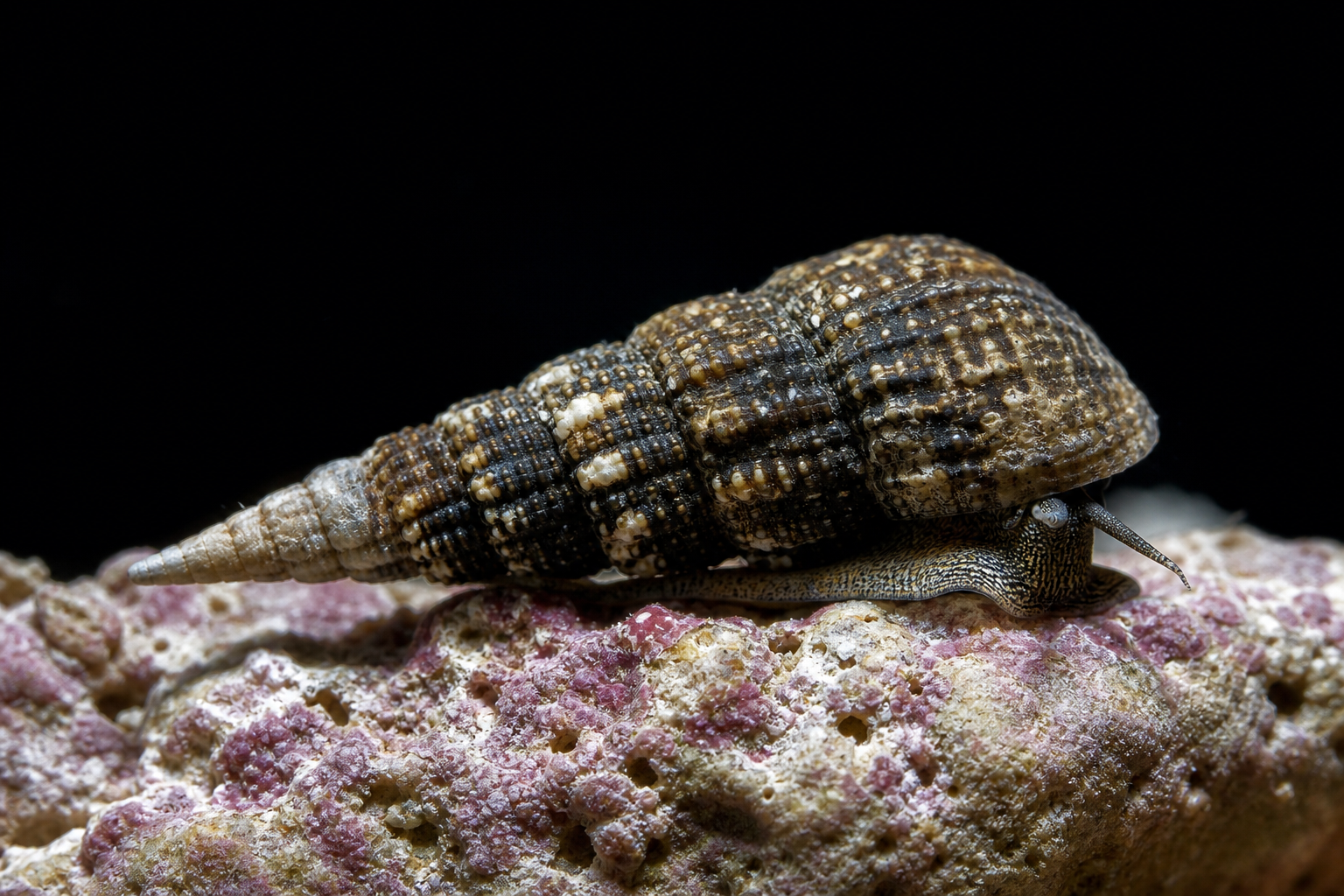
The Trochus Snail is one of the best “core cleanup crew” snails in reefkeeping. If you want a snail that reliably grazes algae, works on both rock and glass, and doesn’t require constant babysitting, trochus is usually the answer.
What makes trochus snails stand out is the combination of:
• strong algae grazing (film and light turf)
• good mobility and grip
• and the ability to right themselves if they fall upside down (in most cases)
That last point is huge, because it’s one of the main weaknesses of some other common snails. Trochus are often the “set-and-forget” grazer people think they’re getting when they buy other snails.
Quick Care Snapshot
Difficulty: Easy
Minimum tank size: Any (nano to large)
Tank maturity: 1–3+ months recommended (once algae/biofilm is present)
Lighting: Not relevant
Flow: Any normal reef flow
Placement: Glass, rockwork, overflow walls
Feeding: Film algae, biofilm, light turf algae; supplemental algae sheets if needed
Reef safe: Yes
Temperament: Peaceful
Biggest risk: Starvation in ultra-clean tanks; hermit harassment in shell-starved tanks
Natural Background
Trochus snails live on hard reef surfaces where they graze algae films and biofilm. They’re built to cling, scrape, and roam across rock and reef structure continuously.
In aquariums, they behave like:
• steady, efficient grazers
• glass and rock cleaners
• “night shift” workers (often more active after lights out)
They’re not sand sifters, and they’re not detritus scavengers. They’re surface algae grazers.
Tank Requirements
Stability (especially salinity)
Trochus are hardy, but snails are sensitive to salinity swings—especially in smaller tanks.
• stable top-off helps a lot
• temperature stability matters too
Habitat
They do best in tanks with:
• rock and glass surfaces to graze
• a consistent supply of biofilm and algae
• stable rockwork (they’re not bulldozers, but they roam everywhere)
Flow
Normal reef flow is fine. Trochus generally handle flow well, but extreme turbulence zones can still knock snails loose repeatedly, which adds stress.
Feeding
Trochus snails are algae film grazers.
What they eat
• film algae
• biofilm
• light turf algae
They generally don’t solve:
• thick, established nuisance algae outbreaks by themselves
Supplemental feeding
In very clean systems:
• provide algae sheets occasionally
• don’t scrub every surface spotless all the time
A tank that looks “perfectly clean” can be a starvation trap for grazers.
Compatibility
With reef tanks
Trochus snails are reef safe and peaceful.
With corals
No direct issues, but:
• they can knock over unsecured frags by crawling over them
If you keep frags loose, any roaming snail can cause trouble.
With fish
Fish ignore them.
With hermits
Hermits may harass snails for shells, especially if:
• hermits are underfed
• shells are limited
• hermits are overstocked
Trochus snails are generally less targeted than smaller snails, but it can still happen.
Common Mistakes
1) Overstocking in new tanks
New tanks may not have enough algae/biofilm to support a big snail army.
2) Expecting them to fix severe algae outbreaks
They help, but nutrient control and husbandry fix the root cause.
3) Running ultra-clean systems with no supplemental feeding
No algae = starvation.
4) Blaming them for coral problems
They don’t eat coral tissue. Most “issues” are mechanical knocks.
5) Ignoring snail harassment from hermits
If you see repeated snail harassment, it’s usually a management issue.
Notes & Variations
Trochus vs Astraea
This is the practical difference most reefkeepers care about:
• Trochus: usually self-righting, very reliable grazer
• Astraea: great grazer, often struggles to self-right
Signs of health
Good signs:
• steady grazing trails on glass
• active movement day and night
• strong grip on surfaces
Red flags:
• inactivity for long periods
• weak grip / frequent falls
• empty shells appearing
Reproduction
In some tanks, trochus snails reproduce. When it happens, it’s a nice sign that your system is stable and supports micro-life.
Final Thoughts
Trochus snails are one of the easiest “yes” answers in reefkeeping. They’re effective, hardy, and usually don’t require the constant flipping/rescuing that some other snails do.
If you want a cleanup crew snail that actually behaves like the ideal cleanup crew snail, trochus is a top pick.