[es]
Overview
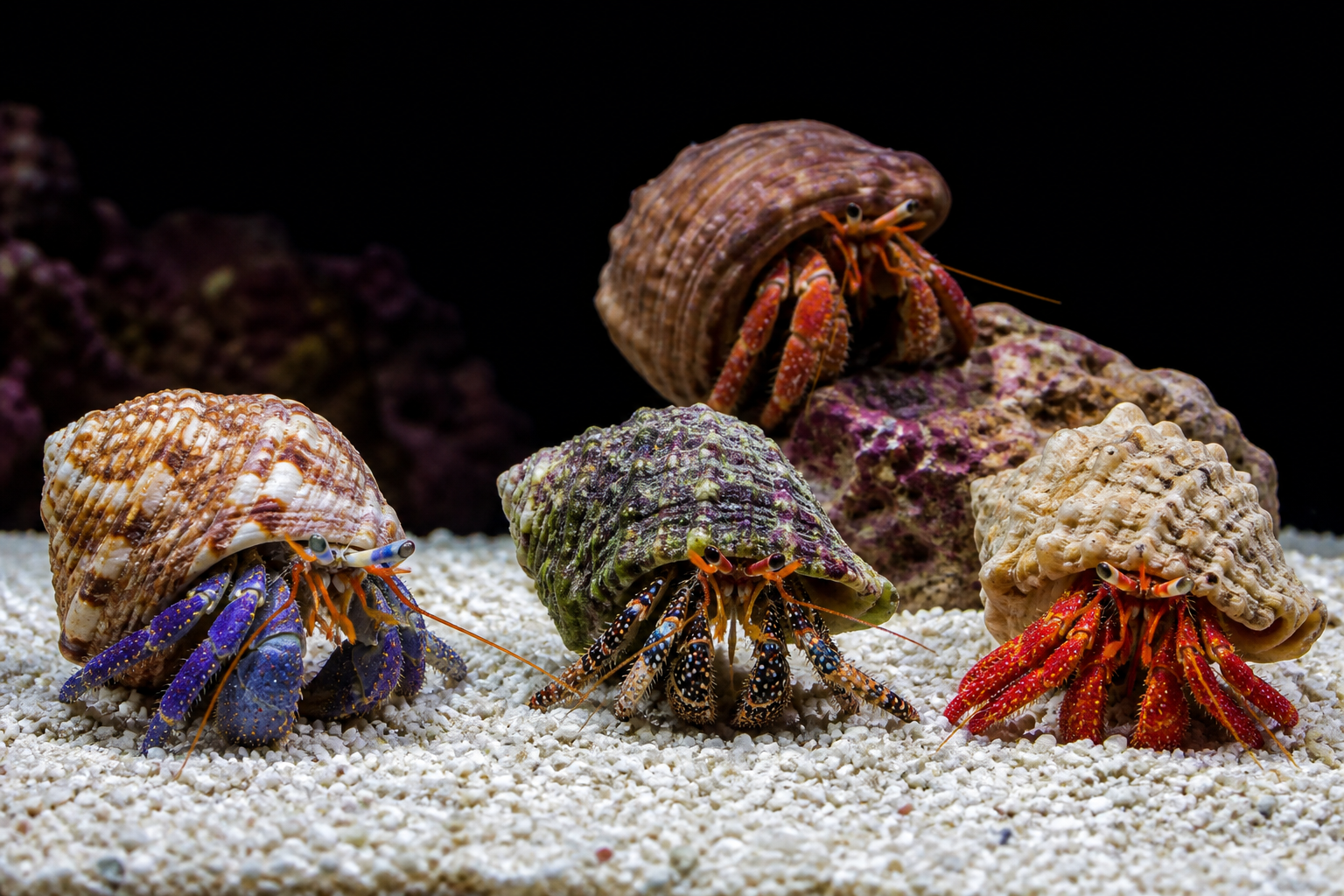
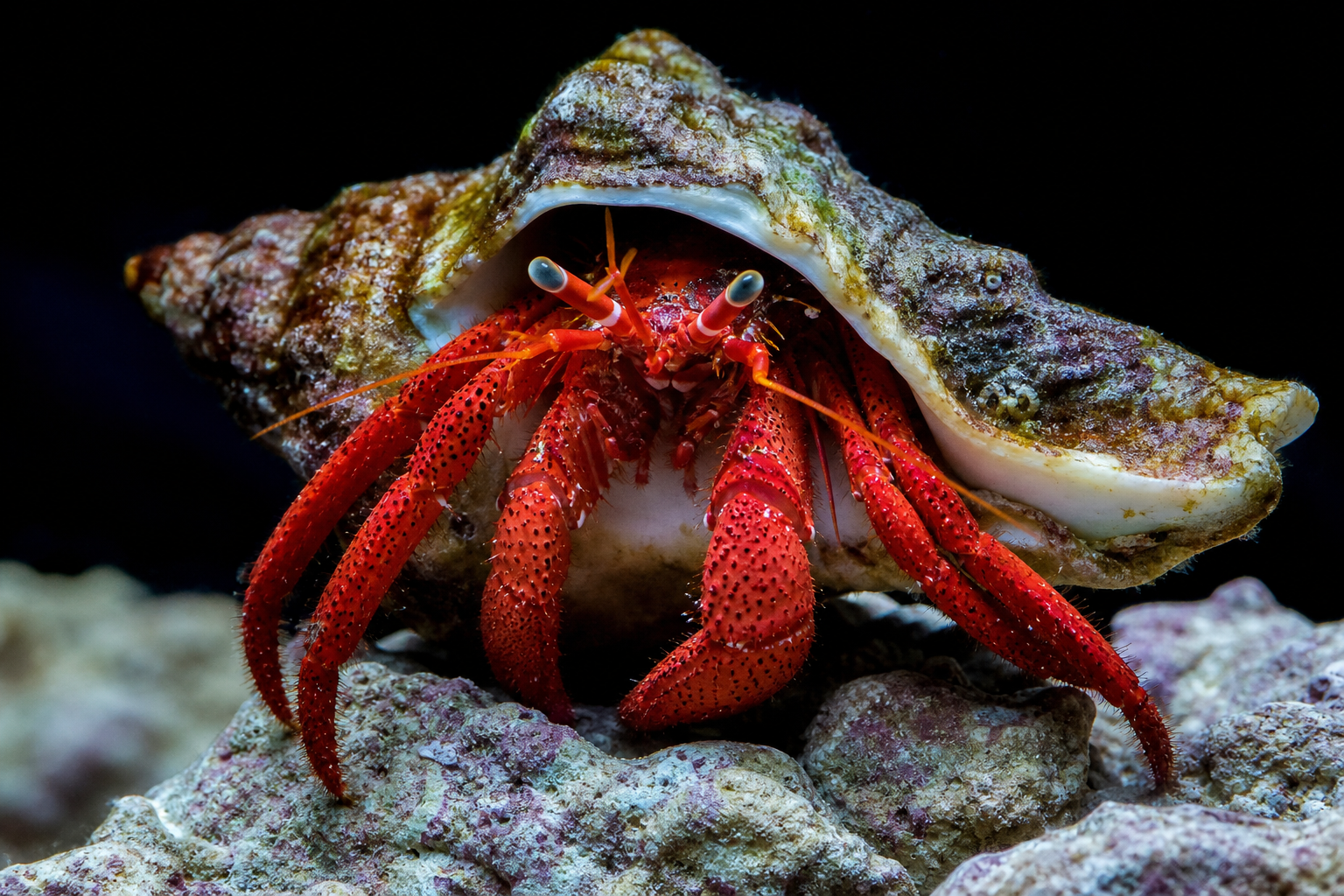
The Scarlet Hermit Crab is one of the most reliable, reef-friendly hermit crabs you can add to a saltwater aquarium. It’s active, visible, and generally well-behaved compared to many other hermits—which is exactly why it’s so popular.
Scarlets are best thought of as algae grazers first, scavengers second. They spend most of their time picking at film algae, biofilm, and leftover bits of food rather than hunting snails or causing chaos. That doesn’t mean they’re angels—but it does mean they’re usually a good fit for mixed reefs when expectations are set correctly.
If you want a hermit crab that actually earns its place without constantly stressing you out, the Scarlet Hermit is a solid choice.
Quick Care Snapshot
Difficulty: Easy
Minimum tank size: 10 gallons
Tank maturity: 3+ months recommended
Lighting: Not relevant
Flow: Any normal reef flow
Placement: Rockwork, sandbed, glass
Feeding: Algae, biofilm, leftover food
Reef safe: Yes, with minor caveats
Temperament: Generally peaceful
Biggest risk: Snail harassment if underfed or lacking shells
Natural Background
In the wild, scarlet hermits live on reefs where they roam constantly in search of algae and organic material. They’re small, mobile, and opportunistic—but they’re not aggressive predators.
That natural behavior translates well to aquariums:
• they stay busy
• they graze continuously
• they adapt easily to captive conditions
Their bright red legs aren’t just for show—they make them easy to spot and monitor, which helps catch issues early.
Tank Requirements
Stability over precision
Scarlet hermits are tolerant of standard reef conditions as long as:
• salinity is stable
• temperature is stable
• oxygen levels are adequate
They don’t need perfect numbers, but they don’t handle sudden swings well.
Habitat
They do best in tanks with:
• plenty of rockwork
• algae and biofilm to graze
• multiple surfaces to explore
Bare tanks limit their usefulness and lead to boredom-driven behavior.
Shell availability (important)
Hermits don’t grow their own shells—they steal upgrades.
Always provide:
• several empty shells of varying sizes
• shells placed openly, not buried
Lack of shells is one of the biggest triggers for aggression toward snails.
Feeding
Scarlet hermits are primarily grazers.
What they eat
• film algae
• biofilm
• detritus
• leftover fish food
In most tanks, they feed themselves naturally.
Supplemental feeding
In clean or newer systems:
• occasional sinking food helps
• algae sheets can be offered sparingly
Underfed hermits are more likely to:
• harass snails
• steal food aggressively
• fight other hermits
Compatibility
With reef tanks
Scarlet hermits are among the most reef-safe hermits available.
With corals
They don’t eat coral tissue, but:
• they can knock over loose frags
• they may climb over corals during grazing
Secure frags well and problems are rare.
With snails
Generally good—if they’re fed and have spare shells.
Most snail deaths blamed on scarlets come down to:
• hunger
• shell competition
With fish
Fish ignore them.
With other hermits
Usually peaceful, but:
• crowding
• limited food
• no spare shells
…can cause conflicts.
Common Mistakes
1) Not providing extra shells
This is the #1 preventable problem.
2) Assuming they live entirely on “waste”
They still need real food sources.
3) Overstocking hermits
Too many hermits = competition and aggression.
4) Blaming them for unrelated snail deaths
Snails die for many reasons. Hermits often get blamed after the fact.
5) Ignoring size growth
A small hermit today will need bigger shells later.
Notes & Variations
Signs of a healthy Scarlet Hermit
Good signs:
• active grazing
• bright coloration
• regular shell changes
• calm behavior
Red flags:
• sluggish movement
• constant snail harassment
• wandering openly during the day searching for food
Molting
Hermits molt periodically. A molted shell looks like a dead crab—confirm before removing it.
“Are they truly reef safe?”
As close as hermits get—but still conditional on feeding and shells.
Final Thoughts
Scarlet hermit crabs are one of the best examples of a cleanup crew animal that actually fits reef tanks. They’re visible, effective, and relatively low-risk when managed properly.
Give them food, give them shells, don’t overcrowd them—and they’ll do their job without drama.