[es]
Overview
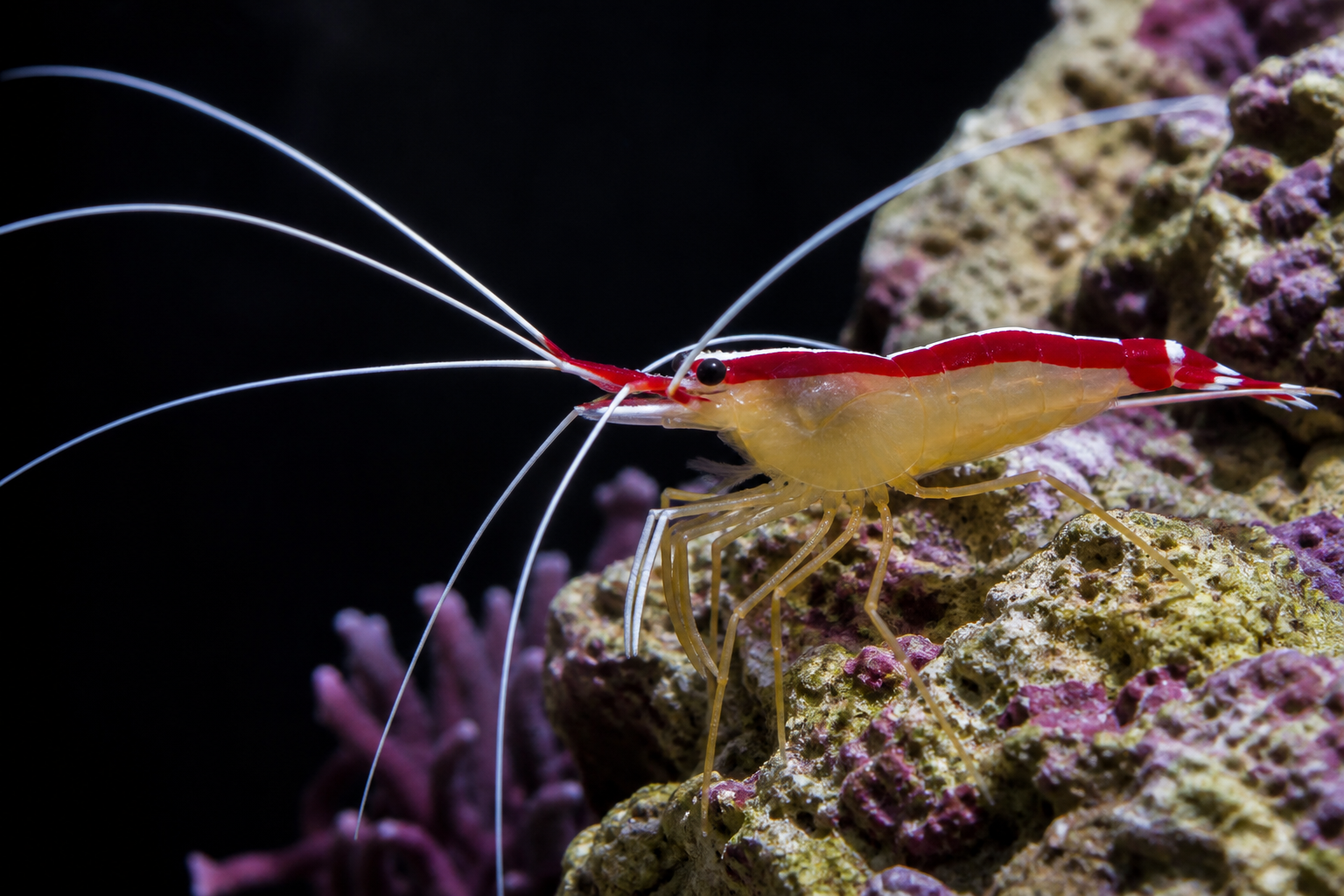
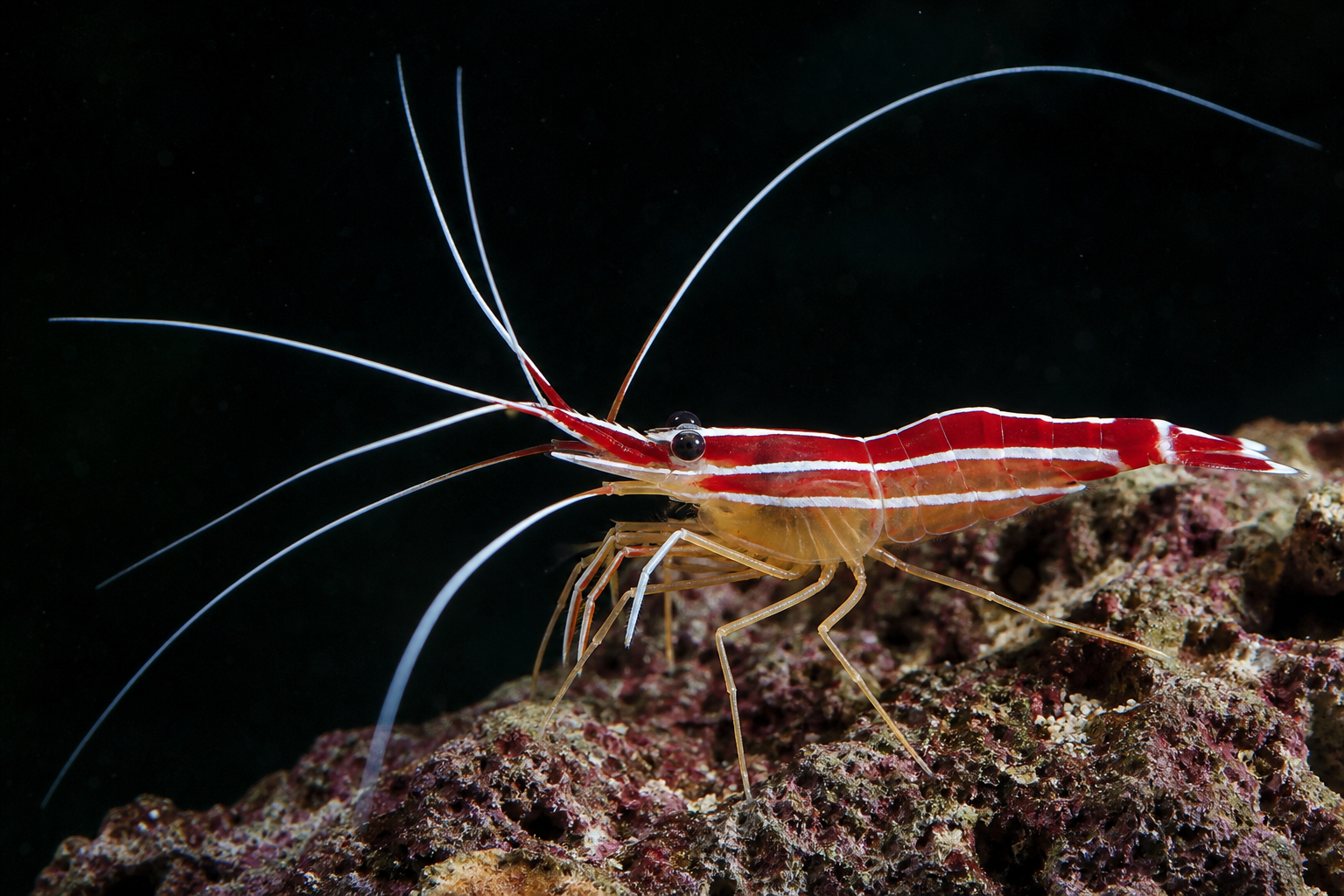
The Peppermint Shrimp is one of the most commonly added “problem-solving” shrimp in reef tanks—usually because people want help with nuisance pests, leftover food cleanup, or just more life in the rockwork.
When they’re a good fit, peppermint shrimp are:
• hardy
• active (mostly at night)
• great scavengers
• and genuinely useful in a reef ecosystem
When they’re a bad fit, they can become:
• invisible until feeding time
• aggressive food thieves
• and occasionally irritating to certain corals (especially if underfed)
Peppermints are not “bad shrimp.” They’re opportunistic. The key is using them with the right expectations: they’re reef safe most of the time, but they’re also not delicate little angels.
Quick Care Snapshot
Difficulty: Easy
Minimum tank size: 10 gallons
Tank maturity: 3+ months recommended
Lighting: Not relevant
Flow: Moderate
Placement: Rockwork and crevices
Feeding: Omnivore scavenger (leftovers + supplemental feeding)
Reef safe: Usually yes, with caveats
Temperament: Semi-peaceful; can be pushy during feeding
Biggest risks: Coral picking when underfed, harassment by aggressive fish, disappearing into rockwork
Natural Background
Peppermint shrimp live among reef rock and rubble where they scavenge and opportunistically feed. They’re adapted to:
• finding food fast
• hiding well
• feeding mostly at low light
In aquariums, that means:
• you’ll see them more at night
• they’ll show up instantly when food hits the water
• they’ll vanish the rest of the time
This is normal behavior.
Tank Requirements
Stability matters (especially for molting)
Peppermint shrimp are hardy but still sensitive to:
• salinity swings
• temperature spikes
• sudden parameter changes
Stable top-off and consistent maintenance are important, especially in smaller tanks.
Habitat
They do best with:
• rockwork and crevices
• shaded hiding spots
• a tank that isn’t dominated by aggressive fish
A tank with no cover often results in shrimp that hide constantly.
Flow
Moderate flow is ideal:
• enough to distribute food particles
• not so strong that it constantly blows them out of hiding
Feeding
Peppermint shrimp are omnivorous scavengers.
What they eat
• leftover fish food
• meaty scraps
• pellets and flakes
• small organic bits
They will also steal food from corals and anemones if they can.
Supplemental feeding
If you want peppermint shrimp to behave well, feed them.
• small meaty foods occasionally
• ensure food reaches the rockwork where they hide
Underfed peppermint shrimp are more likely to:
• pick at corals
• harass slow feeders
• become aggressive during feeding time
Compatibility
With reef tanks
Peppermint shrimp are usually reef safe, but there are caveats:
• in well-fed tanks, they’re usually model scavengers
• in hungry tanks, they can irritate fleshy corals by picking and stealing
With corals
Most are fine, but watch for:
• repeated picking at fleshy LPS
• stealing food from coral mouths
• coral staying retracted because shrimp won’t leave it alone
If you see this behavior, it’s often a feeding and stocking issue.
With fish
Generally fine with peaceful fish. Avoid:
• fish that hunt shrimp
• aggressive fish that keep them stressed
With other shrimp
They can coexist with other shrimp, but:
• competition increases feeding aggression
• small tanks increase territorial behavior
Common Mistakes
1) Adding them and never feeding them
Hungry peppermint shrimp get pushy and opportunistic.
2) Expecting them to be visible all day
They’re often nocturnal and shy.
3) Blaming them for every coral issue
They can irritate corals, but stressed corals often attract opportunistic picking.
4) Keeping them with aggressive fish
They’ll hide constantly or disappear.
5) Confusing molts with dead shrimp
Molts look exactly like a dead shrimp at first glance.
Notes & Variations
Molting
Peppermint shrimp molt regularly.
• they hide more before and after molting
• leave molts in the tank—they may be eaten and recycled
Signs of health
Good signs:
• active foraging at night
• intact antennae and legs
• strong feeding response
Red flags:
• lethargy
• repeated failed molts
• sudden disappearance after harassment
“Are they safe with anemones?”
Usually, but they will steal food from anemones during feeding. If that causes issues, feed the anemone more carefully or distract the shrimp.
Final Thoughts
Peppermint shrimp are useful, hardy reef scavengers with a lot of personality. They’re not perfect angels, but they’re not villains either—they’re opportunists. If you keep them well-fed, give them hiding spaces, and avoid aggressive tankmates, they’re one of the most practical shrimp you can add to a reef tank.
If you neglect feeding and expect them to “clean for free,” they’ll start making their own rules.