[es]
Overview
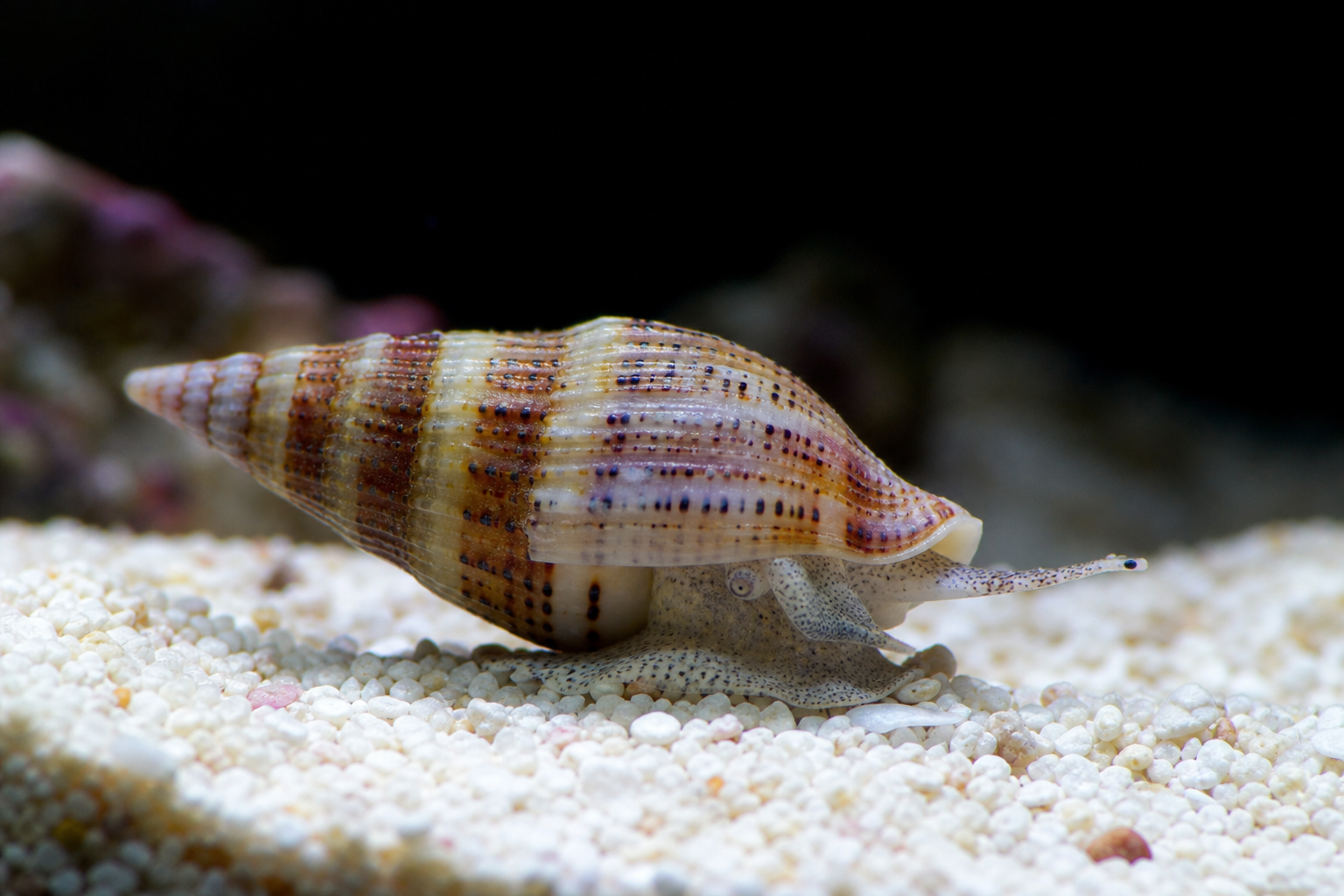
The Nassarius Snail is one of the best “sandbed utility” animals you can add to a reef tank—as long as you understand what it actually does.
Nassarius snails are not algae grazers. They’re not glass cleaners. They’re not there to make your sand white by eating diatoms.
They are sandbed scavengers.
They live buried in the sand, and when food hits the water, they pop up like little zombie periscopes and sprint toward it. Their job is to find leftover meaty food before it rots in the sandbed and fuels nutrient problems.
If you want a sandbed cleanup crew that eats detritus and leftover food, nassarius are excellent. If you want a snail that eats algae, choose something else.
Quick Care Snapshot
Difficulty: Easy
Minimum tank size: Any (nano to large)
Tank maturity: Any (best once the tank has regular feeding)
Lighting: Not relevant
Flow: Any normal reef flow
Placement: Sandbed (they bury themselves)
Feeding: Meaty leftovers, sinking foods, detritus
Reef safe: Yes
Temperament: Peaceful scavenger
Biggest risk: Starvation in lightly stocked tanks or tanks with very little feeding
Natural Background
Nassarius snails live in sandy environments where they bury themselves and detect food through smell. They’re built to:
• stay hidden
• sense food quickly
• move fast across sand
• scavenge efficiently
In the aquarium, they behave exactly the same way. If your nassarius are working, you’ll barely see them—until feeding time.
Tank Requirements
Stability (especially salinity)
Nassarius snails are hardy, but like most snails they’re sensitive to:
• salinity swings (common in nanos without top-off)
• temperature spikes
Stable top-off and consistent temperature go a long way.
Sandbed
They need:
• a sandbed to bury in
• sand that isn’t constantly blasted into dunes
They don’t require a deep sandbed, but they do need enough substrate to burrow comfortably.
Habitat
They do well in tanks with:
• regular feeding
• fish that drop food to the sandbed
• areas of sand that aren’t constantly disturbed
Feeding
Nassarius snails are meat-scavengers, not algae grazers.
What they eat
• leftover fish food
• sinking pellets
• meaty scraps
• organic bits in the sandbed
They do not primarily eat:
• algae
• film algae on glass
• thick nuisance algae
Supplemental feeding
In lightly stocked tanks, or tanks with very clean feeding:
• drop a small sinking meaty food occasionally
• don’t assume they can live on “nothing”
A nassarius snail without enough food will slowly starve, often while remaining buried most of the time.
Compatibility
With reef tanks
Nassarius snails are reef safe and do not bother corals.
With corals
No issues. They stay in the sand and don’t climb much.
With fish
Fish ignore them. They’re part of the cleanup crew ecosystem.
With other cleanup crew
Nassarius pair well with:
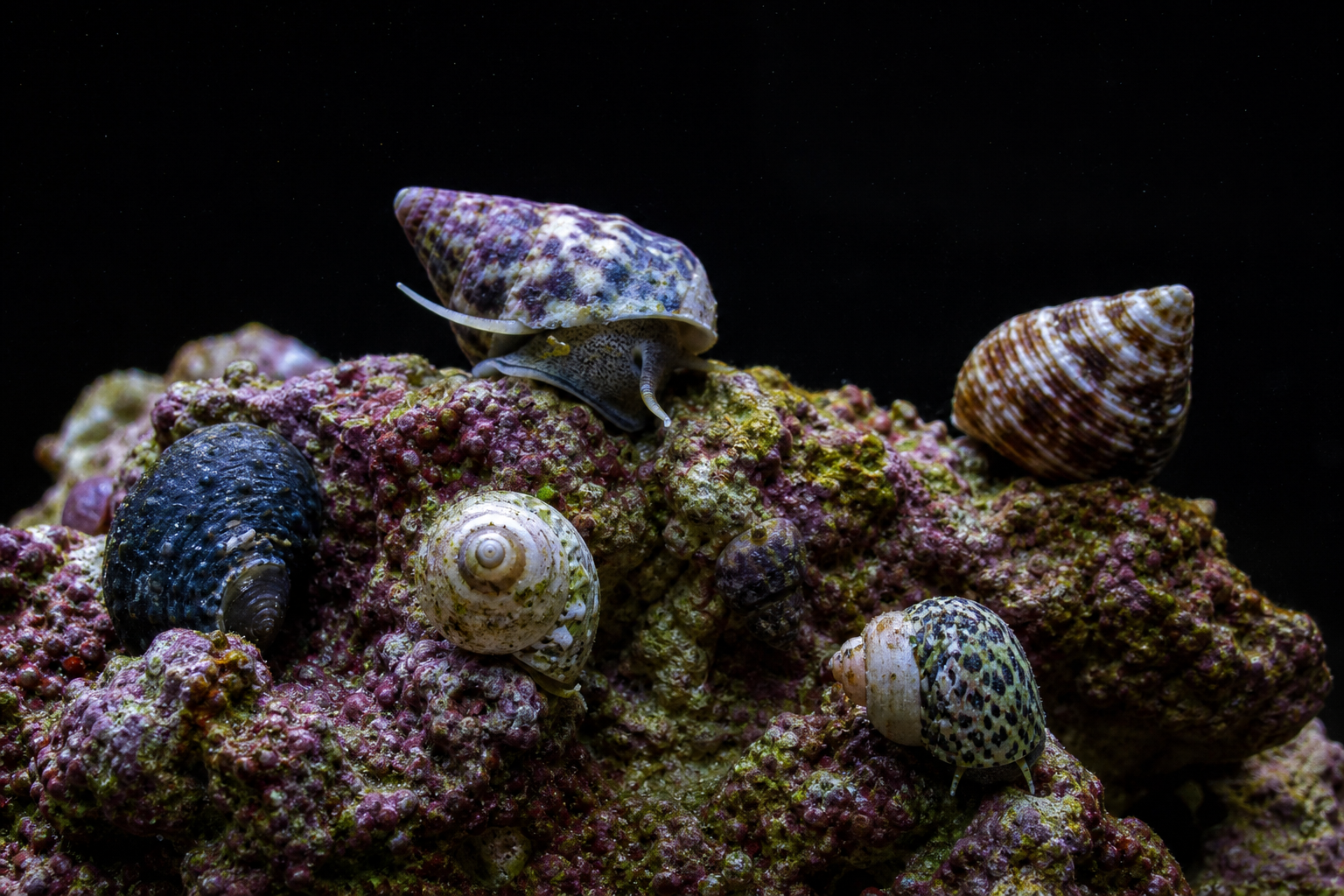
• trochus/astraea (algae grazers)
• ceriths (multizone grazers)
• hermits (with caution)
• conchs (for sandbed grazing in larger tanks)
They fill a different role than algae-grazing snails, which is why they’re so valuable.
Common Mistakes
1) Buying them for algae control
They won’t fix algae. They don’t eat it like you want them to.
2) Overstocking in lightly fed tanks
More snails than food = starvation.
3) No sandbed
They need substrate to bury.
4) Thinking “I never see them, so they died”
They may be buried. Check at feeding time—if you see them emerge, they’re fine.
5) Expecting them to keep sand visually white
They clean leftover food, not diatoms.
Notes & Variations
“They come out like zombies”
Yes. That’s normal and one of the reasons people love them.
Signs of health
Good signs:
• fast emergence at feeding time
• active crawling on sand when food is present
• burrowing behavior after feeding
Red flags:
• never emerging (in a tank that gets fed)
• repeated inactivity above the sand
• empty shells appearing over time
Nassarius vs Cerith
• Nassarius: sandbed scavenger, meaty food specialist
• Cerith: more versatile grazer, works on sand surface + rock + glass
They complement each other well.
Final Thoughts
Nassarius snails are one of the best examples of a cleanup crew animal that does a specific job extremely well. They don’t make your tank look cleaner by scraping algae—they make it healthier by preventing leftover food from turning into nutrient problems in the sandbed.
If you feed your tank regularly and have a sandbed, nassarius are an easy win.