[es]
Scientific Name
Behavior notes
Overview
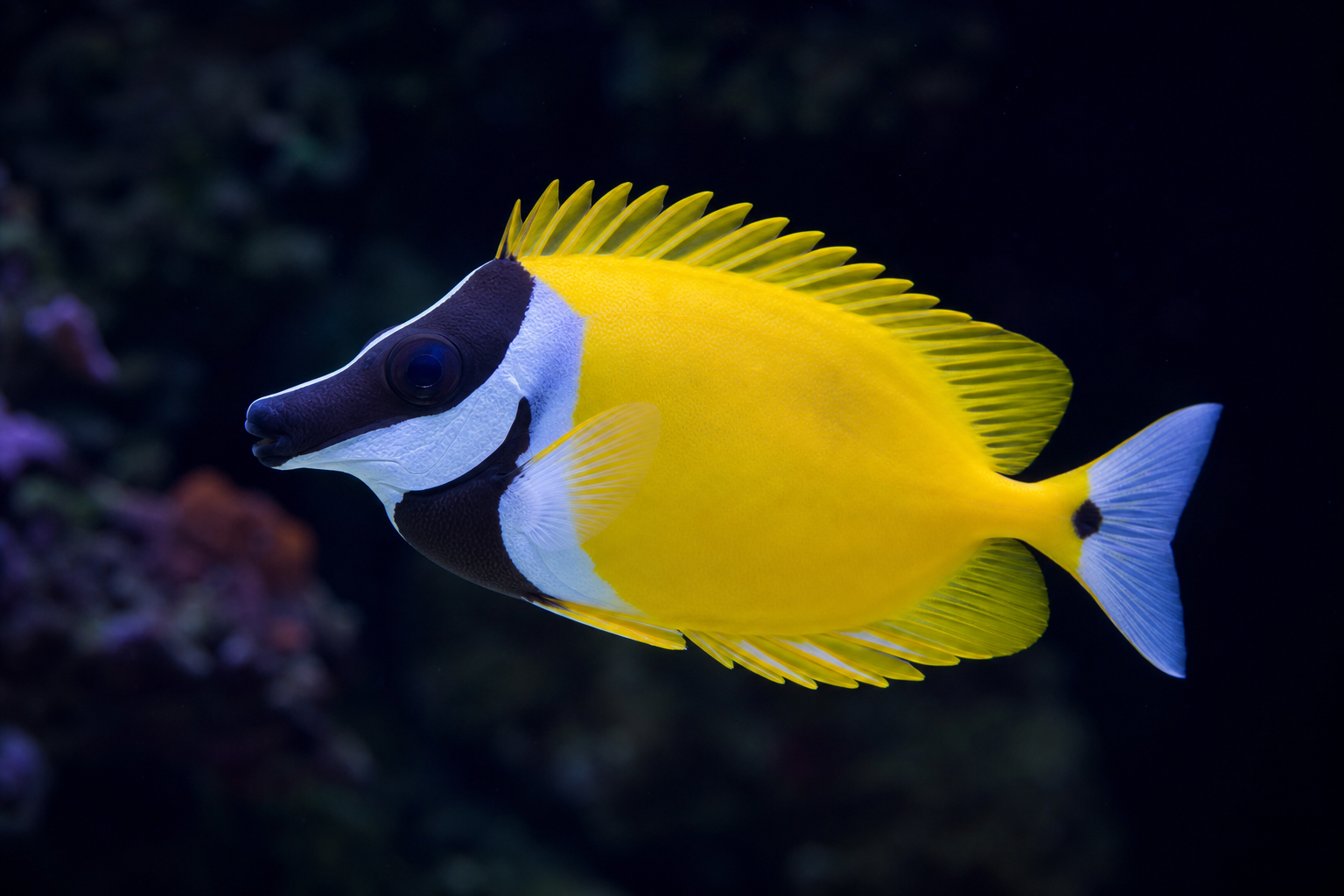
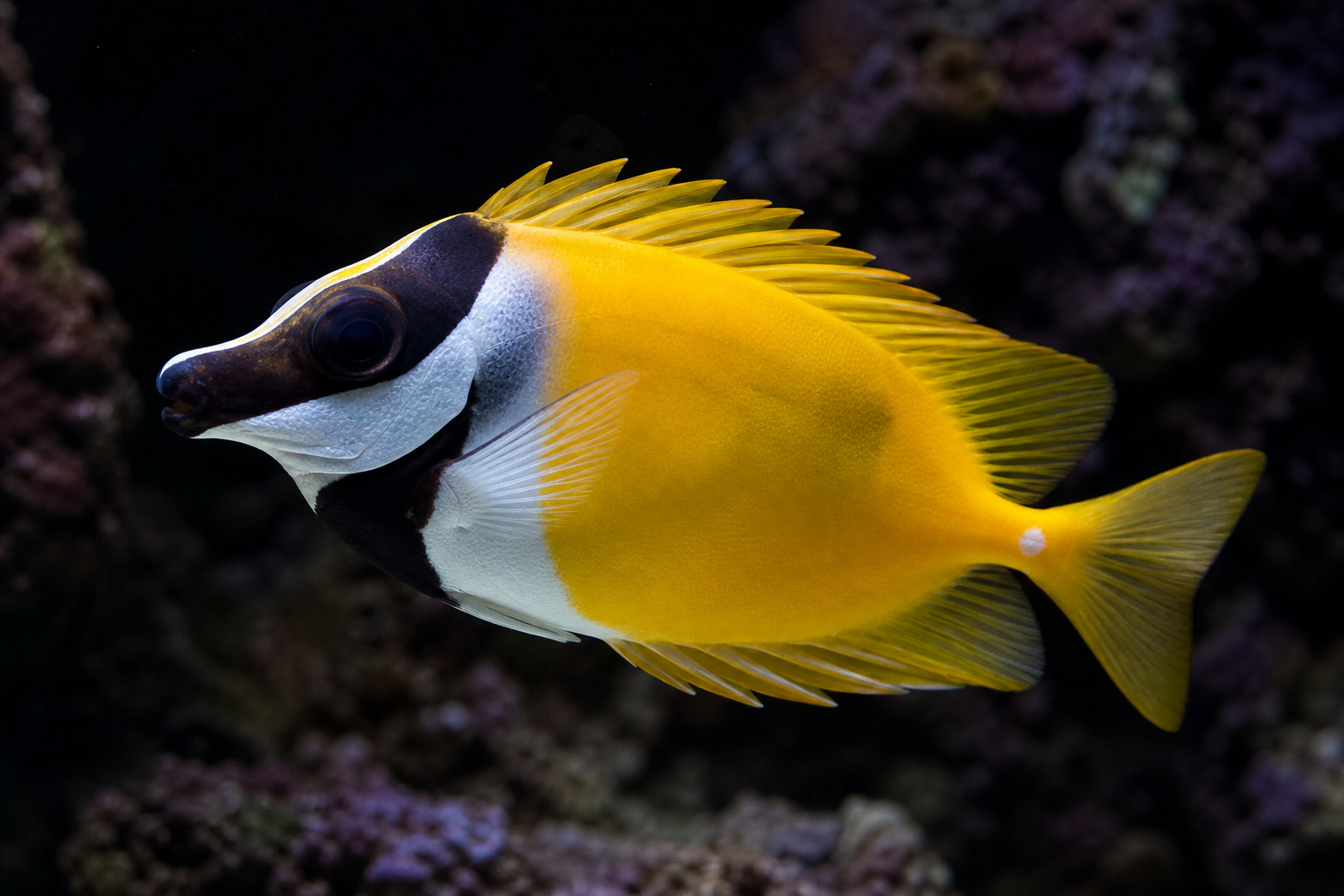
The Foxface Rabbitfish is a larger, highly useful reef fish known for two things: algae grazing and a calm, steady personality (most of the time). With its yellow body, black-and-white “fox mask,” and constant cruising behavior, it can become a true centerpiece fish in larger reef tanks. Many hobbyists also appreciate Foxfaces because they often graze nuisance algae that other fish ignore.
Foxfaces are usually reef compatible, but like many grazing fish, they’re not a guaranteed “no-risk” choice for every coral. Most behave well, but a hungry or stressed rabbitfish may sample certain corals. They also have venomous dorsal spines, which isn’t something to fear day-to-day, but it does matter for handling and netting. If you have the tank size and can feed properly, a Foxface can be one of the best “big utility fish” in the hobby.
Quick Care Snapshot
Reef Safe: Usually, with caution (may nip certain corals if hungry)
Difficulty: Moderate
Temperament: Generally peaceful; can become territorial in tight spaces
Minimum Tank Size: 125 gallons (90+ for juveniles, but plan long-term)
Best Kept As: Single in most tanks
Diet: Herbivore grazer + supplemental foods
Water Conditions: Stable reef parameters; strong filtration and oxygenation help
Special Note: Venomous dorsal spines—handle with care
Natural Background
In the wild, Foxface Rabbitfish spend much of their time grazing on algae and plant material while cruising reefs and lagoon areas. That “always browsing” lifestyle is why they’re so useful in reef aquariums—and why they need space and a consistent herbivore diet.
They also have a natural defense system: venomous spines. They’re not aggressive with them, but they can deploy them if threatened. In the aquarium, this mostly matters when you try to catch or move the fish.
Tank Requirements
Tank size & swimming space
• 125 gallons minimum is a solid long-term target.
• A juvenile may “fit” in smaller tanks temporarily, but Foxfaces grow and need room to cruise.
• Tank length and open swimming lanes matter.
Rockwork and layout
• Provide rockwork for grazing and shelter, but keep open lanes for swimming.
• Foxfaces like to have a few spots to retreat into when they feel stressed.
Flow, oxygen, and filtration
As a larger, active fish, a Foxface benefits from:
• good water movement (oxygen)
• strong filtration
• stable parameters
Lid / jumping
Not a notorious jumper, but any fish can jump when startled. A lid is always a good practice—especially in mixed reef setups.
Feeding
Feeding properly is key for health and reef compatibility.
What to feed
A strong routine includes:
• dried seaweed/nori (often a staple)
• algae-based pellets/flakes
• frozen foods with veggie content
• occasional meaty foods as a supplement (not the main diet)
Feeding tips
• Feed consistently. Hungry grazers are more likely to “test” corals.
• If you’re relying on the Foxface to eat nuisance algae, don’t starve it—healthy grazing happens when it’s well-fed and confident.
How often
• Daily algae-based feeding is recommended.
• Many tanks do best with 2 smaller feedings per day.
Compatibility
Foxface Rabbitfish are generally peaceful community fish, especially in larger tanks. Their size and activity level are the bigger compatibility factors.
Good tankmates
Often compatible with:
• tangs (in large tanks, introduced thoughtfully)
• clownfish
• wrasses
• larger gobies and blennies
• many reef-safe community fish
Watch-outs
• Small, timid fish may feel intimidated by a large, active grazer (even if the Foxface isn’t trying to bully them).
• Other rabbitfish can cause territory conflict unless the tank is large and planned carefully.
• Aggressive fish may harass the Foxface and keep it stressed.
Reef compatibility (realistic view)
Most Foxfaces behave well in reef tanks, but some may nip:
• fleshy LPS corals
• soft corals
• polyps that stay open and “tasty”
This is not guaranteed, but it’s a real possibility—especially if the fish is underfed.
Common Mistakes
1) Buying one for algae control without planning for size
Foxfaces grow and need space. Many end up rehomed when they outgrow the tank.
2) Underfeeding to “make it eat algae”
Starving a fish to force behavior usually backfires. It leads to stress, health problems, and increased coral nipping risk.
3) Treating it as automatically reef safe
It’s often reef compatible, but not a 100% guarantee. Watch behavior and feed well.
4) Handling without caution
Those dorsal spines can sting. Use careful netting techniques and avoid rushing when moving the fish.
5) Adding it to a cramped or aggressive tank
In tight or stressful environments, a Foxface can become more defensive and less stable in behavior.
Notes & Variations
Common names
- Foxface Rabbitfish
- Foxface
- Magnificent Foxface (often used in the hobby)
Scientific Name
- Siganus vulpinus
Behavior notes
• They cruise constantly and graze throughout the day.
• They may “hide” or wedge into rockwork at night—normal behavior.
• Their coloration can shift slightly based on stress and mood.
Safety note (spines)
Foxfaces aren’t out to sting you, but they can when threatened. The key is calm handling: don’t panic, don’t chase, and don’t grab.
Final Thoughts
The Foxface Rabbitfish is a fantastic choice for larger reef tanks if you want a big, useful grazer with personality and presence. The keys are straightforward: give it space, feed it like an herbivore, and handle it carefully. If you do that, a Foxface can become a reliable, hardworking part of your reef—helping with algae, adding movement, and serving as a true centerpiece fish.