[es]
Overview
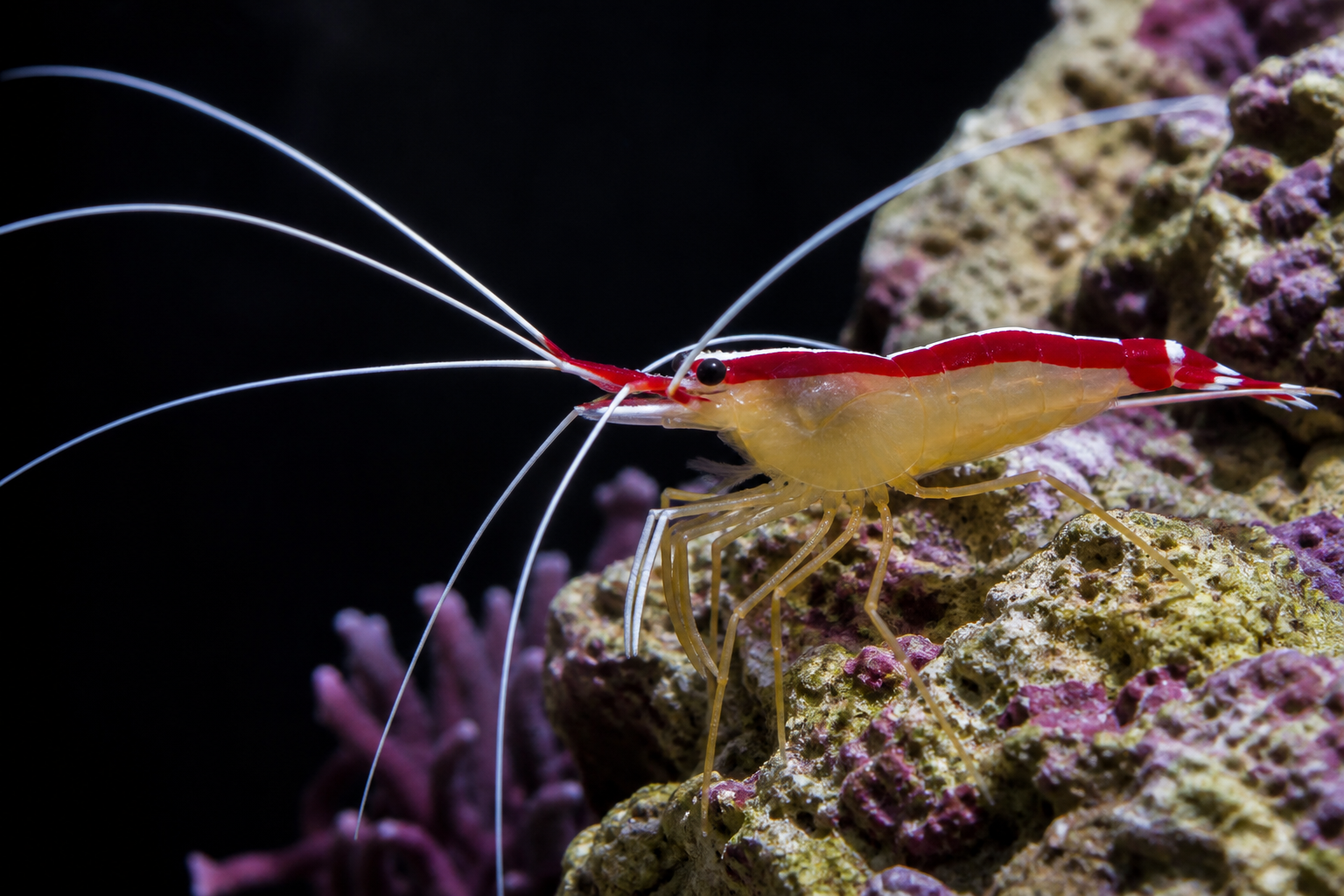
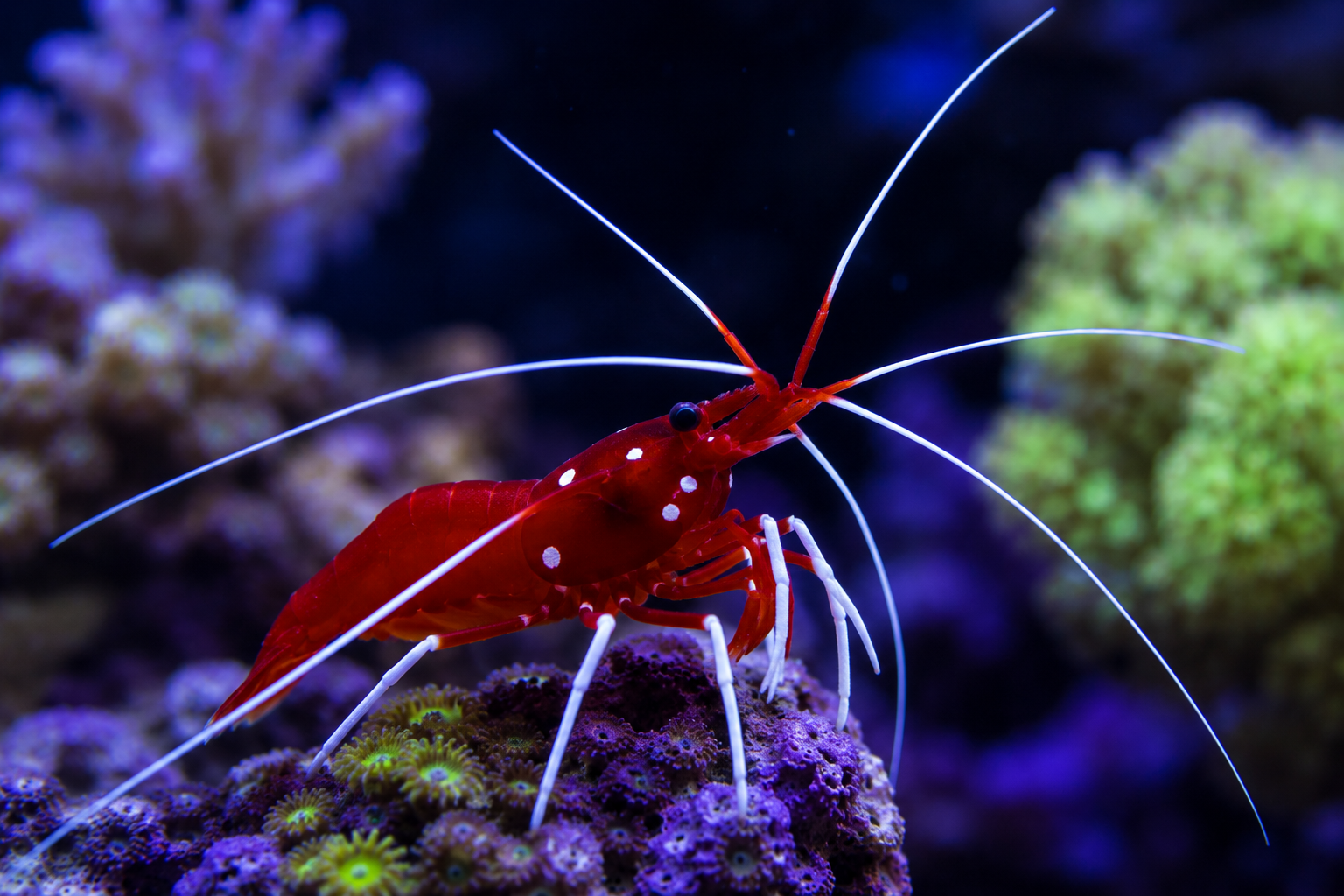
The Fire Shrimp (also commonly called the Blood Shrimp) is one of the most striking shrimp you can keep in a reef tank—deep red body, crisp white markings, and that elegant, slow-moving confidence. It looks expensive, acts important, and somehow manages to be both bold and shy at the same time.
Fire shrimp are cleaner shrimp, but they’re not as in-your-face about it as skunk cleaners. They tend to hang back under ledges and come out on their own terms. When they do clean, it feels like a special event rather than a constant car wash.
They’re generally hardy, reef safe, and long-lived when kept in stable conditions. The main challenge isn’t keeping them alive—it’s understanding their behavior so you don’t assume something’s wrong when they disappear for a while.
Quick Care Snapshot
Difficulty: Easy
Minimum tank size: 20 gallons
Tank maturity: 3–6+ months recommended
Lighting: Not relevant
Flow: Moderate
Placement: Rockwork, caves, overhangs
Feeding: Omnivore (leftovers + supplemental feeding)
Reef safe: Yes
Temperament: Peaceful, slightly territorial with other shrimp
Biggest risk: Aggressive tankmates, starvation in ultra-clean tanks, harassment during molting
Natural Background
Fire shrimp are found on reefs where they live among rocks and crevices, often setting up cleaning stations where fish come to be serviced. Unlike skunk cleaners, they’re more nocturnal and less exposed, preferring shadowed areas and caves.
In aquariums, this translates to:
• hiding during the day
• becoming more active in the evening
• establishing a preferred “home base”
Their behavior is calm and deliberate—not frantic or constantly visible.
Tank Requirements
Stability matters (especially for molting)
Fire shrimp are hardy, but like all shrimp they’re sensitive to:
• salinity swings
• temperature spikes
• sudden parameter changes
Stable top-off and consistent maintenance are key, especially in smaller tanks.
Habitat
They do best in tanks with:
• rockwork and caves
• shaded areas
• defined hiding spots
A tank with no cover will stress them and keep them hidden even more.
Flow
Moderate flow works well:
• enough to bring food past them
• not so strong that it constantly blasts their hiding spots
They’ll choose calmer zones if flow is too intense.
Feeding
Fire shrimp are omnivorous scavengers.
What they eat
• leftover fish food
• small meaty foods
• pellets and flakes
• scraps from feeding events
They’ll also opportunistically clean fish, but cleaning alone is not enough to sustain them.
Supplemental feeding
In clean or lightly stocked tanks:
• target-feed a small meaty food occasionally
• make sure food reaches their hiding area
A fire shrimp that never sees food can slowly starve while still looking “fine” for a long time.
Compatibility
With reef tanks
Fire shrimp are reef safe and do not bother corals.
With fish
Generally peaceful, but avoid:
• large predatory fish
• fish that hunt shrimp
Peaceful community fish are ideal.
With other shrimp
Mixed results:
• usually fine with skunk cleaners in larger tanks
• can be territorial with other fire/blood shrimp in small tanks
Space and hiding spots reduce conflict.
With inverts
Generally peaceful. They don’t bother snails or corals.
Common Mistakes
1) Assuming it died because you don’t see it
Fire shrimp are naturally shy. Not seeing it all day is normal.
2) Not feeding it intentionally
They need real food, not just “leftovers maybe.”
3) Panicking during molts
A molted exoskeleton looks exactly like a dead shrimp.
4) Keeping with aggressive fish
Fire shrimp don’t defend themselves well.
5) Chasing it out of hiding
Stress keeps them hidden longer.
Notes & Variations
Molting behavior
Fire shrimp molt regularly.
• they hide more before and after a molt
• leave the molt in the tank—shrimp often recycle it
If the shrimp vanishes for a few days, molting is often the reason.
Signs of health
Good signs:
• bright coloration
• intact antennae and legs
• steady movement
• normal feeding response
Red flags:
• lethargy
• missing limbs without recovery
• repeated failed molts
• sudden disappearance after harassment
Cleaning behavior
Some fire shrimp clean frequently. Others almost never clean. Both are normal.
Final Thoughts
Fire shrimp are a great example of a reef animal that rewards patience. They’re not always front and center, but when they are, they steal the show.
If you give them hiding spots, stable water, and consistent feeding, they’re hardy, peaceful, and long-lived. If you expect constant activity or neglect feeding because “they clean fish,” they’ll slowly fade out of the system.
Treat them like a valued member of the reef—not just decoration—and they’ll do just fine.