[es]
Overview
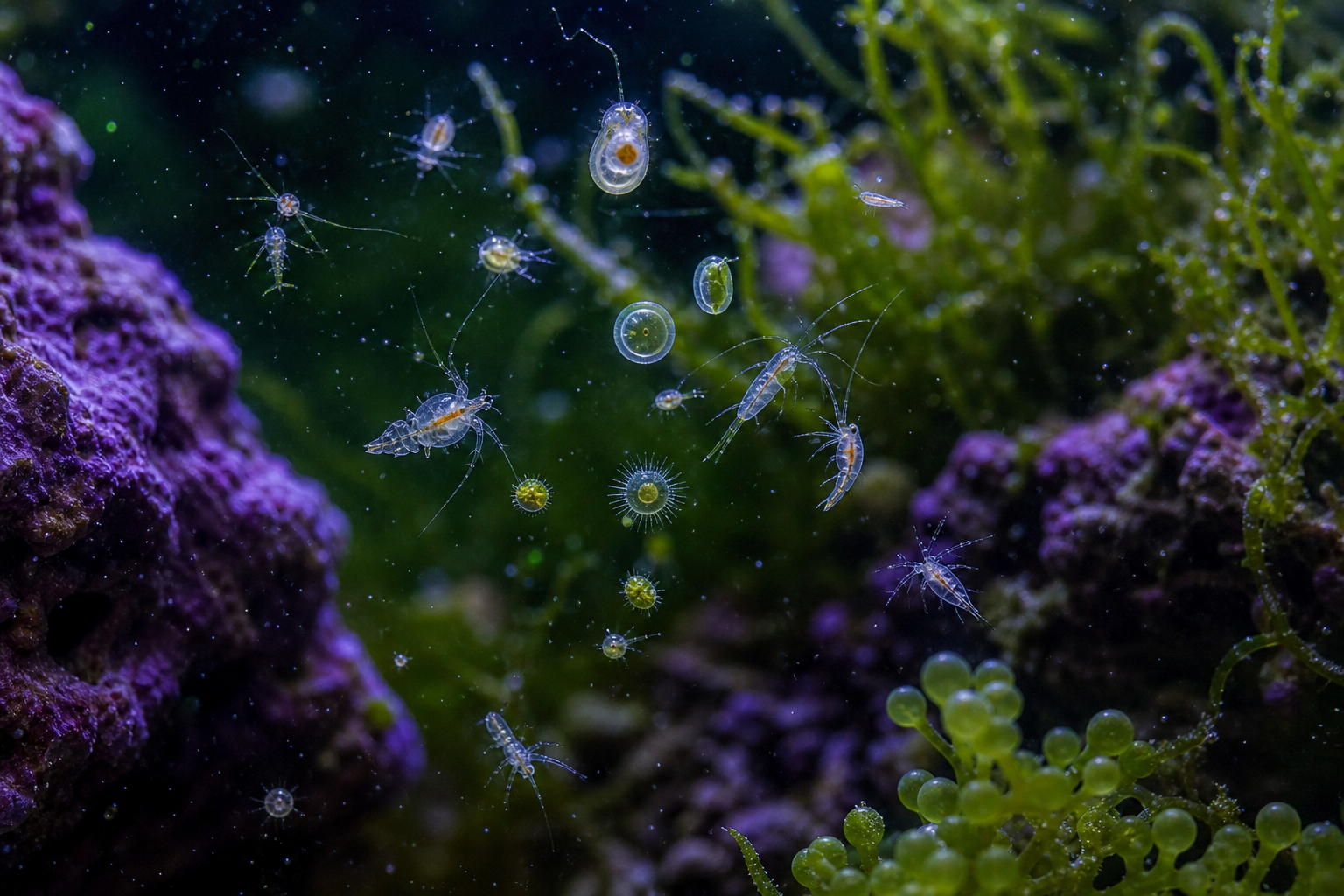
Copepods are one of the most important “invisible” animals in a reef aquarium. You won’t admire them like a coral, and you won’t hand-feed them like a fish—but without them, a reef tank feels sterile and artificial.
Copepods are tiny crustaceans that live on rock, glass, sand, and within refugiums. They form the base of the live-food web in many successful reef systems and are critical for supporting pod-dependent fish, encouraging natural feeding behavior, and increasing overall biodiversity.
If amphipods are the janitors, copepods are the plankton engine.
Quick Care Snapshot
Difficulty: Easy
Tank size: Any (nano to large systems)
Tank maturity: Best in established tanks
Lighting: Not required
Flow: Normal reef flow
Placement: Rockwork, sandbed, refugium
Feeding: Microalgae, phytoplankton, detritus
Reef safe: Yes
Primary role: Live food + ecosystem support
Biggest risk: Starvation in ultra-clean systems
Natural Background
In the ocean, copepods are among the most abundant animals on Earth. They’re a primary food source for countless fish and invertebrates and are a key link between microscopic producers (like phytoplankton) and larger animals.
In reef aquariums, they fill the same role—just on a much smaller scale. They graze on microalgae and biofilms, reproduce rapidly under the right conditions, and provide a steady supply of live food.
Tank Requirements
Stability beats precision
Copepods don’t require specific parameters beyond normal reef stability:
• stable salinity
• stable temperature
• oxygenated water
Sudden swings, medications, or aggressive cleaning can reduce populations quickly.
Habitat and refuge
Copepods thrive where they can:
• hide
• graze
• reproduce without constant predation
Ideal habitats include:
• porous live rock
• sandbeds
• refugiums
• macroalgae beds
Tanks with no refuge and heavy pod predators will struggle to maintain populations long-term.
Nutrient balance
Copepods need something to eat.
• Tanks that are aggressively skimmed, filtered, and scrubbed often starve pods.
• Slight nutrient presence supports healthier populations.
Feeding
What copepods eat
Primarily:
• microalgae
• biofilm
• phytoplankton
• dissolved organic material
Supplementing food
In many tanks, copepods survive without direct feeding. However, populations grow faster and remain more stable with:
• periodic phytoplankton dosing
• consistent fish feeding (leftover fines)
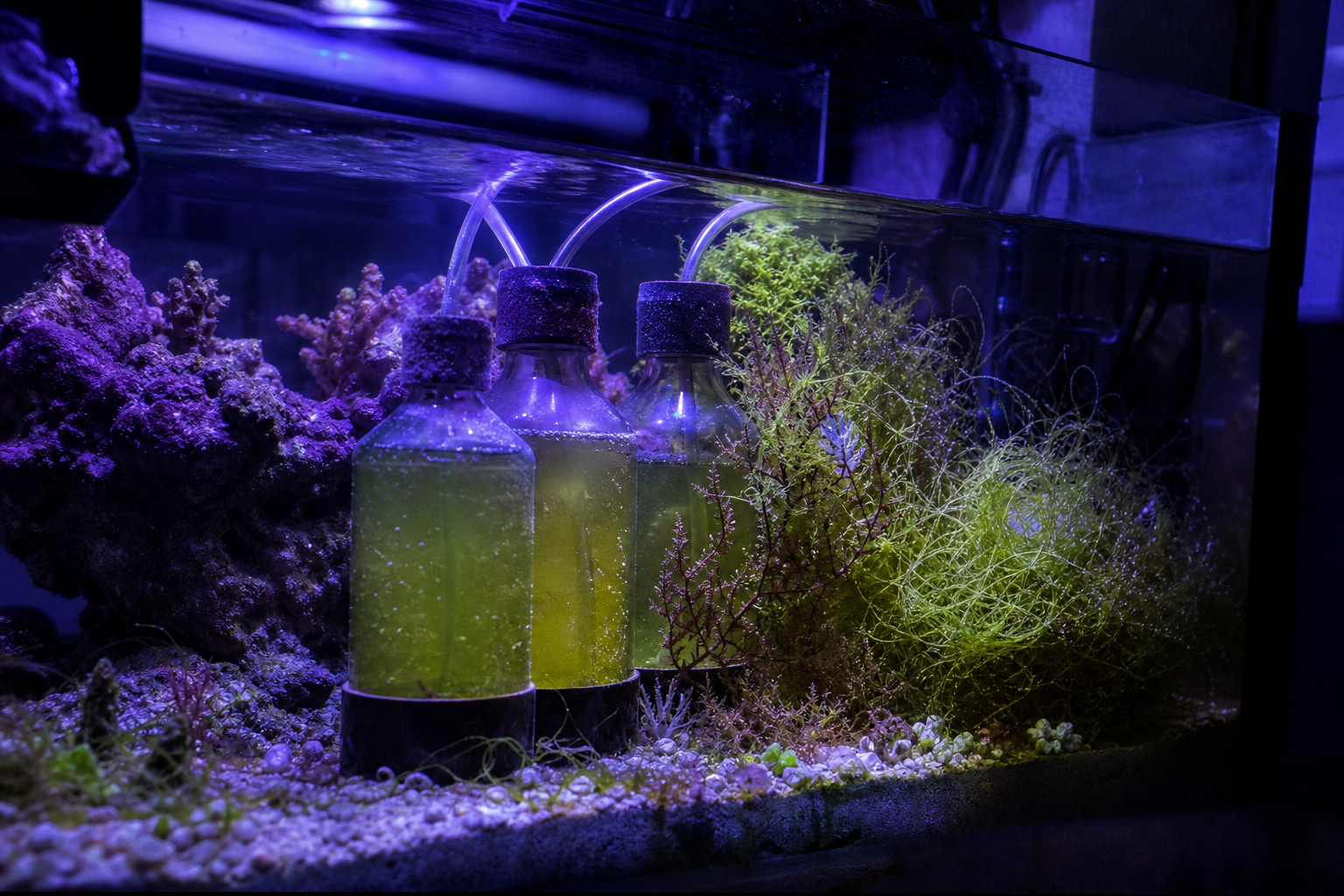
• refugiums with macroalgae
If you’re keeping pod-dependent fish, intentional feeding becomes important.
Compatibility
With reef tanks
Copepods are compatible with all reef systems and do not harm livestock.
With fish
Many fish actively hunt copepods:
• mandarins
• dragonets
• wrasses
• pipefish
• small reef fish
This is natural—but it means population support is necessary in predator-heavy tanks.
With inverts
Generally peaceful. Some inverts may consume copepods opportunistically, but they pose no threat to others.
Common Mistakes
1) Assuming copepods maintain themselves forever
Without food and refuge, populations crash.
2) Adding pod-dependent fish too early
New tanks often can’t sustain natural pod reproduction yet.
3) Over-cleaning the system
Removing biofilm and detritus removes copepod food.
4) Expecting instant population booms
Pods grow over time. Stability matters more than quick fixes.
5) Confusing absence of visible pods with absence of pods
Many copepods are microscopic or nocturnal.
Notes & Variations
Copepods vs amphipods
• Copepods are smaller and more numerous.
• Amphipods are larger scavengers.
• Both contribute to a balanced food web.
Refugiums and copepods
Refugiums are one of the best tools for sustaining copepod populations:
• reduced predation
• steady food supply
• continuous export into the display
“Do I need copepods?”
Not every tank requires them—but tanks that have them tend to be more resilient and natural, especially when keeping specialized fish.
Final Thoughts
Copepods are easy to overlook because they don’t demand attention—but that’s exactly what makes them so valuable. They quietly stabilize food chains, encourage natural behavior, and support fish that can’t thrive on prepared foods alone.
If your reef has copepods thriving, your system is doing more than just surviving—it’s functioning.